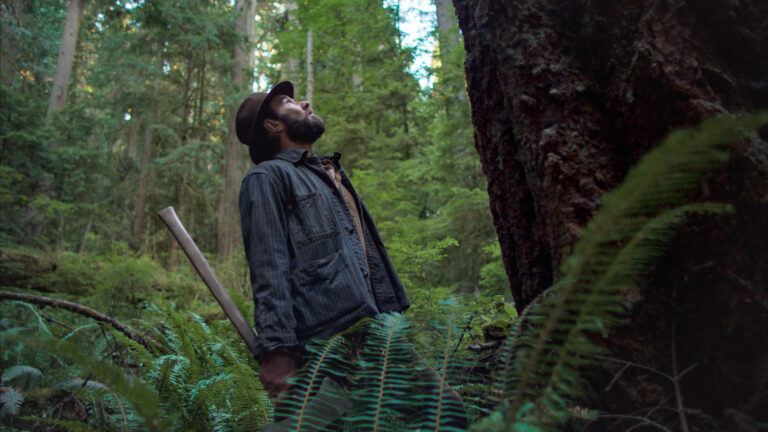
| In two of 2025’s best movies—Clint Bentley’s Train Dreams and Chloé Zhao’s Hamnet—a father is away when his child suddenly dies. Both movies explore the grief of losing a child and the way we cope with—and carry on after—such devastating blows. Both movies are adapted from celebrated novels (Denis Johnson’s Train Dreams and Maggie O’Farrell’s Hamnet). Both are “Malicky” in style, beautifully made and relatively wholesome (PG-13). Both are likely to be best picture Oscar nominees. I wrote a full TGC review of Train Dreams (which is out today on Netflix), which you can check out at the link below. I likely won’t have a chance to write a separate piece on Hamnet, so I’ll say a bit about it here. Zhao is a masterful director and the cast she’s assembled for Hamnet is superb. Paul Mescal is riveting as Shakespeare, and Jessie Buckley will likely win best actress for her spellbinding portrayal of Shakespeare’s wife Anne/Agnes Hathaway. The young Jacobi Jupe is quite good as Shakespeare’s son Hamnet. In a brilliant casting choice, Jacobi’s older brother Noah plays Hamlet in the play-within-the-movie, a tragedy the Bard possibly wrote in part as a way of working through his son’s untimely death at 11. The scene where Hamnet Shakespeare succumbs to the bubonic plague in his mother’s arms is perhaps the most harrowing movie scene of child sickness I’ve ever seen. As a dad of three young children (with a fourth due to be born any day now), the emotions of that scene hit hard. Life is so vulnerable. To fail to protect your child from death is among every parent’s worst fears. Both Train Dreams and Hamnet capture this fearsome contingency. “What is given may be taken away at any time,” says one character in Hamnet. “Never take for granted that our children’s hearts beat.” I didn’t love everything in Hamnet. The film presents a very indifferent-to-Christianity Shakespeare (something Leland Ryken called “a great lie”). And Agnes is portrayed as a pagan forest mystic who is downright hostile to Christianity (she rebukes those who suggest her dead child will “go to heaven”). The final scene’s milking of emotion also feels overwrought, especially when it deploys Max Richter’s “On the Nature of Daylight”—a song which was used to such sublime effect in Arrival that it should never be used again in another movie. Those caveats aside, Hamnet is undeniably powerful. Like Train Dreams, it takes seriously the sacred gifts of marriage and children—gifts all the more precious because they can be lost at any moment. These may not be “feel good” movies to watch over the holidays, but as they capture the beauty and fragility of life, they can lead to a powerful sense of gratitude. |