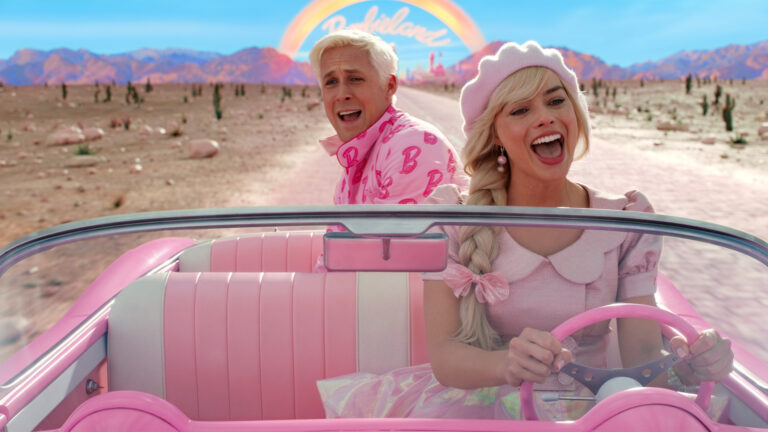
| I was on vacation when the #Barbieheimer phenomenon took social media by storm. And what a phenomenon it was (and continues to be). Christopher Nolan’s Oppenheimer and Greta Gerwig’s Barbie have both set box office records and almost single-handedly revived hope in the prospects of a creatively and financially rejuvenated Hollywood. Though it took me a few weeks, I finally got around to seeing both films. I greatly admired Nolan’s film (a technical marvel, as I expected) and laughed a lot watching Gerwig’s clever film. Though I have to admit I was somewhat disappointed by both. As compelling and well-acted as it is, Oppenheimer felt rather joyless to me—perhaps unsurprising for a film about the first nuclear bomb—and also unnecessarily R-rated with totally needless sexual content. And for all its smart one-liners, cultural commentaries, and theological allusions, Barbie felt frustratingly messy and full of internal contradictions. As just one example, the film’s inclusion of a trans Barbie (played by biologically male Hari Nef) seems to affirm the modern notion that “womanhood” is a plastic concept wholly divorced from biology; but then in Barbie’s final shot, a joke about a gynecologist visit seems to affirm the inescapable biology of womanhood. It’s no wonder the myriad hot takes on #Barbie are so all over the place, with some conservatives arguing the film is anti-man propaganda and others seeing it as post-feminist critique we should welcome. That Barbie has been so variously interpreted reflects the film’s own inner confusion on the subjects of gender and identity—which itself is reflective of our broader cultural impasse. I agree with Barbara Nicolosi when she says Christians should not look on Barbie‘s popularity with smugness or disgust “but with compassion that the postmoderns all around us are basically trapped in hellish confusion.” Or as Jen Oshman argues in her Barbie review for TGC, “In a culture grappling for solid handles to approach the slippery questions of identity, it’s no wonder the meaning of Barbie—like the toys we used to play make-believe with—is essentially whatever the viewer wants it to be.” This is why, Oshman argues, Christians should lean into the questions Barbie asks (but can’t answer). After all, we have the biblical tools and theological premises that can actually bring clarity to this deeply fraught cultural conversation. |