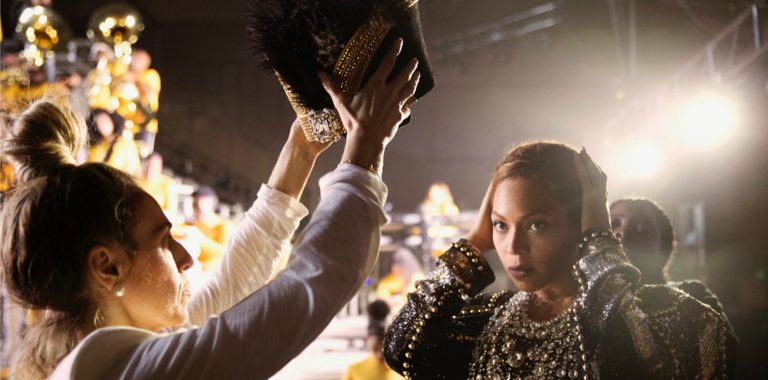
| Few would deny that pop concerts can feel like religious experiences. I recall a conversation I had with a secular music critic who said she did not believe in God but did feel some unnameable presence of the divine while attending an Animal Collective concert. Indeed, for both pop music performers (who for more than a half century have poached church music for secular formats) and audiences, music and art are “the new church.” Amidst the suffocating immanence of a secular age, modern people look for holes that poke through and let in rays of otherworldly light. These immanence-penetrating holes are often found in concerts, and I increasingly hear the word “transcendent” used to describe a concert experience. Two recent (excellent) concert documentaries, Amazing Grace (about a 1972 Aretha Franklin performance) and Homecoming (about Beyoncé 2018 Coachella performance) are case in point. Both have enthralled audiences and been called “transcendent” by critics. Both showcase the fuzzy lines between church and secular pop music. But their differences, as I explore in the article below, are also quite telling and illustrate the changing nature of what we deem most sacred. |