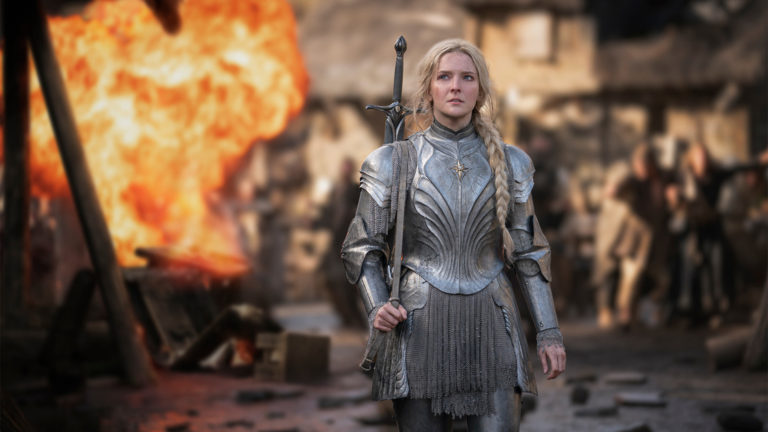
| If you could go back in time and relive any filmgoing moment—experiencing a movie’s magic on the big screen for the first time, again—what would you choose? My choice would undoubtedly be The Lord of the Rings trilogy. I saw each of Peter Jackson’s films at the local multiplex while an undergraduate at Wheaton College, and the thrill of those cinematic experiences (December 2001, 2002, and 2003) has yet to be replicated for me (though Malick’s The Tree of Life in 2011 was life-altering in other ways). It helped that in those years (2001-2003) I was working as an archive assistant at Wheaton’s Wade Center, helping Dr. Chris Mitchell with research projects related to J.R.R. Tolkien, whose writing desk is on display in the Wade Center museum. I was a student of Tolkien’s imagination and an Inkling kindred spirit. It was a dream to see his vivid Middle-earth rendered in such grand cinematic scope. Naturally, I have anticipated Amazon’s new Lord of the Rings: Rings of Power series with both excitement and trepidation. Would the series do justice to Tolkien’s world-building talents and Christian worldview? Or would corporate influences and the thematic concerns of a post-Christian age distort the spirit of Rings as dramatically as Sméagol was distorted into Gollum? I’ve only seen two episodes so far, so the verdict is very much still out. But in the article below, I write about what I think Tolkien would like (and possibly not like) about The Rings of Power. I typically avoid weighing in on a television series before I’ve seen the whole season, and my assessment might grow more favorable or more critical as the season goes on. But for now, consider me cautiously optimistic that the magic of Middle-earth will be experienced anew as we watch the prequel’s narrative unfold—albeit on tragically smaller screens than the last time we experienced Tolkien’s thrilling world. |