GOSPEL BOUND WITH COLLIN HANSEN
In This Week's Briefing

In this week’s briefing:

Consider whether post-literacy is driving young people to Catholicism, ponder Ben Sasse’s final testimony, and remember the ministry of Lee Eclov.

Watch as Sarah Zylstra and I discuss this week’s top stories:

What I'm Seeing

I gotta hand it to Julia Yost of First Things, writing in The Washington Post last week. She was right to identify the Young, Restless, Roman with so many of the same dynamics I captured for the Young, Restless, Reformed in my 2006 Christianity Today article and 2008 book by the same name. It’s not that these young Catholics represent some kind of mass revival or even the most noteworthy religious trends of our day. But the counter-cultural momentum feels real, fed by the disproportionate influence of social media.

Yost’s analysis treads where I never would have dared. She argues that post-literate Gen Z prefers Catholic visuals on Instagram and TikTok. Trapped in a Spotify playlist of disenchantment, Good Friday is “punk rock” rebellion:

Pope Leo XIV presides over the Way of the Cross on the evening of Easter Good Friday at the Colosseum in Rome, Italy on April 3, 2026. Photo by (EV) Simone Risoluti/Vatican Media/Abaca/Sipa USA(Sipa via AP Images)

If Reformed theology spread in the early 2000s through books and blogs, I can understand why Catholic iconography better appeals to a generation asking AI to summarize and write for them. Yost makes a good point that this dynamic recalls the Reformation itself, spread by Protestants through the recently invented technology of movable type. Reformed iconoclasm preferred the written and preached Word to the visual Word of Catholic relics.

I wonder, however, how her analysis lands on converts to Catholicism from evangelicalism. I often hear them cite Pope John Paul II’s teaching on theology of the body, or the philosophical synthesis of Thomas Aquinas. It sure seems like many Protestants float across the Tiber on a raft of medieval tomes.

What’s really happening?

Since the early 2000s, it’s only become more difficult to discern and describe religious trends in a media-fractured culture. The Catholic Church can be in serious, objective decline while a small number of exvangelical memoirs and Washington Post op-eds leave the impression of defiant growth. The future of the Catholic Church could be smaller but more consistently fervent. The same thing happened with Reformed theology in the early 2000s. Evangelicalism hasn’t grown in numbers or influence since then. Compared to the Reformed, Pentecostals and charismatics claim a larger share of the Protestant pie. But over the last 20 years, evangelical media and seminaries shifted under the disproportionate influence of Reformed leaders and a large, rising generation. Especially through books and digital publishing, they’ve seen great success in spreading their beliefs around the world.

But has that spread been arrested by the decline of literacy in Gen Z? Have Catholic vibes already claimed the next generation?

No, the numbers don’t yet support this conclusion. But evangelical leaders would be wise not to take literacy for granted as AI usage increases. And recognize that a little visual beauty and liturgical spectacle need not distract from the Word.

By God’s grace, we can be holy without being ugly.

COLLIN HANSEN
Editor in Chief
 
What I'm Hearing
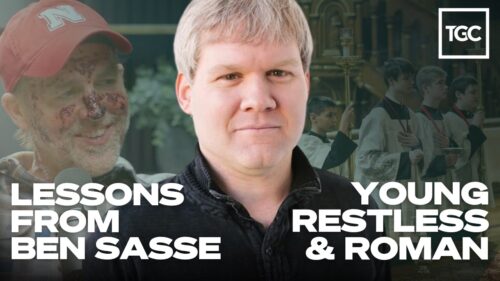
How Ben Sasse Is Living Now That He Is Dying
Ben Sasse and Ross Douthat

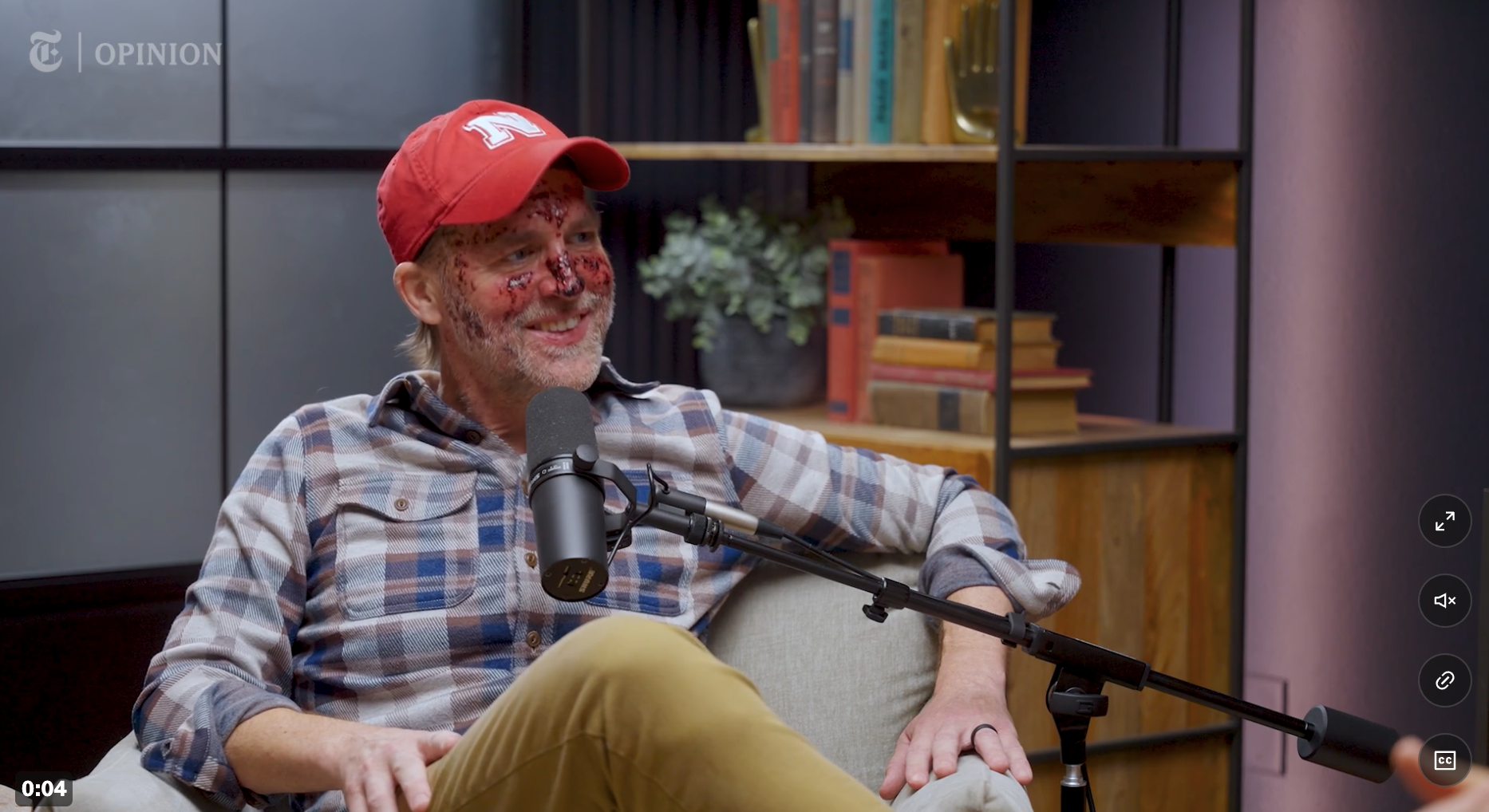
I won’t apologize: this newsletter is a Ben Sasse and Ross Douthat fan account. So when these two role models link up on a podcast, I’m listening.

Or, in this case, I’m watching—agonizing, actually, while seeing my friend Ben’s face wearing the effects of his cancer trial. The very treatment shrinking his tumors hinders his body’s ability to grow skin.

Some of you may recall Pope John Paul II’s public decline and death related to Parkinson’s disease. His death testified to his theology, to his belief in the dignity of the body made and sustained by God in his image. I thought likewise of Ben, boyish smile across his face, defying death’s defeat with the joy of the resurrection.

“Do you feel ready to die?” Ross asked Ben.

“To whom would I go?” Ben answered. “We’re told that we get to approach the Almighty, we get to approach the divine and call him Daddy, Abba, Father? That’s pretty glorious. And I know that that’s what I need.”

In contrast to Bart Ehrman, who told Ross a week earlier the problem of suffering destroyed his faith in God, Ben testified to the life worth living through the death he’s dying.

Ben Sasse didn’t need to spend his final days podcasting. But in terms of his public ministry, these interviews may become his greatest spiritual legacy.

 
What I'm Reading
Feels Like Home
Feels Like Home
Lee Eclov

I probably think too often about my first interaction with Lee Eclov. I was studying pastoral ministry under him at Trinity Evangelical Divinity School, not far from where he led an Evangelical Free church in Lincolnshire, Illinois.

I don’t remember the subject of the reflection paper he assigned us to write.

But I’ll never forget his response when he handed back my paper.

“You’re not a very reflective person, are you?”

I’m still not exactly sure what he meant. But I knew at some level he was right. I didn’t have enough perspective on myself or experience with others to make for a good pastor in my 20s. I often wonder what I’m missing, what I’m not seeing, what might be obvious to others but a blind spot to me.

I suspect his sharp question landed heavier than he intended. But Lee Eclov still gave me a gift by challenging me to think deeper about the Lord’s work inside me and not just through me.

This week I’m mourning the loss of my professor, who died unexpectedly on April 8 at age 75.

Lee and I kept in touch after graduation. We didn’t always agree on theology. But we shared a love of the Lord and service to his church. And we often reflected on our shared background in South Dakota, where he was born in 1951. In 2019 he asked me to write the foreword to his excellent book, Feels Like Home: How Rediscovering the Church as Family Changes Everything.

Knowing Lee’s upbringing, I reflected in that foreword about the feeling of home on the farm and the greater joy of welcome into the family of God we know as the church. Here’s how I concluded:

***

I hope those church members will be to my children a family who loves them through every stage and situation of life. I hope they’ll feel safe, welcome, and known as brothers and sisters in Christ. I hope they’ll see this bond of the Spirit as even stronger than the bond their mother and I share with them by blood.

Apart from my children, I don’t live within 650 miles of anyone who shares my DNA. I’ll never again celebrate Christmas in that living room in South Dakota. But I’m surrounded by family. And I have a home. Even better, it’s a home that fills me with longing for the home we’ll share for eternity with God.

I don’t always get along with everyone in this home, our church. Sometimes I hurt these spiritual siblings with my words, or my lack of care. In some situations we don’t agree on the best way forward. So we argue. Usually I need to apologize. Many of these brothers and sisters I’ve never even met, since this church family has grown so much in the last few years. And these aren’t necessarily the first folks with whom I’d choose to spend my time. Some of us don’t share many common interests. It really is a family.

When I read Lee Eclov, it’s like he’s been in my home. And that’s not just because we both hail from South Dakota and crossed paths in the Chicago suburbs. It’s because I share his vision of the church as a home. I’ve been in large churches and small churches, growing churches and dying churches, churches full of farmers and churches full of hipsters. Every church should work toward the vision Eclov lays out in Feels Like Home: How Rediscovering the Church as Family Changes Everything.

This vision is not only biblical, but also attainable for every church. You don’t have to be brilliant or rich or savvy or trendy. You could be declining and aging. You could be in the West or the Majority World. It doesn’t matter. You can pray together. You can remember names. You can bring a meal. You can mourn with those who mourn. You can sing the songs that have sustained the faith of family members for generations.

Because in Christ, you have fellowship stronger than a brother’s bond. You have a home that neither death nor time nor anything else in all creation can take away from you. When you rediscover the church as family, it changes everything.

***

We miss you, Lee. But we’re glad you’re home now with Jesus.

Next week on Unseen Things:

We’ll return on May 1 following The Keller Center’s annual retreat in New York and The Gospel Coalition board meetings in Memphis.

 
Desktop mobile image alt text