GOSPEL BOUND WITH COLLIN HANSEN
What I'm Seeing
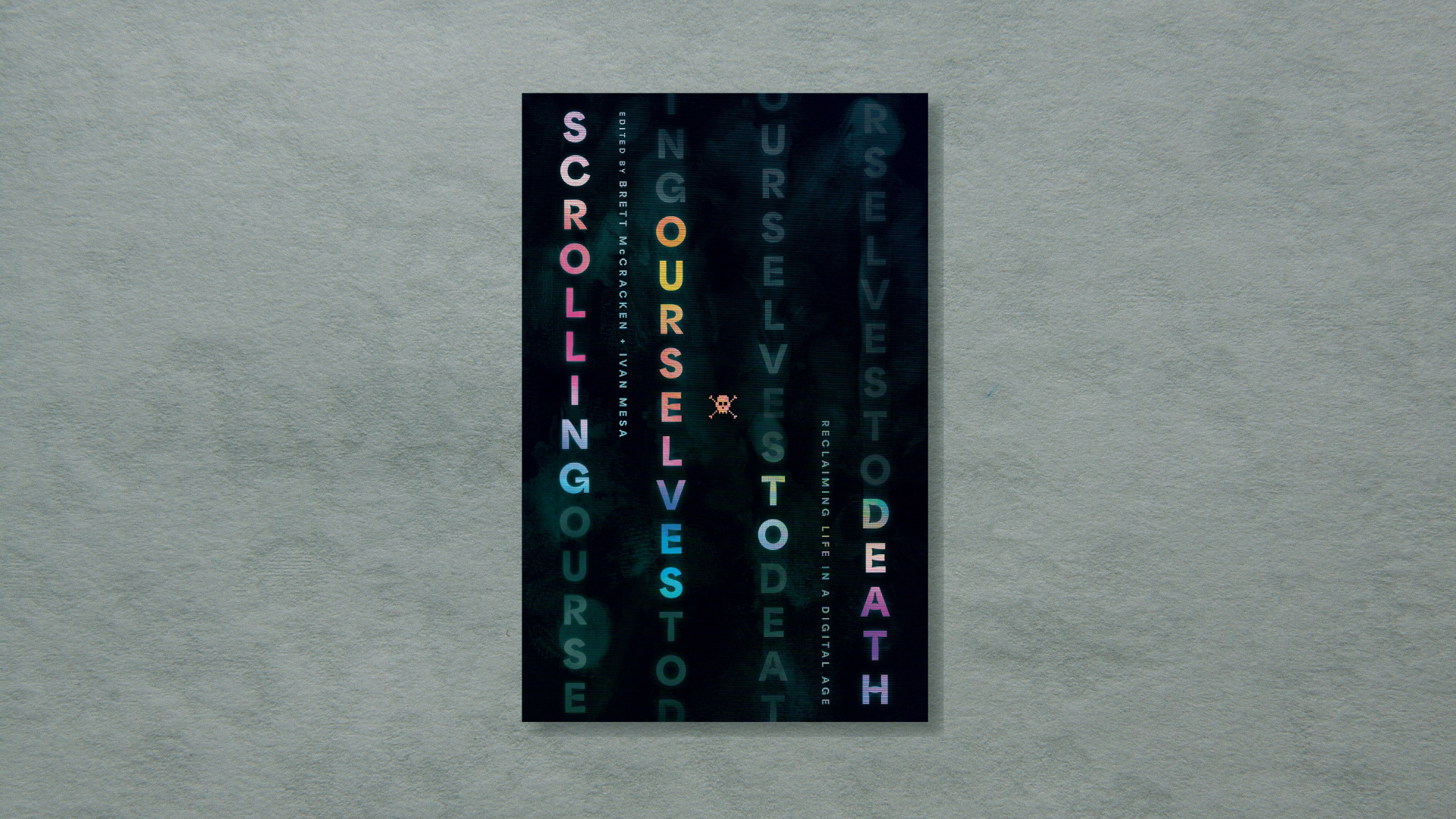
‘Scrolling Ourselves to Death: Reclaiming Life in a Digital Age’

Back in 2021, when many churches were just getting back to meeting in person, Jonathan Leeman and I published Rediscover Church. The premise was simple, right there in the title: we hoped millions around the world would return to church and rediscover the ordinary means of grace in their local assembly. I was worried that once people got a taste for livestreaming they would no longer make gathered church a priority, and eventually they would disconnect from the church altogether.

Thankfully many, probably even most, did return. I’ve only heard a few examples of churches where attendance declined when the livestream became available. Many have continued to post video recordings of their services. People stuck at home for health reasons can stay engaged with their churches. Visitors can check out many churches in one sitting instead of dragging out in-person searches over weeks or months. Livestream feels like a win-win.

In our 2025 book Scrolling Ourselves to Death, however, I observed how preaching has changed in the digital age. Instead of expecting to learn from their preachers, many Christians now expect preachers to conform to their favorite voices on social media and podcasts. And some of the most popular outside voices are highly critical of pastors for not engaging more aggressively in partisan politics. They fault pastors when they don’t speak into a select list of subjects approved for culture war.

Now, artificial intelligence has added a new dimension. With help from AI, anyone with motivation, time, and a little expertise can quickly survey a wide variety of church services through the public transcripts of their livestreams. And they’re rarely looking to catch pastors doing good. They’re looking for something they can clip for X under suspicion for a global viewing audience.

It’s hard for pastors to understand that once the camera enters the sanctuary, that global audience becomes primary, and the local assembly becomes secondary. Among other church members we often speak in colloquial ways we know will be understood by sympathetic ears. Pastors address local challenges while looking into the eyes of the suffering. Preachers expect context will make sense of controversial points, and if anyone wants to ask questions, they can talk things over face to face.

That’s not what happens when the most provocative point of the sermon or service gets posted on X. No context. No sympathy. Maximal suspicion.

I urge pastors to remember their audience when they’re leading a service before cameras. Nothing is private. Today, anyone can film from their own phones, even if your church isn’t recording the services for YouTube. But especially if you’re posting a livestream, remember the internet isn’t sympathetic. Aided by AI, some people are looking for your worst, or at least where you’re less than crystal clear. You may not want to publish that livestream. Or at least least you may want to disable the transcript.

At the same time, no matter what technology brings, nothing has really changed: “For a man’s ways are before the eyes of the LORD, and he ponders all his paths” (Prov. 5:21). God already knows and sees everything. He even sees inside your heart. He peers into the dark corners we wouldn’t dare show the cameras. And he still loves you! No slip of the tongue, no social media swarm, can separate you from the love of God in Christ Jesus our Lord (Rom. 8:38-39).

COLLIN HANSEN
Editor in Chief
 
What I'm Hearing
More on the Midwest and Midlife
Justin Taylor, Kevin DeYoung, and Collin Hansen

Wherever I go, I heard from listeners of the podcast Life and Books and Everything hosted by Kevin DeYoung. Justin Taylor and I have been friends with Kevin for almost 20 years, and we join him for a few episodes per year. Conversations range from our favorite sports teams to recent reads to everyday discipleship as we follow Christ together.

Not many of my friends outside the United States appreciate our sports discussions. Not many outside our mothers care much about our observations on Midwestern culture. In the latest episode we talked about the challenges of midlife, including weight gain, exercise, and diet drugs.

When we returned from the summer break we looked back on John MacArthur and the ways funerals can bring former friends and allies back together. Since then Charlie Kirk has been assassinated, and Voddie Baucham has died. I can’t recall a year when so many high-profile U.S. church leaders have died. Their loss has exposed fault lines and made many wonder how unity could be achieved without their widespread influence.

I won’t pretend like I’m hearing increased calls for unity and shared mission. For some of the technological reasons I mentioned in the previous section, division has the upper hand. Algorithms know we prefer conflict to peace. But I still have hope when I think about funerals, which offer perspective. What matters most in the end is character, the fruit of our deepest beliefs. That character forged in life’s challenges produces hope, “and hope does not put us to shame, because God’s love has been poured into our hearts through the Holy Spirit who has been given to us” (Rom. 5:4–5). Funerals remind us no matter who we are, or what we’ve done, only one hope can carry us into the presence of God in eternity.

 
What I'm Reading
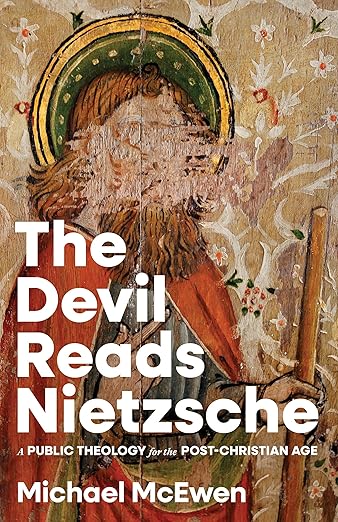
The Devil Reads Nietzsche: A Public Theology for the Post-Christian Age
Michael McEwen

No philosopher is more cited in my reading than Nietzsche, so legendary he needs only one name. While his big ideas can be easily understood (Übermensch, slave morality) Nietzsche remains a daunting read for us in the 21st century, 125 years after he died at 55 years old in 1900.

Michael McEwen provides an essential service in this new introduction to Nietzsche’s most important arguments, their origins, and their ongoing influence. McEwen sees the philosopher less as the “death of God” and more as a product of Christendom who can’t help but plagiarize and parody. McEwen writes, “Nietzsche wants to annihilate anything remotely Christian while living off its conceptual bounty.”

Understanding the persistence of belief even after Christendom is a key to effective evangelism and apologetics in our era. Even the arguments against Christianity depend on Christian framing. Nevertheless, maybe no thinker has done more than Nietzsche to reshape the way we think today about power, morality, and truth. This German philosopher lurks behind the ressentiment that fuels so many of our disputes by inverting how Christians value the weak. He’s worth the attention McEwen helps us give him in this new guide. His ideas have been too consequential to ignore or dismiss.