GOSPEL BOUND WITH COLLIN HANSEN
What I'm Seeing

Last weekend I accepted one of my hardest teaching challenges: two 20-minute devotionals for a few dozen boys between 3rd and 5th grade. I spoke to them once after breakfast and once during lunch after three hours of dodgeball, BB guns, zip lines, and high ropes.

I don’t think I succeeded in getting many of my points across.

From Paul’s letters to the Corinthians we looked at how to work hard in our weakness. I tried to emphasize the strangeness of the gospel. Most of these boys have grown up in the church. Almost all of them attended this retreat with their dad. In a world so shaped by the Christian value of weakness, how do you help them understand the oddity of Paul saying, “For when I am weak, then I am strong” (2 Cor. 2:10)?

How can Paul say we’re supposed to work hard (1 Cor. 9:24), but also that we’re only strong when we’re weak? It’s like someone telling you to go to the gym and lift weights. But the stronger you get, the less you can lift. It just doesn’t make sense according to human experience. Neither does the Son of God becoming a baby while still upholding infinite galaxies (Heb. 1:3). It doesn’t make sense that this boy would grow up and never sin. He never said anything mean to his brother or sisters. He never talked back to his teachers. He never got mad at his friends. He never stole their food when they weren’t looking. He never sat in the synagogue and wished he were swimming in the sea instead.

Things only get weirder from there. He claimed he was the Son of God, he did everything in love—and many people wanted him dead. They killed him, while making it as painful as possible.

That’s still not even the weirdest part of the story! This God-man let it all happen. He didn’t need to come to earth at all. He didn’t have to become a baby. He didn’t need to allow himself to die—let alone on a cross, the worst way to go. So why did he do it? Because his power was made perfect in weakness. Because on the cross he died for our sins. He gave up his life to save ours. In his weakness he did nothing less than defeat death. Three days later he rose from the dead. In his weakness, no one has ever been stronger.

Something happens when you share the gospel with non-Christians. Or teach it to some boys in elementary school. The familiar becomes strange again. We gain perspective, in humility. We don’t add anything to God. He doesn’t need us. He hung a thousand stars with one word! He painted the skies. He filled up the oceans. He carved the canyons. He walked among us in perfection. He never sinned even as his enemies put him to death. And he’s coming back soon.

It’s the strangest—and greatest—story ever told.

COLLIN HANSEN
Editor in Chief
 
What I'm Hearing
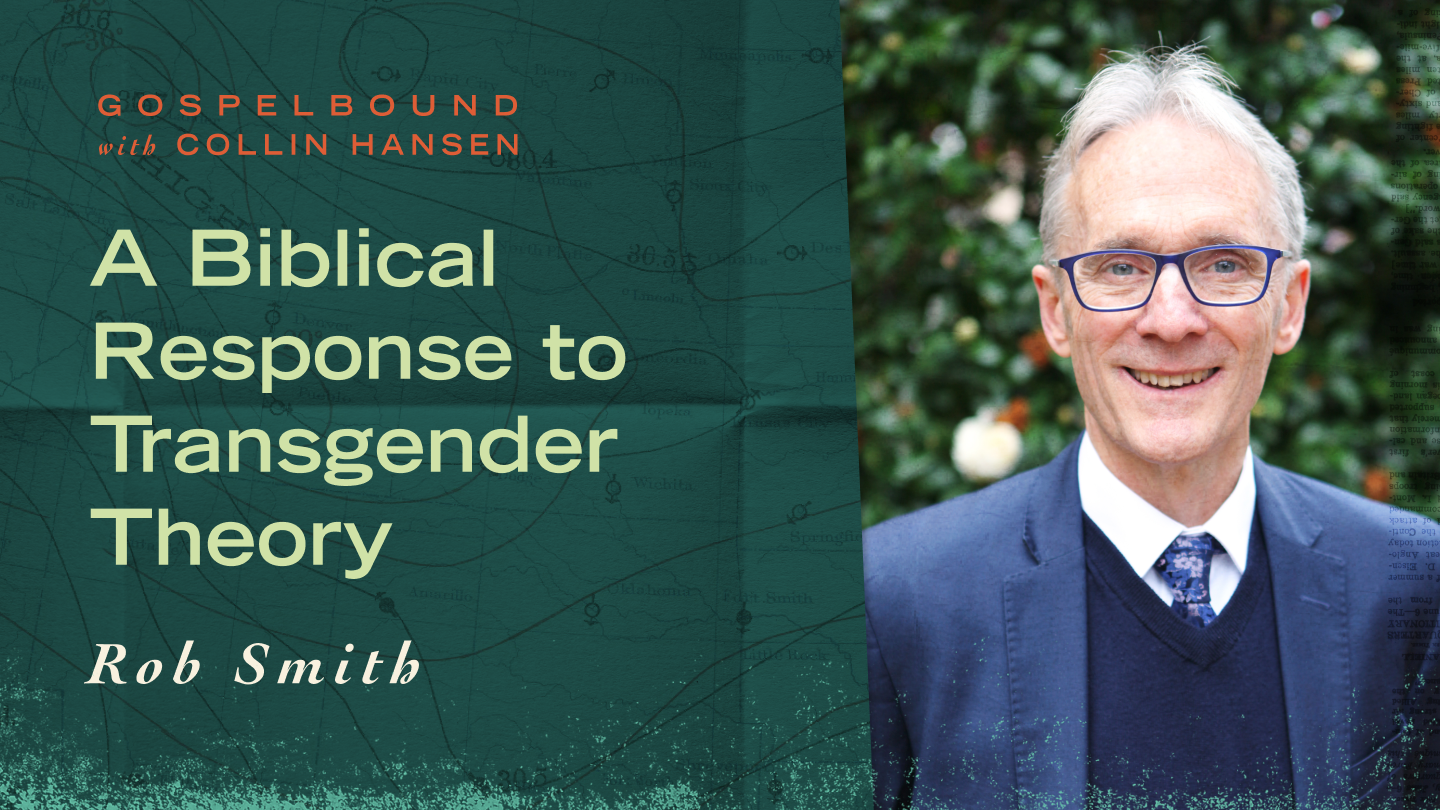
A Biblical Response to Transgender Theory

If gender is constructed, it can be deconstructed. If we built it, we can tear it down.

Now you know why some activists have been so determined to convince us that gender is something we assign, rather than something we receive. If we assign it, then we can reassign it as we wish. We don’t receive our bodies. We can remake our bodies.

No doubt you’ve observed the rise of transgender theory in Western culture. It’s the denial that the sexed body reveals and determines the gendered self. That’s the helpful summary we find in the excellent new book The Body God Gives: A Biblical Response to Transgender Theory, written by Robert Smith. This new book gives you a little bit of everything. He breaks down the arguments of gender theorists. He guides readers on a who’s who of philosophers who built the intellectual foundations of the secular West: Descartes, Rousseau, Kant, Marx, Wittgenstein, Freud, Sartre, Derrida, Foucault.

And he concludes with biblical argumentation to show us nobody is born in the wrong body. He writes, “God’s desire for my gender is revealed by the design of my body.” I appreciate the way he harmonizes the biblical story from Genesis to Revelation: “Our present task is to work with the grain of creation toward the goal of new creation.”

Robert joined me on Gospelbound to talk transgender theory, how it spread, why it’s peaked, and where evangelicals need to go next.

 
What I'm Reading
Butler: The Untold Story of the Near Assassination of Donald Trump and the Fight for America's Heartland
Salena Zito

Journalist Zito’s first-hand account of last summer’s near-assassination of Donald Trump debuted in July at #1 on The New York Times bestseller list. But Zito’s up-close experience doesn’t add much to our understanding of that chaotic scene. Mostly we learn from Zito about her close personal relationship with Trump as documenter and defender of the conservative-populist coalition that propelled Trump in 2024 back into the White House.

Readers will recognize Zito’s framing of politics and media with what Wallace Stegner termed boomers vs. stickers. The stickers rooted in a place like Butler, Pennsylvania, resent how the boomers in big coastal cities make their lives worse and don’t bother trying to understand them. Zito is always willing to tell her media colleagues what she’s hearing from Heartland stickers about their affection and loyalty for Trump. But that dwindling cadre of mainstream media reporters won’t even look up from their phones as they share each other’s stories about the joy of the Kamala Harris campaign and the latest trumped-up scandal.

Working- and middle-class voters in America’s Heartland have propelled everyone from Franklin Roosevelt to Richard Nixon to Ronald Reagan to Bill Clinton to Barack Obama and now Donald Trump into power. They may be loyal to Trump now, but they’re not loyal to either political party. Just a few months after publication I wanted an update from Zito on this coalition’s reaction to Trump’s tariffs and the ongoing struggles to afford staple goods, with trade wars closing foreign markets for American-grown crops.

Aside from the political implications Zito’s book illuminates similar dynamics among American evangelicals, with populist instincts and widespread support for Trump. You could copy and paste almost the entire book, just changing a few names, and understand the dynamic among American evangelicals the last eight years. As goes American politics, so goes the church.

 
Desktop mobile image alt text