GOSPEL BOUND WITH COLLIN HANSEN
In This Week's Briefing

The key to sustaining a republic, the proper posture of an apologist, and the best of Presbyterians for evangelicals.

 
What I'm Seeing
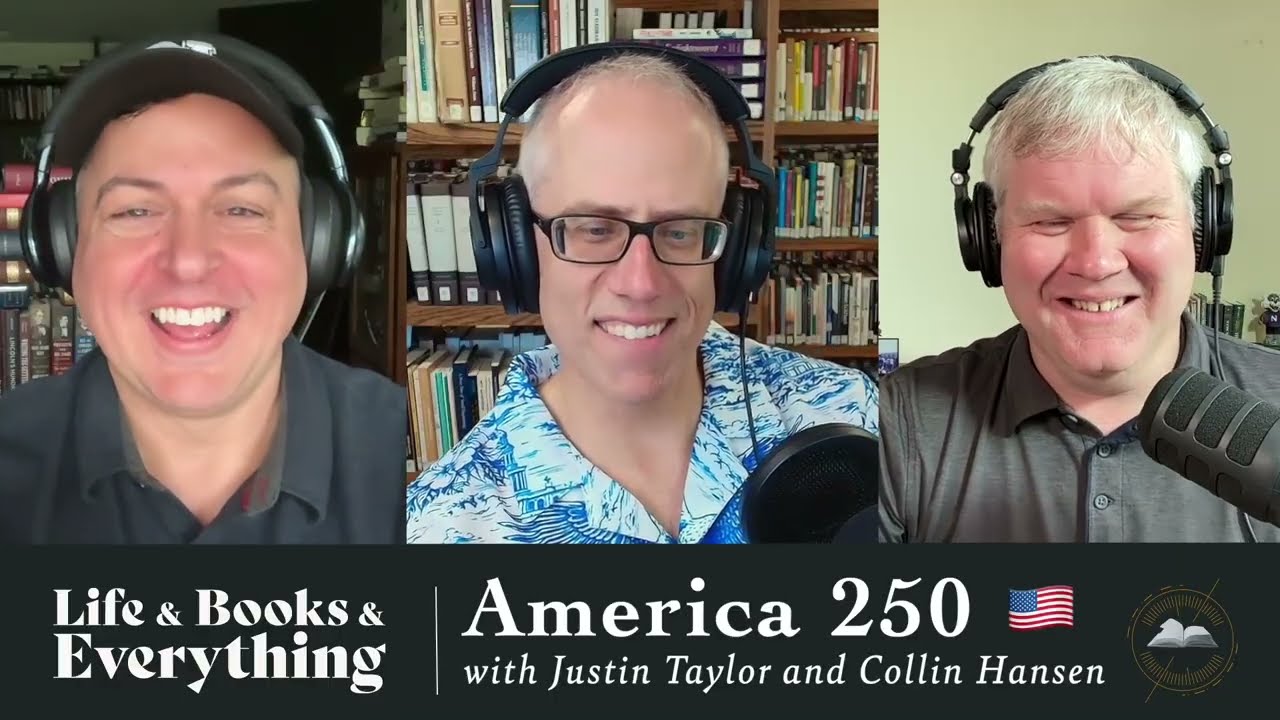
America 250 with Justin Taylor and Collin Hansen
Clearly Reformed

Sometimes you see best when looking through someone else’s eyes.

One of the great joys of parenting is seeing familiar experiences through the eyes of eager children you love more than life. Maybe you’ve already seen The Lord of the Rings trilogy four times. Try watching the Battle of Helm’s Deep through the fresh eyes of your 11-year-old son. I’ve attended dozens of football games at the University of Alabama. But before last fall I’d never seen Bryant-Denny Stadium through the eyes of someone who earned his PhD from the University of Cambridge. (See my picture below with Christoper Watkin. When I picked him up, he was already wearing a Crimson Tide hat. He walked miles in the heat to pick one up at a Walmart in Birmingham. Already a true fan.)

Maybe you’re sour on the United States as we approach our 250th birthday next week. I wouldn’t blame you. The vibes aren’t immaculate. But try seeing the country through the eyes of German soccer fan Freddy during his World Cup tour. See what he sees when walking into Buc-ee’s for the first time. Or sees the eagle fly around Jordan-Hare Stadium. Or just rolls past the storefronts in a “historic” Midwestern downtown. Let him teach you not to take your familiar for granted.

On a special recent episode of Life and Books and Everything, Kevin DeYoung asked Justin Taylor and me which five places we’d bring first-time visitors to give them a sense for our vast country. Bryant-Denny (and Watkin’s experience) made my list. I don’t know what’s more uniquely American than SEC football in its combination of violence and pageantry that appeals across races and classes. I rounded out my list with Yellowstone; Gettysburg; Cupertino, California; and the Sheep Meadow in Central Park, New York. Generating your own list could make for fun conversation with family and friends over the Fourth of July!

We have many motivations for evangelism. We’re commanded by Jesus to share the gospel. We love our neighbors who are dead in their transgressions and remain under the eternal judgment of God. But if you want to be renewed in your faith, share it with someone whose eyes are being opened by the Spirit to the gospel. You’ll recapture the wonder for yourself.

If you’re interested in the rest of the podcast, you’ll hear my top four book recommendations on the American Revolution; my case for the most overlooked Founding Father; my favorite patriotic song; and my personal Mount Rushmore of American presidents. (You’ll also get more South Dakota content than anyone has ever requested. Go easy on us in the Apple Podcast reviews.)

Kevin’s questions provoked some of my favorite reflections in recent memory. As we approach the 250th birthday, American remains exceptional. We Americans either left home or are descended from those who did, usually seeking a better life, and not always voluntarily. We’re all still shaped by that experience, for better or worse. We still believe that we can remake the world. As the atheist Thomas Paine wrote in his 1776 book Common Sense, “We have it in our power to begin the world over again.” This is our greatest strength and often our biggest flaw. We generate big innovations. And we make big mistakes.

Centuries removed, it’s hard to even realize how the American republic was unique in 1776. Or how it remained in imminent peril until 1865. Democracies have always fallen prey to demagoguery as they tear each other apart. Remember what Abraham Lincoln said in 1863 at Gettysburg:

It is rather for us to be here dedicated to the great task remaining before us, that from these honored dead we take increased devotion to that cause for which they gave the last full measure of devotion, that we here highly resolve that these dead shall not have died in vain, that this nation, under God, shall have a new birth of freedom, and that government of the people, by the people, for the people, shall not perish from the earth.

In ways new and old the republic remains under threat today. We can’t sustain this government, this freedom, when we act in our narrow, short-term, self-interest. Only virtue can sustain a free people. For two generations we have largely failed to reinforce what makes us Americans apart from a generic sense of “freedom to do what we want.” What freedom we enjoy must be used to love our neighbors and seek their good (Gal. 5:13).

How can we enjoy the fruit of this freedom apart from Christianity? Or at least a culture thoroughly infused with Christian influence?

I see no evidence we can. And neither did the Founders, whatever their varied beliefs.

I almost certainly won’t be around for America’s 300th. Will the United States? With a new birth of freedom, under God, I still believe it will.

COLLIN HANSEN
Editor in Chief
Desktop mobile image alt text
 
What I'm Hearing
The Peace and Contentment of Christian Faith
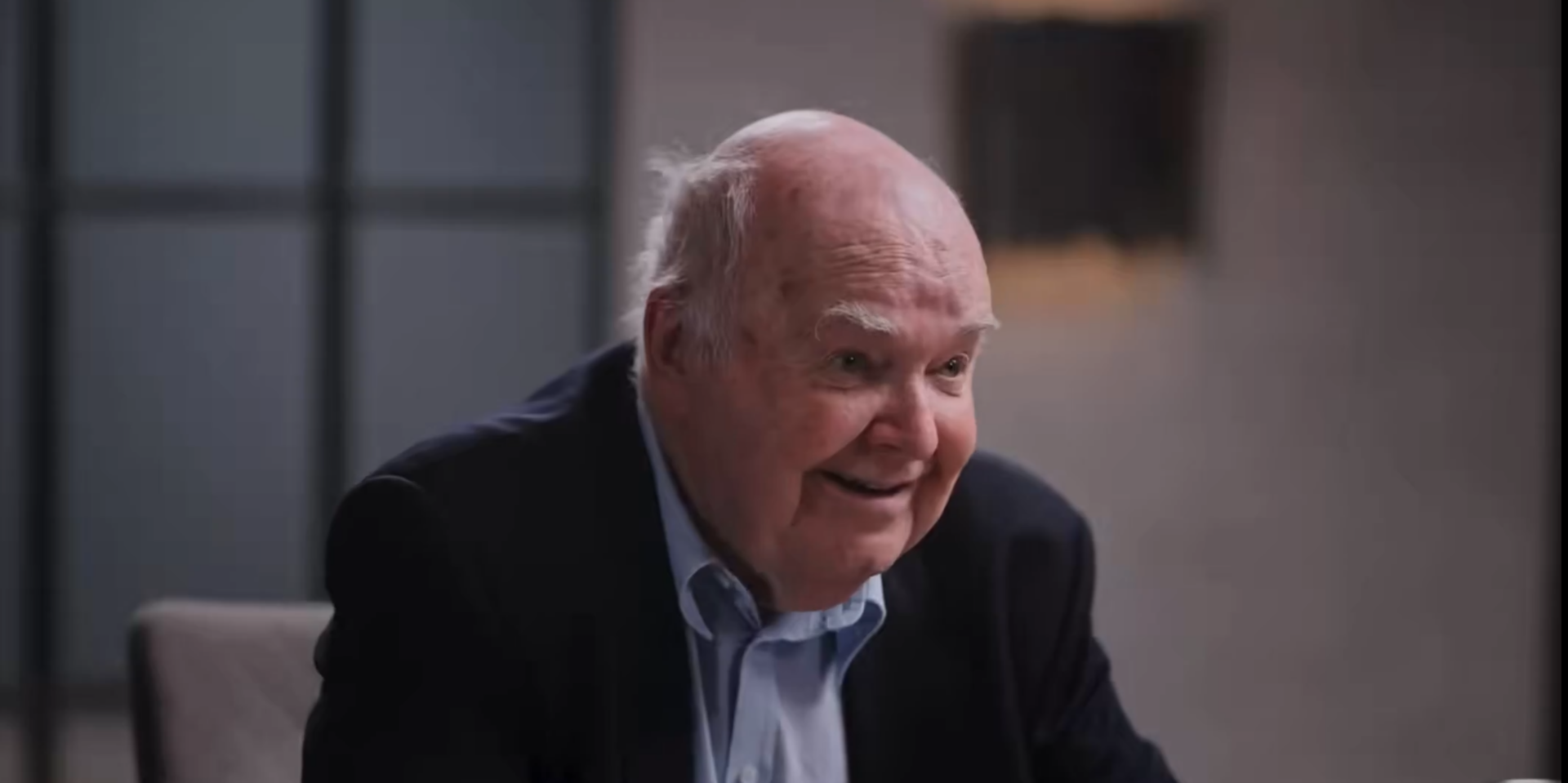
Steven Bartlett and John Lennox

Last year Steven Bartlett’s podcast The Diary of a CEO ranked second with Spotify in most popular podcasts around the world. Three months ago he interviewed apologist Wes Huff (more than 5 million views so far on YouTube). Then, two weeks ago, he spoke with another highly regarded apologist, John Lennox, with 2.3 million views already. (Wes joked how Bartlett labeled both of them “#1 Christianity expert” in gaudy YouTube branding.)

Anyone who’s heard Lennox understands the power of his intellect. Just look at his CV: doctorate in mathematics from Cambridge, doctor of philosophy from Oxford, doctor of science in mathematics from Cardiff, along with two master’s degrees from Cambridge and another in science from Surrey. Even the most confident atheists—from Richard Dawkins to Christopher Hitchens to Peter Singer—knew they were in for a tough night in debate with Lennox.

Barlett didn’t host Lennox just because he’s smart, however. Sure, Lennox is intelligent. But intelligence isn’t transferable. We can only watch Lennox and marvel. We can only gain a little knowledge when he teaches us about math. But we’ll never have his gifts. We’ll never match his stature.

Lennox does, however, possess something Bartlett evidently wants—something the rest of us want, too. Something all of us can have, in Christ.

Peace. Contentment. Joy.

Real interest in the good of another. Even love for strangers.

Just listen to or watch this viral clip from their interview. Bartlett recognizes what sets Lennox and Huff apart. He sees what makes these Christians different. They are settled. They are confident. They make compelling arguments, sure. But they are the argument that attracts Bartlett’s notice. They are 1 Peter 3:15 in action: “but in your hearts honor Christ the Lord as holy, always being prepared to make a defense to anyone who asks you for a reason for the hope that is in you; yet do it with gentleness and respect.”

Better than debate, the podcast format draws out the demeanor of the Christian apologist. As a result, we’re living in a golden age of opportunities for Christianity in public discourse. Millions are watching.

 
What I'm Reading
Reformed and Evangelical? Evangelical Influences on the Presbyterian Church in America
Richard Lints

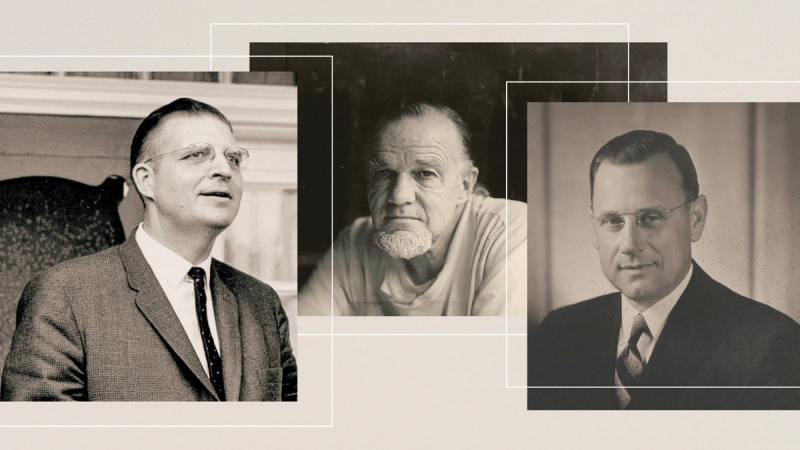
When I was researching Tim Keller’s spiritual and intellectual formation, I dove into the history of Westminster Theological Seminary, a flagship school for Reformed theology in the United States. Keller earned his doctor of ministry from Westminster and later taught there as successor to his mentor Edmund Clowney.

The first president of Westminster, Clowney led the school at the height of its influence on the broader evangelical movement, between the 1960s and 1980s. Clowney’s addresses at the Urbana missions conference of InterVarsity Christian Fellowship recruited evangelical students to Westminster. Depending on the era, however, Westminster has sometimes emphasized instead its Presbyterian and Reformed identity, its confessional distinctives from more pragmatic evangelicalism. Westminster engages, then retreats; re-engages, then retreats.

You could say the same for other Reformed institutions, such as the Presbyterian Church in America, which met this week in Louisville, Kentucky, for its General Assembly. As a disciple of Clowney, Keller contributed to the missional emphasis of the PCA as it expanded beyond its historic homeland of the American Southeast. Even when Keller was alive that effort was contested. His role in starting The Gospel Coalition with other evangelicals in 2005 didn’t sit well with some Presbyterians who put higher value on confessional purity than ecumenical collaboration for mission.

After Keller, who died in 2023, the PCA has been reconsidering its identity as an expansionist, missional denomination. During this transition, dozens of elders have left the PCA for the broader doctrinal waters of the Anglican Church in North America. Another group continues to flirt with and sometimes openly embrace theonomy and various iterations of Christian nationalism. Younger voices building online platforms have aligned behind the fraught Southern Presbyterian tradition and other anti-liberal, reactionary elements. Denominational leadership has swung back toward doctrinal emphasis.

Richard Lints, who developed the concept of theological vision, observes how the PCA’s expansion contributed to various regional tensions over evangelistic strategy, preaching styles, musical choices, and approaches to cultural and political engagement. One group wanted to focus on mission alongside other evangelicals in the post-Christendom culture across the global West. Another group wanted to emphasize PCA denominational, historical, confessional (and sometimes regional) distinctives even contrasted with other conservative Protestants.

Lints concludes by acknowledging negative outcomes with the missional approach:

This “turn to mission” has often come at the cost of a deep and rich theological center by which Protestants historically conceived of their common Protestant convictions. The loss of the theological center may appear to allow for a larger evangelical tent, while in fact becoming more nebulous and less theologically grounded. The “turn to mission” need not have this outcome, but the symbiotic relationship between historic Protestant traditions and modern American evangelicalism often pushes in this direction.

“Faithful contextualization” is what Lints commends to bridge the divide. So did his friend Keller. This kind of evangelism clarifies the offense of the gospel by clearing away cultural accretions to the message of Jesus.

The PCA at its best lends needed theological leadership and conviction to evangelicals. I don’t know what I’d do without the influence of Tim Keller, Ligon Duncan, Kevin DeYoung, and many others on my life and ministry. And I affirm even as a Baptist that the PCA can lead effectively when refusing to sacrifice its confessional integrity and precision while pursuing missional reach.

 
Next Week on Unseen Things

I’ll be back July 10 with reflections on the post-Christian Right, Scripture’s connections to Scripture, the secret to happiness, and puppet ministry as an unexpected clue to today’s opportunity in apologetics.

 
Desktop mobile image alt text