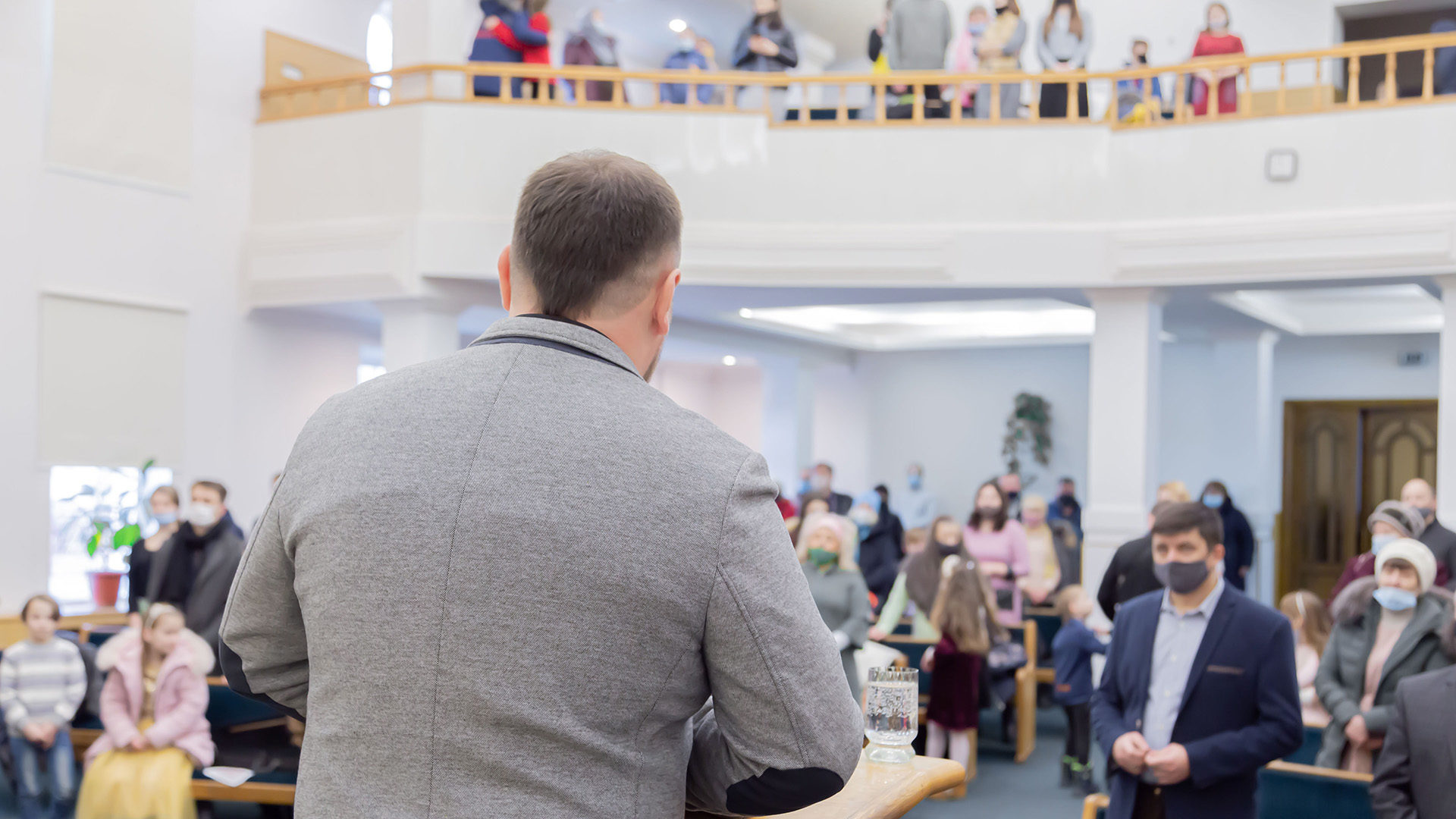
 |   | | | | You can often count on *Pastor* Mark Driscoll for saying the quiet part out loud: 
I podcast more often than I preach, so I guess this supposed shift in God’s plan after 20 centuries is good for my business. I’m also glad for God to catch up to our digital reality. We can reach way more people today via TikTok, YouTube, Instagram, Facebook, and X than we ever could via sermons in a stuffy old church building, or under a tent, or even in the open air. It’s a mystery why the Spirit waited through 2,000 years of boring, confusing, and sometimes even heretical sermons to bypass the pulpit. But I guess he finally just had enough of “useless motivational speakers.” Hey, my 10-year-old self felt the same way in the church pew. I would have devoured a good podcast instead of reheated Chicken Soup for the Soul. The timing for this comment is the assassination of Charlie Kirk, whose influence as a political activist, podcaster, and influencer dwarfed any pastor’s, including Driscoll, who filled in on Kirk’s show last week. I doubt any pastor would argue with that comparative claim. Pastors have every incentive today to shift their focus away from local congregations and preaching the full counsel of God’s Word in favor of expanding their digital audience through political and cultural commentary. I expect that shift to continue and possibly even accelerate after Kirk’s death as more pastors account for his influence on young adults. Driscoll has long been ahead of the curve in his sense for ministry and cultural trends. And while he might be the first person to put the point this way, he’s not the first pastor to act this way. To the extent that influencers, politicians, and podcasters preach the gospel, we rejoice! The Lord uses whomever he pleases. If he speaks through a donkey (Num. 22:28), then he can even speak through you and me to open eyes to the gospel. But pastors don’t live out their divine calling the same way podcasters build their audience. God calls pastors to preach the whose counsel of God, as Paul did among the Ephesians (Acts 20:27). The easiest way for podcasters to grow their brand is by flattering their own audience while deprecating an out group, the way politicians often do. When influencers don’t serve what their audiences want, the audiences wilts. Driscoll may be right that many pastors do the same, and become “useless motivational speakers.” Much more common in my experience, however, are pastors who “care for the church of God, which he obtained with his own blood” by teaching Christians to obey everything Jesus commanded (Acts 20:28, Matt. 28:20). That teaching is not always well received, even by professing Christians. Persisting in the face of threats from the the flock requires conviction and bravery. One thing that set Kirk apart was his willingness to debate hostile audiences on their own territory, often college campuses. Maybe more of us, including pastors, should follow in that example in the marketplace of ideas, even given the risks he braved. But in the aftermath of Kirk’s death we must also beware Paul’s warning to the Ephesians: “I know that after my departure fierce wolves will come in among you, not sparing the flock; and from among your own selves will arise men speaking twisted things, to draw away the disciples after them” (Acts 20:29-30). The gospel convicts us of our sin so that in following Jesus we can love our neighbors, even our enemies. Wolves convict us of other people’s sin so that in following their influence we can judge our neighbors, especially our enemies. God’s call will never bypass preachers who preach the gospel. | | COLLIN HANSEN | | Editor in Chief | | |  |  | | How to Exit Tech | | When I see wiffle ball, and I hear the piano, I know we’re probably doing ok as a family. And when I turn on the news and see what Meta has been programming AI to engage in sensual conversations with children, I don’t feel bad about keeping my children away from social media. I wouldn’t have my job if not for social media. I’ve learned a lot. I’ve made and maintained many friends. I would miss social media if it were gone. But I’m glad I had a childhood without it. If we as parents could see what our children see on social media, we wouldn’t hesitate to keep them away. That’s why Clare Morell calls for a tech exit: “no smartphones, social media, tablets, or video games during childhood.” In her book The Tech Exit: A Practical Guide to Freeing Kids and Teens from Smartphones, Clare says we’ve reached a tipping point in the fight against letting smartphones take over childhood. The key is preserving something better, something more valuable: the chance for our children to contribute to their family and community, to enjoy the bonds of families and the boundaries of neighborhoods. Clare writes, “It turns out that screens cost children more than just their time; they also cause them to lose their appetite for things of the real world.” Morell is a fellow at the Ethics and Public Policy Center and director of its Technology and Human Flourishing Project. You met her husband earlier this year on Gospelbound as Caleb Morell wrote about the history of Capitol Hill Baptist Church. Listen to hear Clare’s five-point plan and her answer to some of the objections I posed, including what to do about parents who worry they won’t be able to reach their children during school shootings. | | | | |  |  | | 'A New Evangelical Coalition: Early Documents of the National Association of Evangelicals' Edited by Joel A. Carpenter | | On April 9, 1942, the last day of the first national conference of United Action Among Evangelicals in St. Louis, some 76,000 American soldiers surrendered to the Japanese in Bataan. It was the largest battlefield surrender in American history. At this low point in the Second World War, a few months after the surprise attack on Pearl Harbor, evangelicals worried about their country—with good reason. From an evangelical point of view, neither the military situation, nor the spiritual status of the country, looked encouraging. “Evangelical Christianity has suffered nothing but a series of defeats for decades,” said Harold John Ockenga, pastor of historic Park Street Church in Boston, on April 7 during the first day of the conference. “The programs of few major denominations today are controlled by evangelicals. Evangelical testimony has sometimes been reduced to the witness of individual churches. New England is an example of this sad situation. Evangelicals, one after another, have been so frozen out that the territory is almost a mission field.” It’s fascinating to look back on this period seeing how the war ended and religion in America continued to change. The war’s tide began to turn a few months later with naval victories at the Coral Sea and Midway. Ockenga played not only a major role in founding the National Association of Evangelicals from this 1942 meeting but also in leading Gordon-Conwell Theological Seminary, which has trained evangelical ministers such as Tim Keller, Kevin DeYoung, and Mark Dever since 1969. Since working for TGC in 2010 I’ve often visited New England for church conferences. Unlike in 1942, evangelical church planters have lately thrived across the region, especially in Boston. The 77th meeting of the Evangelical Theological Society will be held in Boston this fall. Reading these founding documents of NAE I’m grateful for the work of these church leaders back in the war years. They were used by God to maintain evangelical witness in what remains the most secular region of the United States. They saw how evangelicals had receded before “floods of iniquity” that followed the end of the First World War. They knew that without revival of evangelical Christianity, the most important religious force in American history, capitalism and democracy could not function for the common good. When I consider the work we’re doing at TGC and The Keller Center for Cultural Apologetics, I see consistency with this past evangelical project. And I see hope for our own day, when it feels like we need that revival again. When God sends that revival, I think it will be when his people repent of our sins, including our self-sufficiency. We must repent of believing God cannot act in our day as he’s done in the past. And we must join in common cause as evangelical Christians to reach our neighbors with the hope of the gospel. The world waits to see our defense for the hope within us (1 Pet. 3:15). “If we are to guard our testimony and our purity,” Ockenga said, “our great need is not for something which is negative but something which is positive, something which will launch a program, something which will marshal the enthusiasm and the resources and the strength of the people of Christian conviction throughout America.” | | |
|