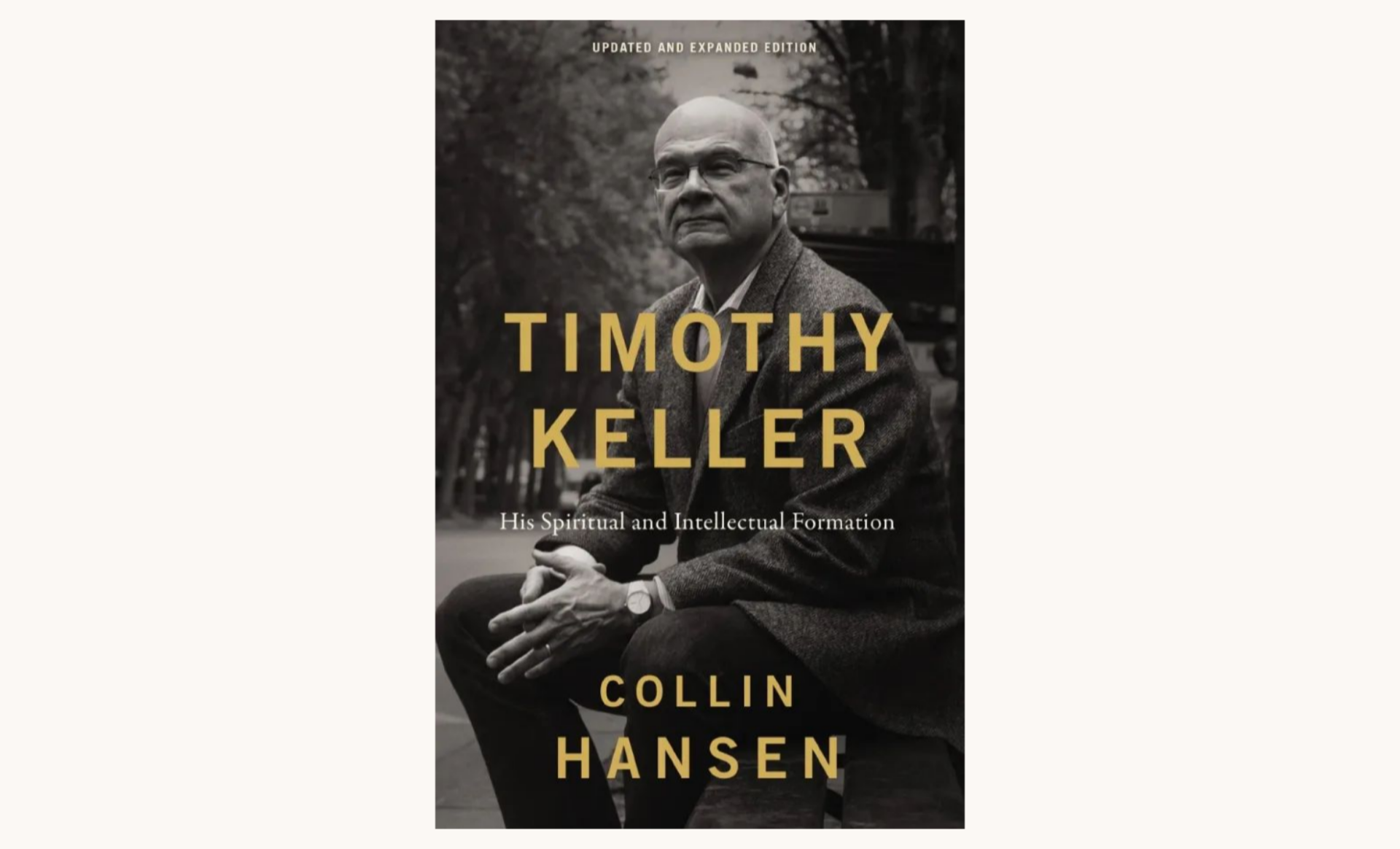
 |   | | | | Though he was a friend to multiple U.S. presidents, Tim Keller didn’t widely tout that fact. Unlike Billy Graham he didn’t kneel in prayer for a photo op on the White House lawn. He didn’t host presidential forums, as Rick Warren did in 2008. Nor did he campaign for a political party or partisan platform. At the height of his influence in 2016 as a pastor in New York City, both major party presidential candidates hailed from New York. Yet he spent that historic Election Day far out of the limelight in Birmingham, Alabama. He spoke at Samford University about faith and work, the pastoral vocation, and suffering. I don’t remember anyone even asking him about the election that would change so many lives and alter the course of American history. And yet when you review his teaching you find someone who may have written more deeply and insightfully about politics than any other contemporary pastor. Examples abound from Keller’s work, especially toward the end of his life. He began to write more frequently about political developments after he retired as the pastor of Redeemer Presbyterian Church in 2017. This shift triggered substantial criticism from 2018 until his death in 2023. But why? I wrote about Keller’s contested legacy in the updated and expanded paperback edition, which released this week. The 2016 election accelerated a shift from ideology to identity in American politics. By the 2024 election, that shift had nearly completed. Today the package of partisan platforms seems to matter hardly at all, compared to vibes and tribes. (For more, see James Davison Hunter’s Democracy and Solidarity.) Tim Keller wasn’t a pietist who avoided contact with unclean politics. But he was pious and expected other Christians to prioritize the example and sacrifice of Jesus Christ, no matter the severity of cultural opposition. He wrote for The New York Times in 2018 about handling rejection, “[Jesus] did it not by taking power but by coming to earth, losing glory and power, serving and dying on a cross. How did Jesus save? Not with a sword but with nails in his hands.” One of Keller’s pastoral role models was John Newton of the Clapham Sect. Newton lived just long enough to see the slave trade abolished in the British Empire. Keller, by contrast, died out of step with his political time. Not many American evangelicals today want to hear about losing glory and power. They feel like they’ve already lost too much. And they want back what they believe rightfully belongs to them—justice, solidarity, influence. Keller has sometimes been identified as relevant only for a recently past culture that favors or at least tolerates Christianity. Some critics allege that he lacked a sense of time, that he failed to discern how Western culture has decisively turned against Christianity in the last decade. But it’s exactly because Keller fell out of step with his own time that insights will endure for our time—not only today, but tomorrow. _________________________ Pick up a copy of the brand-new updated and expanded Timothy Keller: His Spiritual and Intellectual Formation in paperback from our TGC Store. | | COLLIN HANSEN | | Editor in Chief | | |  |  | | A Plan to Restore Trust in Science From a ‘Fringe Epidemiologist’ Ross Douthat with Jay Bhattacharya | | I returned this week from leading a pre-conference on apologetics for the Evangelical Free Church of America Theology Conference in the Chicago area. After the final panel, a young pastor asked me a perceptive question about public skepticism toward authority and how we as church leaders can restore trust. I couldn’t offer him a simple answer. Trust in nearly every major institution has been falling for decades. The internet spreads bad news as well as fake. AI can’t make it easier to know who and what to trust. And how can anyone not lose trust in our so-called elites through the release of the Epstein Files? What happens when the conspiracies turn out to be correct? We can oust one group of failed elites, but they’ll just be replaced by another. Someone needs to run the institutions and make the decisions. That’s why I tuned in to hear Ross Douthat talk on his Interesting Times podcast with Jay Bhattacharya, the new head of the National Institutes of Health under President Trump. Bhattacharya got the job for his criticism of leading health officials in the first Trump administration. With renewed outbreaks of measles due to lowered vaccine rates in recent years, we can see why he says, “March of 2020 represented a fundamental break that public health authorities had with the public.” Bhattacharya argues that despite the shutdowns, COVID-19 spread more broadly than commonly understood, meaning the fatality rate was lower than feared. But when he presented this research at the time, public policy didn’t change. Neither did the recommendations of public health officials. He told Douthat, “Instead, I faced, essentially, attacks on my character, an attempt to destroy my career, questions about the integrity of my work that were completely spurious.” After I listened to this interview, I thought of the young pastor I met outside Chicago. Where did Bhattacharya’s predecessors in authority go wrong? And where do we go wrong as leaders in churches? Bhattacharya tells the story of what happens with third-year medical students get their white coats. Suddenly, patients will tell them everything. And they want the doctor—maybe only 24 or 25 years old—to fix their problems. How, then, do these young, newly empowered authorities respond? They hate to admit when they don’t know the answer, so they answer with confidence beyond their knowledge and experience. That’s what happened with public health officials with the COVID-19 pandemic. The scared public looked to them for answers. So they gave answers, even though they didn’t yet know what they were dealing with. They didn’t know the mortality rate, because they didn’t know the means of spread. When their lockdown and distancing advice proved wrong, they made the problem worse by not changing their minds and policy recommendations. Public trust collapsed. So far it hasn’t recovered. Authority comes not from having all the answers but from the humility to keep learning as evidence mounts. For authorities in the church, desperate Christians often expect us to have all the answers and to fix their problems. We have the inerrant Bible and the unfailing promises of God at our disposal. But when the broken and suffering want to know why God allows their pain, and why God doesn’t answer their prayers in the ways they hoped, we don’t have all the answers. We can’t make all the problems go away. We can’t stake our trust on pretending to play God just because it will confer white-coat authority on our calling. | | | | |  |  | | Time to Say Goodbye David Brooks | | For 22 years at The New York Times, David Brooks was one of the most influential cultural and political observers in the United States. He was also one of the most widely criticized and mocked. Brooks didn’t end as he began. Especially during the Trump years he became more openly associated with the political left even as he converted to Christianity. He cranked out multiple bestselling books as his moral vision came into sharper focus. Last Friday he announced that he’s leaving the Times to write for The Atlantic and host a new podcast as he teaches at Yale University. What I appreciate most about Brooks is what many Times readers disliked about him. Hired to write about politics, Brooks took greater interest in the big ideas of culture. As a longtime conservative who sided with the partisan left, a Jew who became a Christian, and a deep thinker about cultural changes while tribal anger dominated the algorithm, Brooks doesn’t fit on any team. I’ve disagreed with him often, but unlike so many other party mouthpieces, Brooks keeps searching for goodness, truth, and beauty in our world subjected to futility due to sin (Rom. 8:20). His last Times column offers one of the most compelling cases for cultural apologetics I’ve ever read. He rightly observes our crisis of confidence since the end of the Cold War. Absent that unifying good vs. evil narrative, Americans have failed to discover any stable, new identity. Not since the start of the Civil War have Americans been so pessimistic about themselves, each other, and our country. I could have used this quote in Chicago this week to help explain the need for cultural apologetics: We told multiple generations to come up with their own individual values. This privatization of morality burdened people with a task they could not possibly do, leaving them morally inarticulate and unformed. It created a naked public square where there was no broad agreement about what was true, beautiful and good. Without shared standards of right and wrong, it’s impossible to settle disputes; it’s impossible to maintain social cohesion and trust. Every healthy society rests on some shared conception of the sacred—sacred heroes, sacred texts, sacred ideals—and when that goes away, anxiety, atomization and a slow descent toward barbarism are the natural results. Another Brooks quote helps explain why I’m trying to address our civilizational crisis by studying how Winston Churchill and C. S. Lewis handled their own, when all seemed lost to fascism and communism in the Second World War: The elements of our civilization that lift the spirit, nurture empathy and orient the soul now play a diminished role in national life: religious devotion, theology, literature, art, history, philosophy. Many educators decided that because Western powers spawned colonialism—and they did—students in the West should learn nothing about the lineage of their civilization and should thereby be rendered cultural orphans. Activists decided persuasion is a myth and that life is a ruthless power competition between oppressors and oppressed groups. As a result of technological progress and humanistic decay, life has become objectively better but subjectively worse. We have widened personal freedom but utterly failed to help people answer the question of what that freedom is for. In the gospel we find freedom to pursue the ends for which God created us: worship and love. Each Brooks book in the last decade took one step closer to Augustinian insights about how God orders our loves so we never confuse creation with Creator. When we worship him above all, we can love our neighbors, even our enemies. Any healthy society depends on it. Three cheers for Brooks in his ongoing efforts to renew humanism, to promote the study of the arts, civilization, history, literature, philosophy—the American project that delivered the profound theological insights of Lincoln’s Second Inaugural Address and King’s Letter from Birmingham Jail during our darkest moments. We’ll never solve the “tension between autonomy and belonging, equality and achievement, freedom and order, diversity and cohesion, security and exploration, tenderness and strength, intellect and passion.” But in Christ all things hold together (Col. 1:17). We have a story to share for a society desperate to find a happy ending. | | | |  | |
|