GOSPEL BOUND WITH COLLIN HANSEN
In This Week's Briefing

In this week’s briefing:

Why you must expect friction in church, when the Devil reached toward the sky, and how C. S. Lewis counseled us to live in the atomic age.

What I'm Seeing
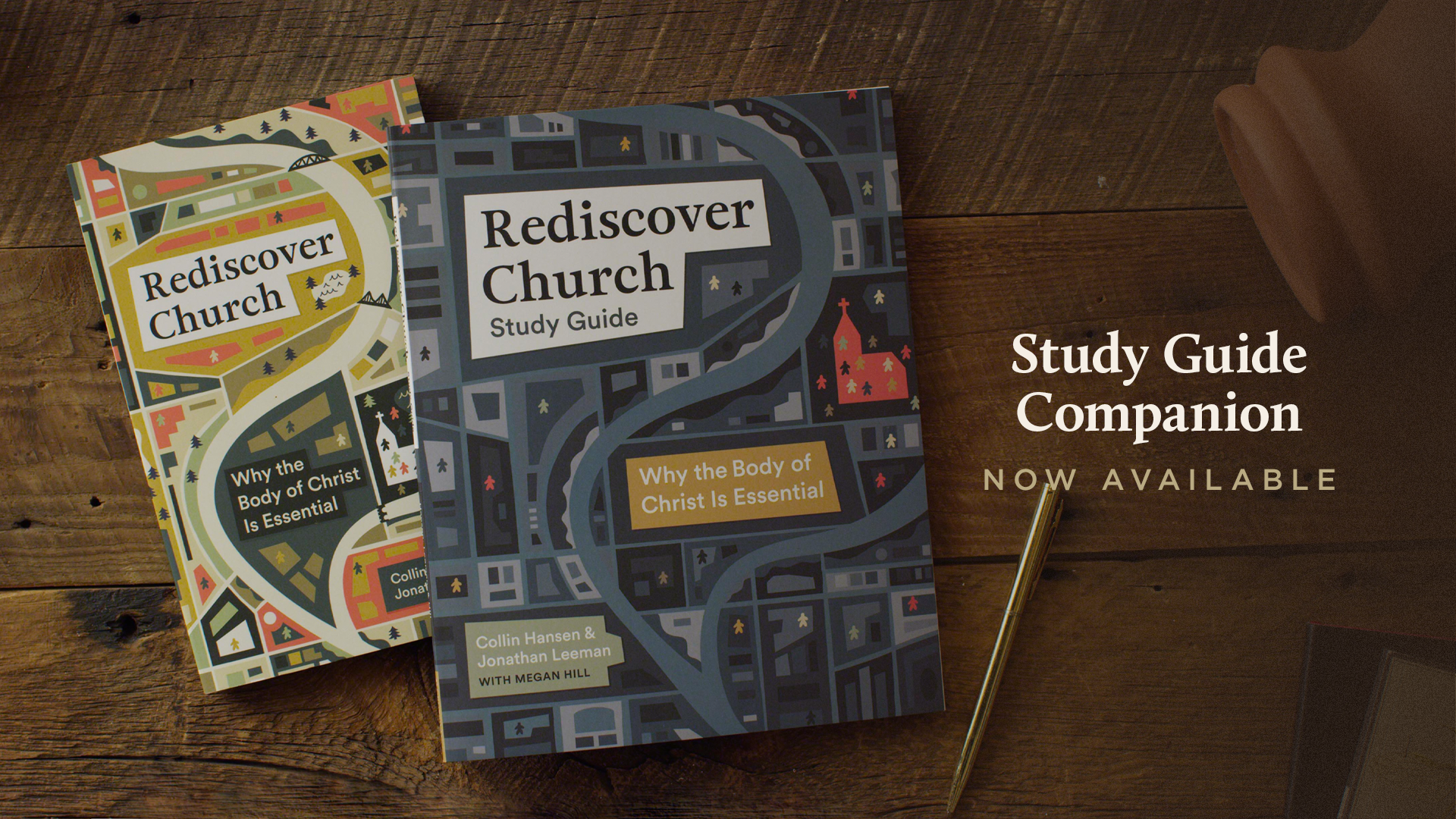
Rediscover Church and Study Guide
Collin Hansen and Jonathan Leeman

Last week I joined the saints at Faith Presbyterian Church in Birmingham, Alabama, in their gorgeous new sanctuary—double the previous size. We see hear so much about dechurching, it’s encouraging to see a congregation thriving and growing. And the success of this building project gave additional hope as my own church down the road relocates to construct larger facilities!

The church asked me to speak about my 2021 book Rediscover Church with Jonathan Leeman. As a congregation—across adult Sunday school classes—they’ve been studying this book, which Jonathan and I wrote during the COVID-19 shutdowns when we didn’t know how churches would bounce back. Recognizing the high stakes, Crossway, TGC, and 9Marks went all in on this collaboration. We gave away tens of thousands of copies. We released 20 strategic language translations. I’m so glad the book continues to sell and serve churches.

When I talk about church, I don’t just emphasize the benefits. At Faith, I began with why church is hard, why we sometimes encounter spiritual abuse, and why we’re so tempted to decamp for the church down the street or the playlist on our couch.

As anyone experienced in leadership can attest, you must expect friction in church. You should not expect to get along with everybody. You should not expect to share the same vision, the same priorities, the same strategies. These moments of friction test all of us. The church around the corner might be easier, at least for a time. Because in that church you’ll find the same thing: sinners redeemed by grace. And you yourself will still be a sinner redeemed by grace. No church this side of Jesus’s return can avoid every disagreement and disappointment.

Think of church as something like waves rolling over rocks. The waves are the church. You and other church members are the rocks. Day after day, year after year, the waves flow without ceasing. They rush over each rock and jostle the rocks against one another. From month to month, you probably won’t notice much difference. But over years, even decades, you’ll observe the change. As the waves crash and the rocks tumble over one another, their rough edges become smooth. They take on a polished glint in the sun. No two rocks emerge from the process with the same size or shape. But in its own way, each becomes beautiful.

We shouldn’t be surprised that Peter, the “rock” himself, picks up the imagery of stones to describe the church.

First, Peter wants us to see that the church is built on the foundation of Jesus. He applies Isaiah 28:16 to Jesus: “Behold, I am laying in Zion a stone, / a cornerstone chosen and precious, / and whoever believes in him will not be put to shame” (1 Pet. 2:6).

Second, he wants us to realize that God didn’t expect everyone to see Jesus as precious. For them, Peter cites Psalm 118:22 (“The stone that the builders rejected / has become the cornerstone”) and Isaiah 8:14 (“A stone of stumbling / and a rock of offense”) in 1 Peter 2:7–8.

Third, he wants us to see that Jesus has built something beautiful—us, the church: “As you come to him, a living stone rejected by men but in the sight of God chosen and precious, you yourselves like living stones are being built up as a spiritual house, to be a holy priesthood, to offer spiritual sacrifices acceptable to God through Jesus Christ” (1 Pet. 2:4–5).

You don’t need to understand every Old Testament allusion here to marvel at what God has done in the church. As we believe in Jesus, we have been saved from our sin by God and for God. We have not been saved by ourselves and for ourselves. God is building something much bigger than any of us. Peter can hardly contain his excitement:

But you are a chosen race, a royal priesthood, a holy nation, a people for his own possession, that you may proclaim the excellencies of him who called you out of darkness into his marvelous light. Once you were not a people, but now you are God’s people; once you had not received mercy, but now you have received mercy. (1 Pet. 2:9–10)

That’s a lot going on in our churches when the sound system doesn’t work. When the slides don’t follow the songs. When the kids are whining for food, Sister Bethel snored through the benediction, Brother Jim posted something dumb on Facebook, and the pastor put in a C+ effort on sermon prep because he had a funeral and three unexpected hospital visits. (Hey, at least he didn’t use AI to write it!)

When we rediscover church, we see beauty where the world sees only rocks.

COLLIN HANSEN
Editor in Chief
 
What I'm Hearing
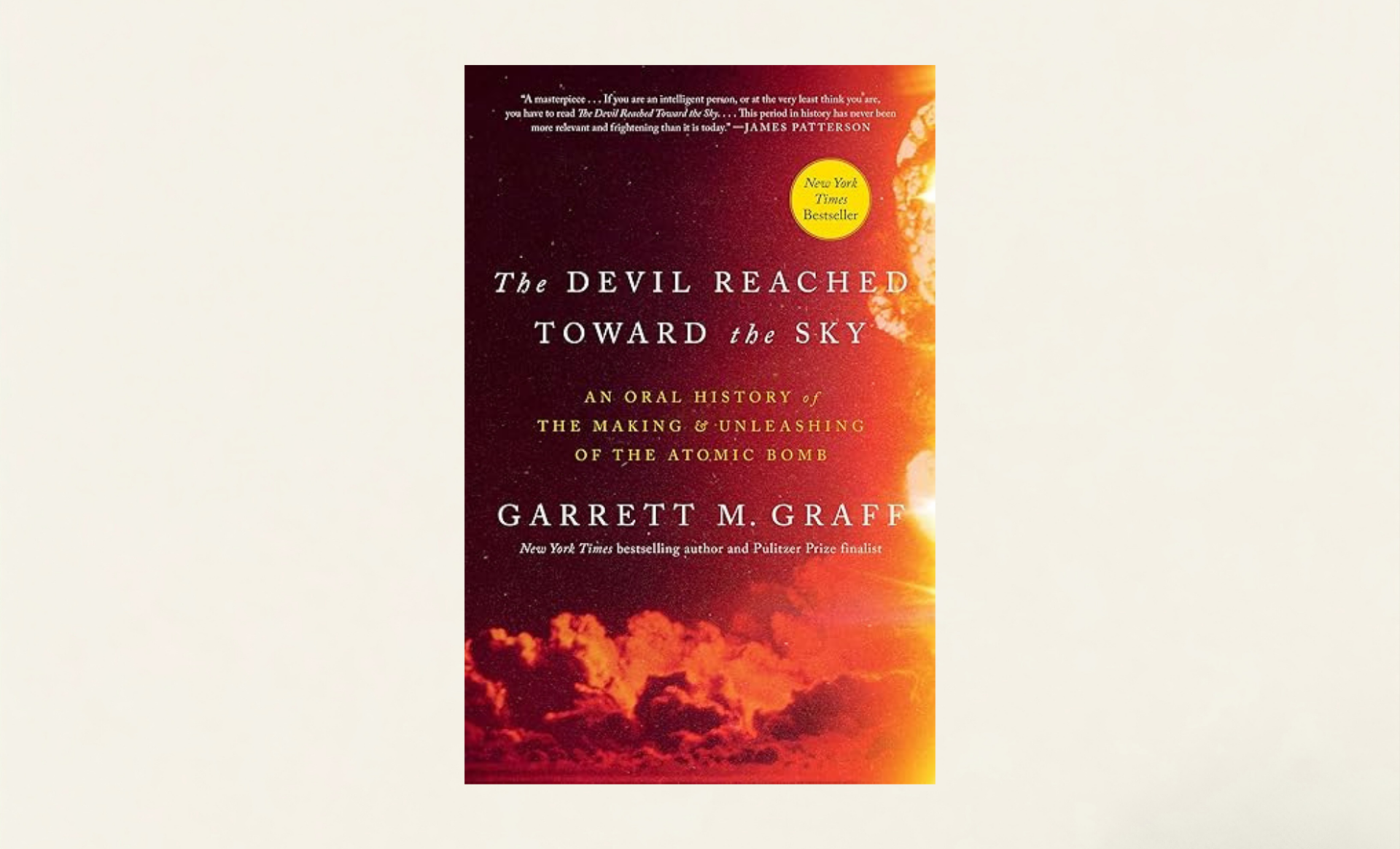
The Devil Reached Toward the Sky: An Oral History of the Making and Unleashing of the Atomic Bomb
Garrett M. Graff

I know Garrett Graff writes books. I’ve just never read any of them.

I’ve only heard them.

Every few weeks I’ll see the argument pop up again on social media: can you say you’ve read a book if you’ve listened to it? Maybe because I learn so much through hearing, I don’t actually have any problem answering yes. If you’ve heard a book, you’ve read it.

Let me qualify my affirmation, however. I only listen to certain kinds of books. I don’t listen for research purposes beyond needing to grab a few details or reaffirming my overall understanding of a subject. And I don’t track well while listening to most theological or biblical works. So I mostly stick to clear chronological narratives, especially novels and history. I keep my pen handy and lug around the biggest, most important books for my own research and writing.

But there’s another special category of audiobooks I prioritize. We’re seeing more books designed more for the audio format than for print. The first I knew and loved in this genre was Malcolm Gladwell’s The Bomber Mafia. It’s no surprise the veteran podcast host and audiobook reader Gladwell would pioneer this genre that integrates longform podcast techniques—such as historical broadcasts and interview audio—into a book presentation.

Graff takes this format to a whole new level, as he did with his 2020 bestselling oral history of 9/11, Only Plane in the Sky. Entire teams of voice actors read the different characters, an effect I especially appreciated in his 2024 oral history of D-Day, When the Sea Came Alive. I was less interested in the Manhattan Project than in those other historical watersheds. But Graff’s format and previous work sold me.

Readers/listeners will especially appreciate his slice of life on the bomb’s development and manufacture outside Los Alamos at such sites as Oak Ridge, Tennessee, where uranium was enriched.

But the audiobook’s chilling payoff comes in the juxtaposition of jubilation in the United States with devastation on the ground in Nagasaki and Hiroshima. Imagine the experience of the man who survived Hiroshima and then arrived on the train in time for the second bomb’s explosion in Nagasaki.

In Graff’s oral history we hear a more visceral take on the horrors of nuclear war than most of us picked up from a textbook or classroom lecture. Whether you believe the bomb was necessary to end the Second World War, we must never trick ourselves into imagining nuclear war as anything other than hell on earth.

 
What I'm Reading
On Living in an Atomic Age
C. S. Lewis

Just five months in 1945.

Imagine beginning to learn in April the extent of what would come to be known as the Holocaust, the deliberate extermination of 6 million Jews by Hitler’s Nazi Germany. Then imagine between August 6 and 9 learning that soon, for the first time, humans would become capable of destroying humanity itself—indeed, the entire world. Before August hardly anyone had even heard of atomic energy and its destructive powers, the deadly potential of what Albert Einstein had discovered in 1905 with E=mc².

C. S. Lewis was asked in 1948 to reflect “On Living in an Atomic Age.” His answer had hardly changed from the invasion of Poland in 1939 to the devastation of Nagasaki in 1945.

“Believe me, dear sir or madam,” Lewis wrote, “you and all whom you love were already sentenced to death before the atomic bomb was invented: and quite a high percentage of us were going to die in unpleasant ways.”

What’s a few extra billions of years shaved off the world’s lifespan by atomic warfare, Lewis reflected.

It’s still nothing compared to eternity.

Uncle Screwtape emerged from Lewis’s pen in 1941 at the low ebb of the British Empire’s tides. But the elder demon found no solace in such global devastation. As Lewis’s alter ego, Screwtape longed for return to the world before 1914. That’s when humanity preferred prosperity to reality. And prosperity lulls humanity into spiritual complacency.

Now, Lewis wrote in 1948, the atomic bomb capped off two world wars that unleashed more reality than humanity could stand. Big questions could not be avoided. Is there more to life than colliding atoms? If not, should we just commit suicide and end this miserable life on our own terms? Or maybe we should just eat, drink, and be merry because tomorrow we’re vaporized by a blast wave.

Some of the serious among us would prefer to demure on both options. Life isn’t hopeless, we insist. We can still enjoy this world. We can still strive for ideals. Why not fight back against the atomic logic? Why not sacrifice to preserve civilization? This is the spirit behind the Universal Declaration of Human Rights, issued by the United Nations—with no reference to God—on December 10, 1948.

Nonsense, Lewis warns. What is civilization? Who determines the ideals? Unless these standards for civilization come from outside and above that civilization, the standards have no authority. No United Nations, however powerful in triumph, can impose these ideals on the world. Lewis saw this through appealing delusion.

If we can’t live up to these self-generated ideals, what’s left for us? The atomic age forces the final issue on humanity: are we just “atoms in skulls”? Or maybe we are strangers in this world, spirits from another realm, living as colonists.

If we’re colonists, we represent a higher power. And we don’t need to despair or drink unto death. We are stewards who live by the law of another land. We’re not just trying to survive. Survival isn’t even in our power in an atomic age when humanity awaits extinction by our own hand at any moment. We can only live, so far at it depends on us, “by honourable and merciful means.”

The world had never suffered anything as awful as the war that ended in August 1945. But as far as anyone knew when the emperor of Japan surrendered, or when Lewis wrote in 1948, a nuclear war could be next—and worse.

Nothing has changed today, either.

Do we commit suicide? Drink ourselves to distraction? Trust in the ideals and authority of the United Nations?

Those are the options. Unless, Lewis suggests, we’re not just “atoms in skulls.”

Next week on Unseen Things:

What makes America unique, why I’m not elite, and why the New Atheists failed to disprove God.