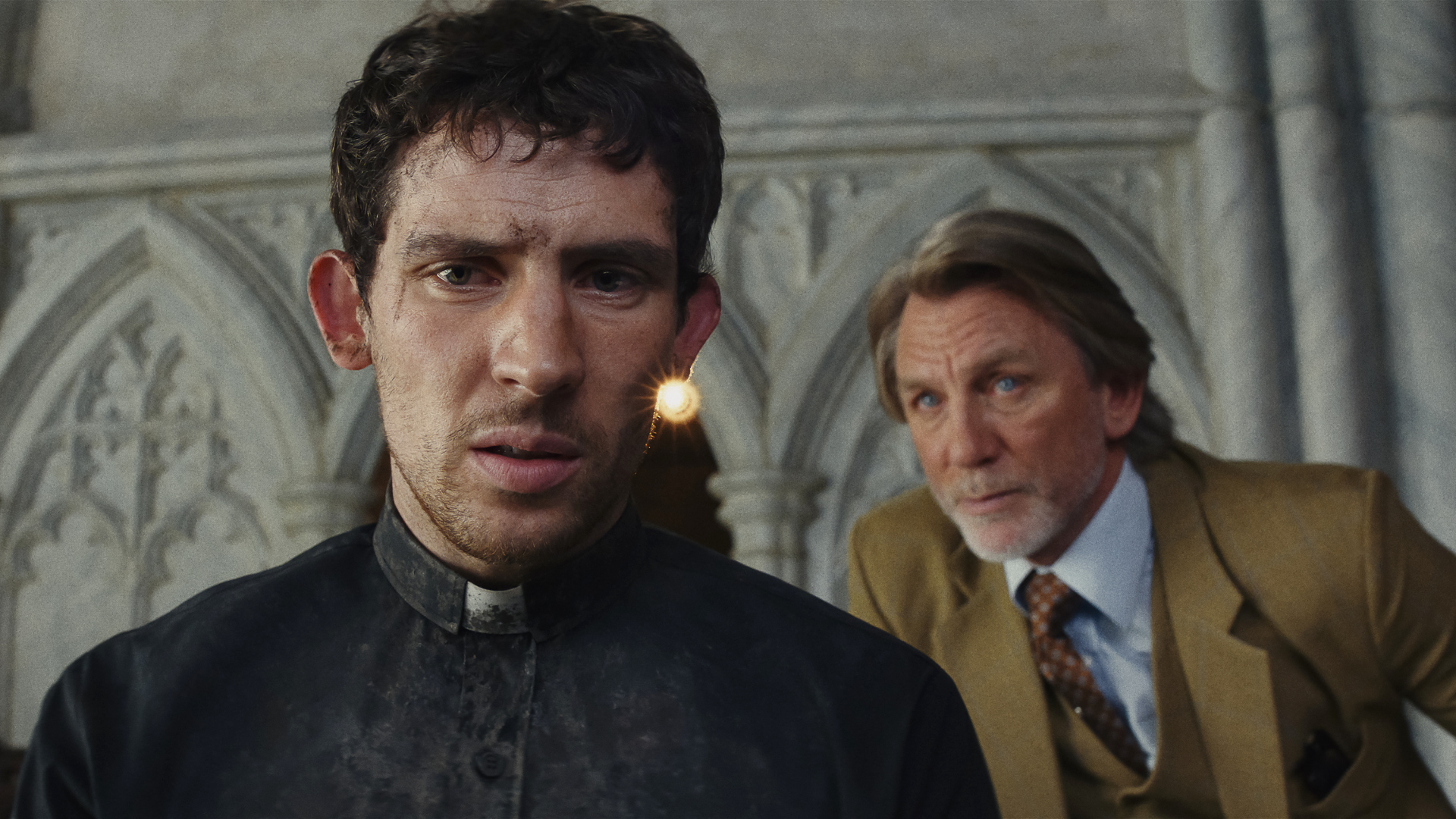
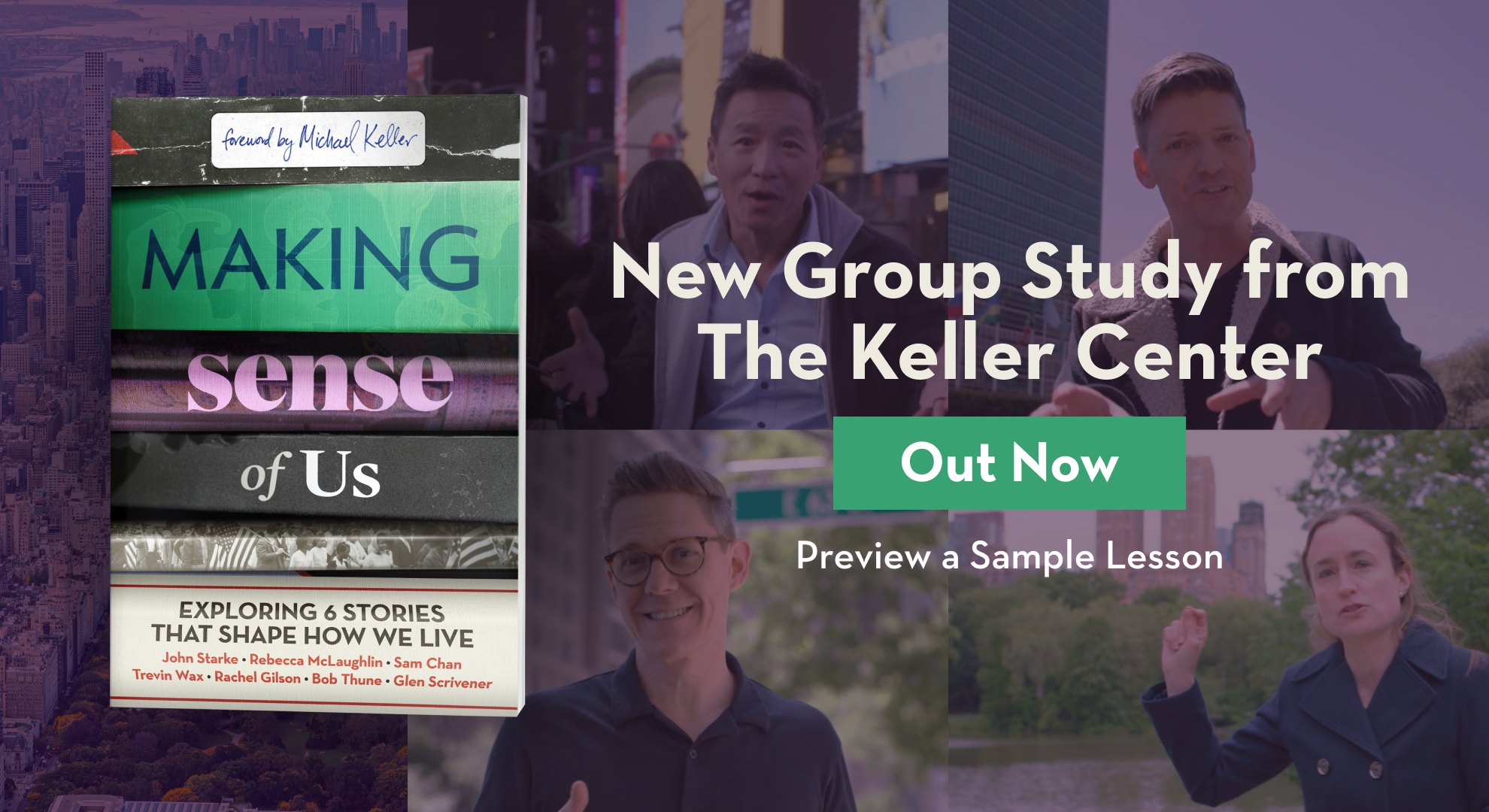
 |   | | | | Chances are the family Christmas debate this year might include the new Knives Out movie, Wake Up Dead Man, now streaming on Netflix. My colleague Brett McCracken offers a review that explores how director Rian Johnson’s exvangelical background shaped his film’s framing of two Christianities—one fights the world, the other loves the world. In a battle over the leadership of the meager parish Our Lady of Perpetual Fortitude, the younger Father Jud Duplenticy (Josh O’Connor) opens his arms in love, while Monsignor Jefferson Wicks (Josh Brolin) itches for a fight. Brett’s review captures why so many conservatives dismiss the film as an attack on Trump-voting Christians. Apart from the strange setting in a Catholic church, Monsignor Wicks marched straight out of central casting for what Hollywood imagines fundamentalist preachers say and do. The Knives Out series is known for its colorful, if caricatured, casts of characters. Choosing O’Connor for the role of Father Jud signals directorial favor for the softer side of faith. At least Father Jud delivers one of the most moving moments of pastoral care on film, when lonely Louise on the other end of the phone interrupts his frantic investigation by seeking prayer for her estranged and dying mother. But I don’t think the film’s central drama is about Republicans and Democrats, fighting vs. loving. SPOILERS AHEAD Johnson’s screenplay builds toward a contrast between Cy Draven (Daryl McCormack) and Martha Delacroix (Glenn Close) as the interpretive keys to the story. Monsignor Wicks controls the congregation with a lie about his late mother, the “harlot whore.” In a flashback we see young Delacroix mock her as the desperate mother seeks her hidden inheritance, the “Eve’s Apple” diamond. Shortly before Delacroix dies, Father Jud helps her confess her sin, repent of her cruelty, and receive forgiveness. Draven, the other heir to “Eve’s Apple” revealed to be the illegitimate son of Monsignor Wicks, doubles down on his sin. He plans to use the fortune to perpetuate his YouTube fraud. His political career failed after stoking every hatred. But with his late father’s staged resurrection, he’s finally found the key to fame and fortune. We last see him threatening to sue for his inheritance if Father Jud, now leading Our Lady of Perpetual Fortitude, unexpectedly comes into wealth. When Benoit Blanc (Daniel Craig) makes his grand entrance, he debates Father Jud about the power of story and its relationship to truth. Blanc enjoys Gothic architecture but dismisses Christianity as childish fairy tales. Father Jud counters that the costumes and music and drama point us to reality. Johnson’s Wake Up Dead Man, then, doesn’t give us two ways to live, Republican and Democrat, but three. The movie offers a fascinating clash not only between sincerity and skepticism (two expressions of modernism between Blanc and Father Jud) but also cynicism (postmodernism). For Cy(nical), every story he posts to YouTube is manipulative. We don’t know what he believes. It doesn’t matter. It’s all for clicks. Add another exhibit to the growing museum of metamodernism. And you, the viewer, get to take the self-guided tour. Is Wake Up Dead Man just another Gen X kid’s grownup revenge on his youth group from 40 years ago? Or is it a sly story where sincerity defeats cynicism? Happy debating! And Merry Christmas! I’ll see you in 2026. | | COLLIN HANSEN | | Editor in Chief | | |  |  | | Top Theology Stories of 2025 | | In this annual tradition I’m joined again by Melissa Kruger as we recap the top theology stories from the last year and preview the year to come. In a sprawling 100-minute conversation we looked back on the interviews that stuck with us for months and the books that affected us most. Several Gospelbound conversations made an especially large impression on me, and when I look back on some memorable reads, one recent book stands above them all. When you watch or listen, I’d love to know your own reflections, highlights and lowlights from 2025. In my conversation with Melissa the section on AI stood out. Studying common uses of generative AI, we can see how we’re getting better and better at not needing each other. That’s just how technology functions, right? No one would go back to the time before the wheel. But when we look at new technology, we often emphasize the benefits without even considering the drawbacks. So when we hear Sam Altman of OpenAI say that he can’t imagine raising a child, we envision the benefits of asking a question in the middle of a sleepless night and getting suggestions on how to soothe a restless baby. But what are we losing when we ask a computer that question and not our parents, our neighbors, our siblings, our friends? What do we sacrifice in community for the sake of efficiency? My dad is probably the handiest person you could ever meet. And I am his son. Somehow. He’s helpful in talking me through how to fix things around the house and on my car. He’s also helpful when he visits me and fixes those problems himself. It’s one of the primary ways we stay connected. It’s how I experience his love as a father. But with the help of ChatGPT and YouTube, I could probably learn all this stuff myself. Maybe it would even be easier because I wouldn’t feel insecure about how I don’t measure up to my dad. But what would I lose by not asking my dad for help? AI poses questions about anthropology. Are we designed to not need each other? Are we designed for maximal efficiency? What’s in the pot at the end of the AI rainbow? More ease, more time . . . so I can what? Take a break from my screens so I can stare at more screens? AI will do my work so I’ll have more time watching movies made by AI and listen to music made by AI? From the earliest pages of Genesis we see that we’re made by God for each other and for work. Don’t fall for technology that makes false promises of deliverance from our nature. | | | | |  |  | | Editor’s Choice: The Best of 2025 | | Consider what’s changed in the last 20 years. Consider how you’ve changed in the last 20 years. And consider what never changes—the good news about Jesus Christ. The 20th anniversary year for The Gospel Coalition has been about reaffirming our foundations. Looking back to our cofounder Don Carson, we welcomed six inaugural fellows and two senior fellows at The Carson Center for Theological Renewal. Looking ahead, we anticipate how their collaboration will help us plumb the depths of God’s Word in cohorts, courses, commentaries, and beyond. As TGC celebrated what motivated our founders 20 years ago, the winning entry from our song and video contest uses stop-motion for a fresh take on the timeless basics: God, Sin, Jesus, Belief. Gospel people are singing people, in good times and bad, as we hear from seven gifted artists in our new anniversary EP, The Gospel Is. You’ll hear this consistent message of hope even in hardship from new TGC president Mark Vroegop, longtime pastor and author of the best-selling book Dark Clouds, Deep Mercy. As he often reminds our staff, TGC has always sought to renew and unify the contemporary church in the ancient gospel. We never try to replace the church. We try to support the church, as you’ll see in this annual list of TGC’s best essays, interviews, conference talks, and podcasts. Stay tuned for additional exciting projects in 2026, starting with the Making Sense of Us small-group curriculum, now available for preorder. It’s designed for evangelism and discipleship among young adults, featuring teaching from various sites around New York City by fellows of The Keller Center for Cultural Apologetics. Thank you for reading, listening, watching, and sharing in 2025. With God’s blessing, and if Jesus tarries, we’ll be supporting the church for another 20 years. Your generosity makes reaffirming our foundations, every podcast, every new book possible. Thank you for considering a year-end gift as we tell the same old gospel story in newly engaging ways. | | | | | | |
|