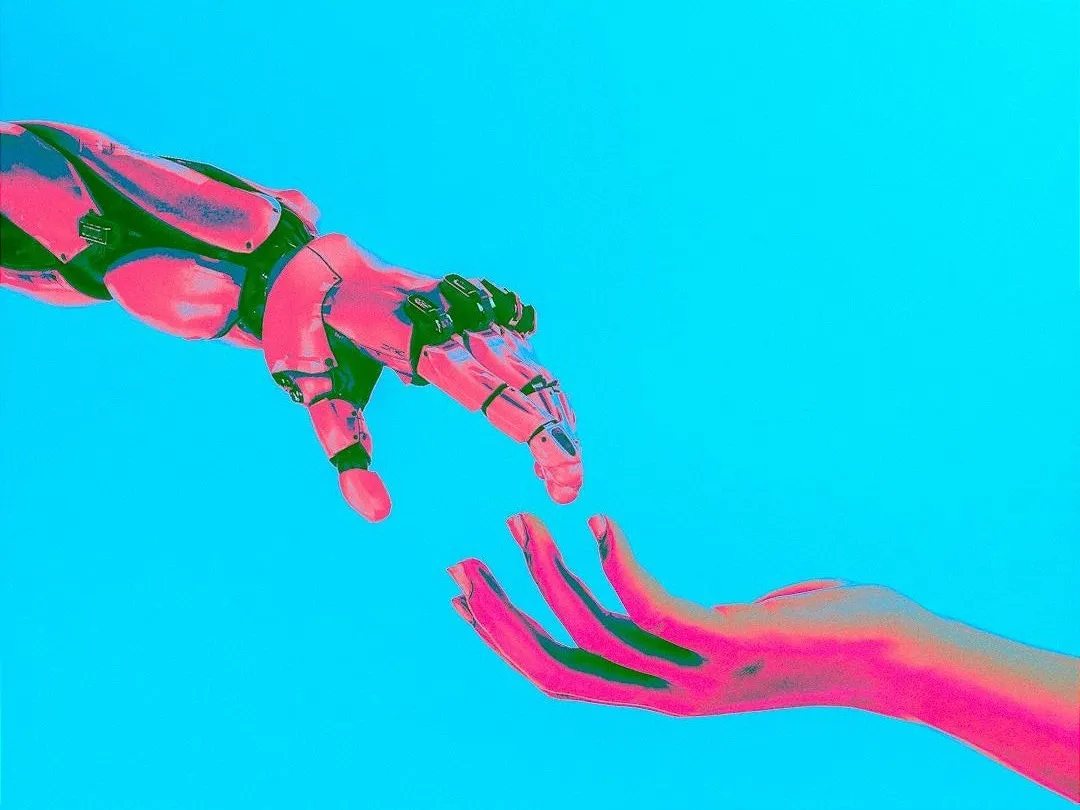
| I didn’t experience the school-age rite of passage by reading Ray Bradbury’s Fahrenheit 451. So I had to borrow my more erudite wife’s copy from seventh grade advanced English. But as I plucked her 1990s paperback copy from our library shelves, I stumbled over the cover: “The Classic Bestseller About Censorship—More Important Now Than Ever Before.” I’ll grant some exuberant marketing exaggeration. But a book about censorship? More important in the 1990s than any (by default, earlier) time? If I’d only read the CliffsNotes, maybe I’d nod along. This 1953 book is about a time when the government won’t need to censor books, because few will take any interest. I fear it’s a book about today. What’s been labeled artificial intelligence (AI) is neither artificial nor intelligent. It’s designed by us, and it feeds on us. Sometimes it preys on us, too. Nearly every day someone’s sharing with me another AI-generated viral case for why AI will change everything and why I better get on board before it’s too late. Before long it’s not hard to see that the boom case isn’t any different from the bust case. The doomers and the acclerationists are the same. If the accelerationists are right, then it doesn’t matter if for the moment I’m one step ahead of the last in the pack. Before long AI will catch up and eat me, too. When this is the positive case for AI, who needs a doomsday scenario? I don’t doubt AI will change and even improve many things. You and I might even be cured from a deadly disease thanks to research advancements powered by AI. Fields from medicine to law to accounting to investing to marketing and just about everything in between will be disrupted. It’s not hard to see those changes looming. Indeed, they’re already happening, with CEOs scared to disclose how much money they’re saving through job cuts. Humans made with dignity in the image of God have a knack for eliminating the drudgery from their work. But humans under the curse of sin also have a knack for confusing drudgery with dignity. And that’s the point Bradbury is making in his novel, far ahead of its time. Not only did Bradbury anticipate the technology of interactive screens for home entertainment. He also understood the underlying philosophy of technologies that promise deliverance but deliver servitude. The firefighters who start fires are delivering humanity from the plague of books with their pointless abstractions. Books make us think about war and love, and who wants to think about such difficult subjects when The White Clown is about to come on the screen? Books make us think about our stewardship for the next generation, and who wants to think about that when you can just get abortions and schedule C-sections and send your children away to storage? Bradbury helps us see why the boom and bust cases for AI are the same. We’re told the many ways AI will save us from work so we can enjoy rest and recreation (usually today that means watching and creating interactive screens). That work includes writing, all the way from college entrance exams to marketing copy to personal emails to novels to legal briefs. But a world where no one’s writing means no one’s reading. AI is writing to be read by AI. The boom necessitates a bust. What begins as deliverance instead delivers servitude—a return to illiteracy. Among many memorable scenes in Fahrenheit 451, Fireman Montag begins to question his fire-starting work in the case of a woman who refuses to leave her books before they burn down her house. Montag’s boss, Captain Beatty, appeals to her “common sense.” He shouts, “None of those books agree with each other. You’ve been locked up here for years with a regular damned Tower of Babel. Snap out of it! The people in those books never lived. Come on now!” She won’t move. She opens her hand and reveals a match. The firemen flee. “Her quietness a condemnation,” she starts the fire herself. No matter what rest and recreation AI offers, we can’t give up on writing. Because when we give up on writing, we’ll have no need for reading. And when we stop reading, we’ll no longer be thinking about love and war and other big topics like how to make our world better for the next generation. Literacy is the house I’ll burn down in. |