GOSPEL BOUND WITH COLLIN HANSEN
What I'm Seeing
The Story of Iran’s Church in Two Sentences

I’m working on the top 10 theology stories since 2000 for an upcoming episode of Gospelbound. And if the Islamic Republic of Iran falls, I’ll need to change or at least update my list.

I won’t claim any insight on whether these protests will succeed (there’s a long history of failed uprisings) or whether the United States should get involved. I don’t know what kind of government might succeed the mullahs who have repressed their people since 1979 and exported terrorism across the Middle East. What I know is why many Iranians don’t accept the ayatollah’s rule—and it’s related to the reason the church has been among the world’s fastest growing during the last decade.

Ten years ago I ran into a friend working for a ministry to Iranians. From him I caught the first glimpse of what’s become a mighty movement of God in the nation of more than 90 million people. “Despite continued hostility from the late 1970s until now,” Mark Howard wrote in 2016, “Iranians have become the Muslim people most open to the gospel in the Middle East.”

Persecution isn’t always, or even usually, a means of church growth. But the perseverance of Christians in Iran—as their Shiite oppressors lose popular support amid prolonged economic hardship due to international isolation—has lent credibility to the gospel they teach. Persian history, which plays such a big role in the Old Testament (especially the return from exile), resists being completely subsumed to Islam and its Arab origins. Not to mention, Shiite succession and theology separate Iran from their far more numerous (up to 90 percent) Sunni co-religionists. There is no love lost between Iran and Saudi Arabia.

In short, the tight bonds of unity between theology, culture, and politics in Saudi Arabia don’t exist in Iran. Christianity, by contrast to Islam, doesn’t dictate one political system or erase Persian history in favor of an Arab export. Among protestors, some assert Persian identity against Islam. Others resent Islamic repression of modern values and freedom associated with the West. Christianity, as seen among the Persian diaspora, offers a hopeful, liberating alternative. Maybe the best example is Daniel Nayeri’s award-winning Everything Sad Is Untrue, a childhood memoir and tribute to his heroic mother. Braving family threats after her conversion to Christianity, she fled with her children to the United States. I often think of her when I read the words of Jesus from Matthew 10:37: “Whoever loves father or mother more than me is not worthy of me, and whoever loves son or daughter more than me is not worthy of me.”

As you read her story, remember to pray for the people of Iran.

COLLIN HANSEN
Editor in Chief
 
What I'm Hearing
What We Learn from the Black Church About the Culture War

Here in Birmingham, Alabama, I often teach about the civil rights movement as the most effective faith-based movement for social change in American history. We have a bitter heritage of violent segregation. But the same city produced many heroes of the struggle, the ordinary men and women (and especially children) who stared down the police dogs and fire hoses in their march for freedom.

Justin Giboney honors such heroes as pastor Fred Shuttlesworth—“the biblicist and actionist” who became namesake to our airport—and commends their example for today in an informative, provocative book, Don’t Let Nobody Turn You Around: How the Black Church’s Public Witness Leads Us Out of the Culture War (IVP). Justin is the cofounder and president of the AND Campaign. The endorsement of this book by Bob Roberts calls Justin a “strange mix of Tim Keller and Martin Luther King Jr. wrapped up in his own personality and voice.” High praise! I’m grateful he joined me on this episode of Gospelbound.

I’ve long been grateful to Justin and his integrity about the issues, which usually puts him sideways with partisans from both major political parties. He’s not centrist in the way we often think of politicians splitting the difference. He cares as much about the poor as he does the unborn, which means he doesn’t match either party platform. It’s rare to find such focus on the issues when vitriolic soundbites dominate our attention.

“I just want people to know that when people imply that being civil and being charitable is not effective, ask them to show you a more effective effort than the civil rights movement, which did just that,” Justin told me. “We have been fooled into thinking that these public temper tantrums where we insult people, tell them how stupid they are, tell them how racist they are, actually is an effective way to get things done. It’s not. And I hope this book, Don’t Let Nobody Turn You Around, shows us that going about it in a more Christ-like way is—number one, even if it wasn’t effective—right. But it’s still more effective than the other way of going about it, which is just short-sighted and may give us results immediately, but it’ll always fall apart or just turn us into monsters.”

If you care about your neighbors, and you don’t want politics to turn you into a monster, let Justin teach you about the example of the civil rights movement.

 
What I'm Reading
The Vanishing Church: How the Hollowing Out of Moderate Congregations Is Hurting Democracy, Faith, and Us
Ryan Burge

I don’t know how my grandparents voted. I don’t even know how to describe their political views. My dad and best friend don’t agree on just about anything in national politics. And growing up in a mainline church during the 1980s and ’90s, I couldn’t tell you anything I heard or learned about politicians or positions over 18 years in the same congregation with a series of Methodist preachers.

So that makes my upbringing a model for what data scientist Ryan Burge commends in his new book, The Vanishing Church. Ryan grew up in a conservative Southern Baptist church and attended a Christian college, but compared the doctrinal assurance he saw in others, he doubted. Nevertheless, at age 23, Ryan began to lead a mainline American Baptist congregation in Mount Vernon, Illinois, alongside his continued academic studies and teaching. The self-described “least successful Baptist pastor in history,” Ryan oversaw the church’s closure in 2024 after nearly 20 years of decline. Ryan writes, then, not only of the overall diminishing of moderate congregations—replaced by more uniformly evangelical churches—but of his own church vanishing.

If you’re younger than Ryan and me, you might not even remember much about mainline Protestantism, which dominated American religious life for much of the late-19th and 20th centuries. You might think of church as something for conservative people. Or if you still see mainline churches in your neighborhood, you might assume they’re liberal. When I went to college more than 25 years ago I was surprised to see every Methodist church flying the rainbow flag of gay pride on their signs. Yet as Ryan points out, in several mainline denominations, the majority still vote Republican. They’re just closer to politically balanced when compared to the much more numerous evangelical groupings.   

Ryan shows how the disappearance of moderate mainline congregations contributes to our cultural and political polarization. I agree that when we don’t know and see friends on the other side of issues, we’re more likely to demonize as we divide. But as a child of the mainline who made the opposite move as Ryan by becoming an evangelical in my teen years, I see two problems common to such laments. First, Ryan focuses on the conservative consolidation and growth of evangelical churches without sufficient attention to the sharp left turn among mainline leadership, especially with sexuality, starting in the 1960s. Methodist seminaries increasingly sent liberal pastors into moderate and conservative congregations, with the effect of pushing many conservatives into evangelical alternatives.

Second, Ryan worries that with fewer mainline churches, moderates who don’t see doctrine in black and white aren’t able to find a congregational home. They’re stuck with nothing or trying to bite their tongue in evangelical churches. I’ve seen that phenomenon in churches I’ve helped to lead, and over time that tension doesn’t usually hold. The moderates choose to leave rather than stay and disagree with their church on homosexuality or women in leadership.

When they leave, they don’t lack for alternatives. Options may be limited in some small towns and rural areas (they’re still abundant in the Midwestern farming communities where I grew up). But I don’t know many suburban or urban areas lacking in a variety of moderate, liberal, and proudly progressive mainline churches, sometimes with considerable endowments and beautiful, historic facilities in prime locations. Yet those churches, to the point of Ryan’s book, don’t seem to be thriving. In the American religious marketplace, there’s still too much supply for the lackluster demand. They haven’t yet vanished. But they’re headed that way.

Doubters should always be welcome to work through those questions in our churches. And I don’t think evangelical churches pushing partisan activism, especially now, are helping Christianity or culture. But I don’t wonder why mainline churches that show little confidence in Scripture, or even actively teach against it, are vanishing. I grew up that way, and until an unexpected encounter with Jesus at age 15, I couldn’t wait to leave Christianity behind. Not many from my elder millennial cohort stayed. They mostly vanished—unsure why they needed the church’s vague weekly reminders to be a nice and decent person.

In my mainline Methodist church, men sometimes promoted a ministry called Walk to Emmaus. Usually, these participants stood out for their evangelical spirituality, compared to the more common moralism we heard from the pulpit. While I couldn’t relate to them at the time, I still remember these men from my church by name. The original two unnamed men on their way to Emmaus saw Jesus vanish as soon as they recognized him. “Did not our hearts burn within us while he talked to us on the road,” they said to each other, “while he opened to us the Scriptures?” (Luke 24:32). I fail to see any other hope if we don’t want the church to vanish in our generation. Until Jesus returns, he’ll always be living and active among those who trust his Word—among those who, like the disciple Thomas, find healing from sin by touching the wounds of the risen Christ.

 
New From TGC
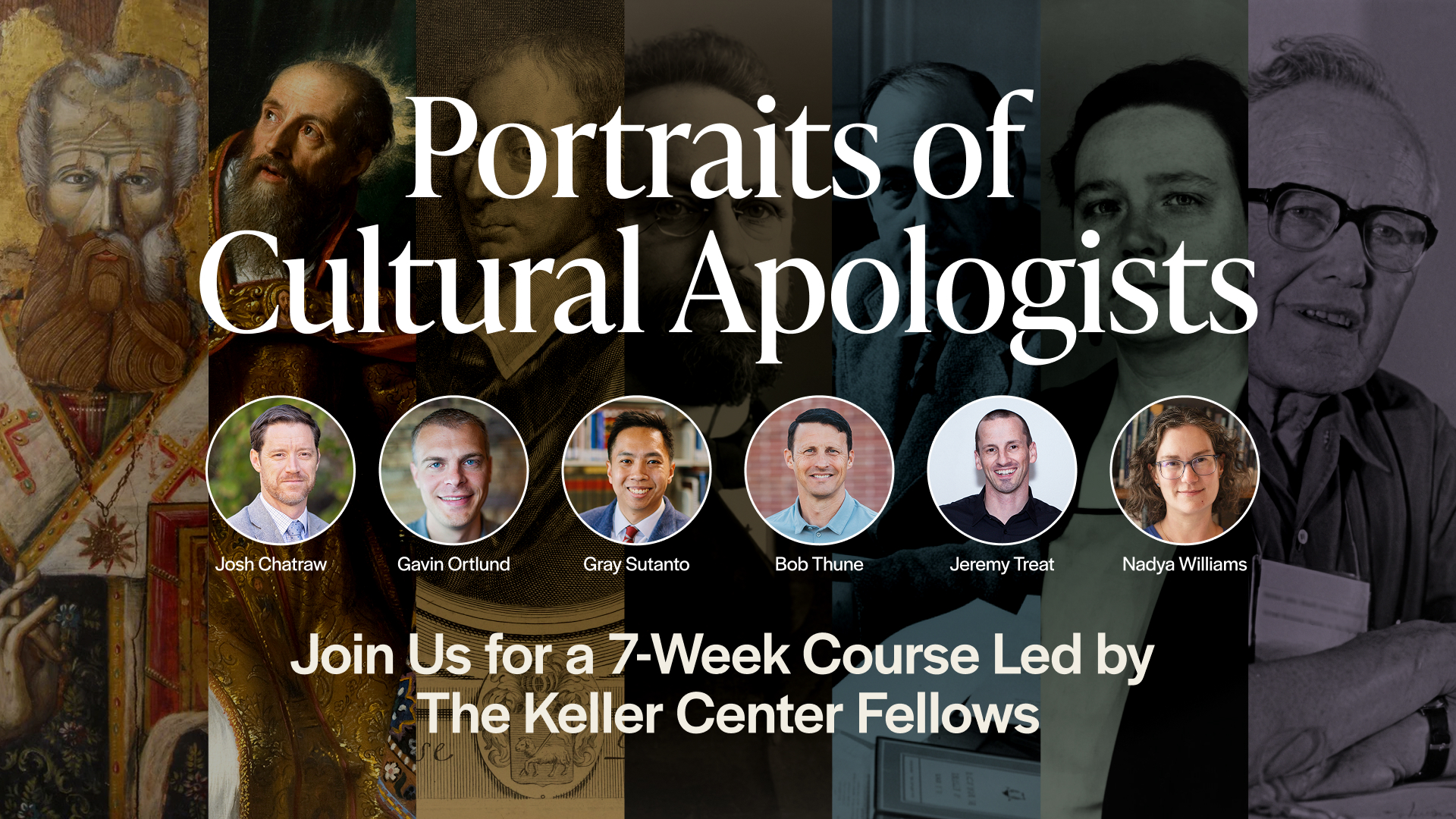
Portraits of a Cultural Apologist: What the Christian Tradition Teaches Us about Ministry Today (2026)
Joshua Chatraw • Gavin Ortlund • N. Gray Sutanto • Bob Thune • Jeremy Treat • Nadya Williams
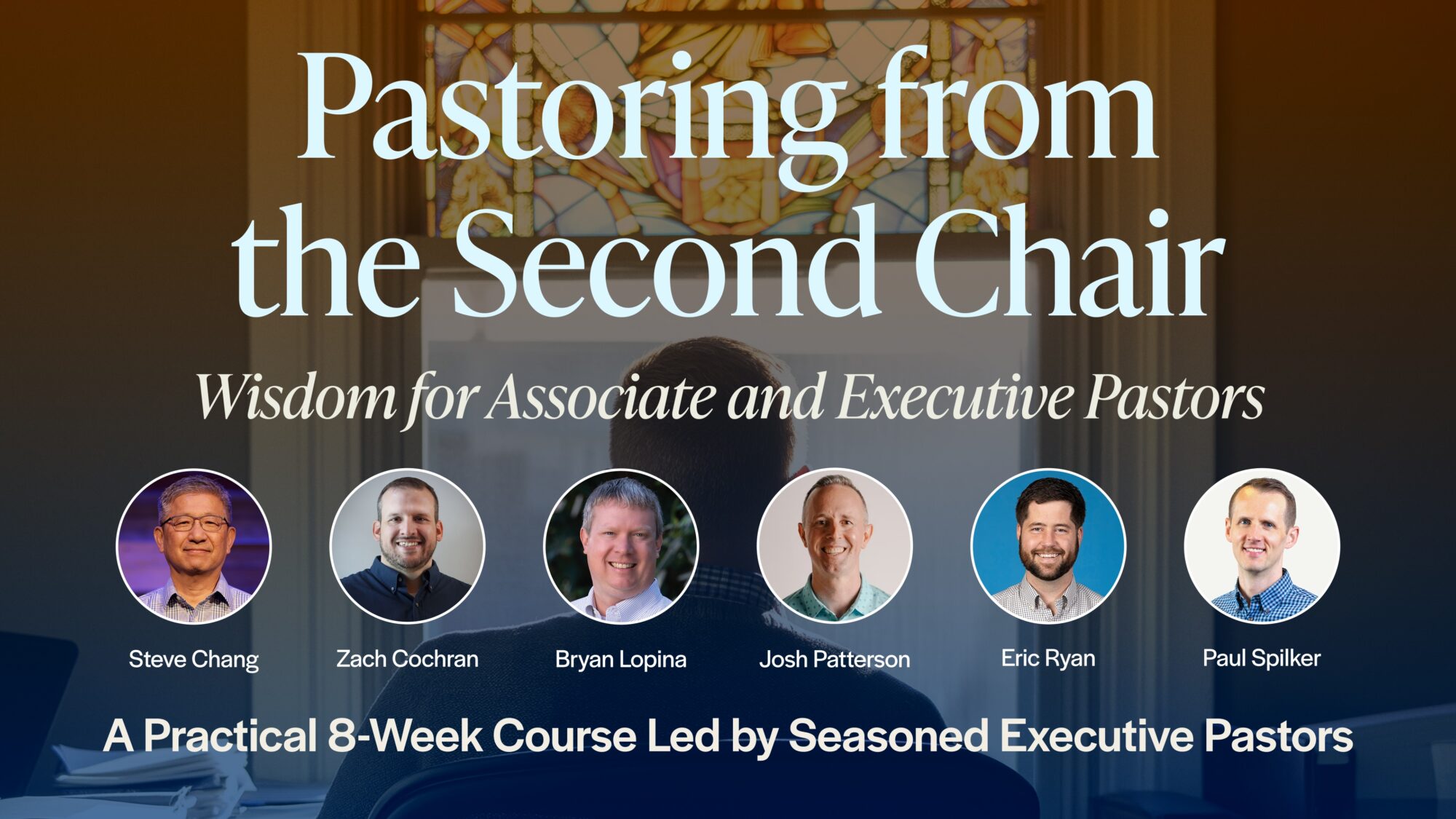
Pastoring from the Second Chair: Wisdom for Associate and Executive Pastors (2026)
Steve Chang • Zach Cochran • Bryan Lopina • Josh Patterson • Eric Ryan • Paul Spilker
 
Desktop mobile image alt text