 |   | | | | This fall I spent a memorable Friday afternoon with friends touring the National Gallery of Denmark, not far from the King’s Garden in central Copenhagen. The guide excitedly told us about a new exhibit on Surrealism, which she said has become popular again. No wonder. Surrealism emerged in Europe as a response to the First World War. I can see why it’s popular again, as the post-war consensus of the Second World War has finally crumbled with Russia’s invasion and ongoing war with Ukraine. I don’t consider myself an expert in Surrealism, so I read the curator’s explanations of André Breton and his Second Surrealist Manifesto from 1929. Here’s one of those summaries: Inspired by Freud’s psychoanalysis, the [Surrealists] see drives as a fundamental energy that moves human beings—not only towards life and creation but also towards dissolution and chaos. This is evident in their depictions of war, disintegrating bodies, and challenges to authority figures . . . . These artists allow themselves to be guided by their drives, which can lead to both the construction of new visions and the dismantling of existing norms. You see and even feel in the Surrealists’ work the destruction suffered by a generation whose world was destroyed by war. You can also see that they didn’t intend to put the world back together the way they inherited it. There was no going back to July 1914. Guided by Freud, they would be driven to reconstruct life however they pleased. Yes, you can see why Surrealism is popular again. We’re not going back to the world before the COVID global pandemic. Or Russia’s invasion of Ukraine. Or the terrorist attacks on Israel from Gaza. We’re navigating the future without a compass, only our drives. This is modern Western secularism, as I describe in a new commentary for Gospelbound. Considering how Protestantism has become a victim of its own success, I trace the historical progression of Christianity from dominant to assumed to dismissed. We’ve internalized Christianity, but we won’t acknowledge it. We’ve publicized Christianity, but we won’t credit it. We’ve abandoned Christianity, but we don’t know how to replace it. Yet today we see cracks in the edifice of secularism. Reality remains inconvenient to those who deny God. The two genders are different. Not every metaphysic produces the same results, or even desirable results. Neighbors often desire to defeat or conquer their neighbors. We need a way to tolerate differences but maintain social cohesion. We need a shared basis for justice while preserving freedoms of conscience, speech, and assembly. We need help restraining the drives that destroy ourselves and others. There must be a purpose for progress beyond the cycles of fashion and our feeling of superiority over the past. I see a future for the church in the most secular cities of the West. I heard about it from the leaders of TGC Norden during my Copenhagen visit. Something is changing. I see three tension points that will demand widespread social action. And Surrealism won’t have any answers. The West will need Christianity again. After you watch or listen to what I’ve identified as three threats to secularism, I’d love to know what you’re seeing. You’ll probably also pick up in my two factors that produce secularism a strong warning against attempts to impose Christian nationalism. | | COLLIN HANSEN | | Editor in Chief | | |  | 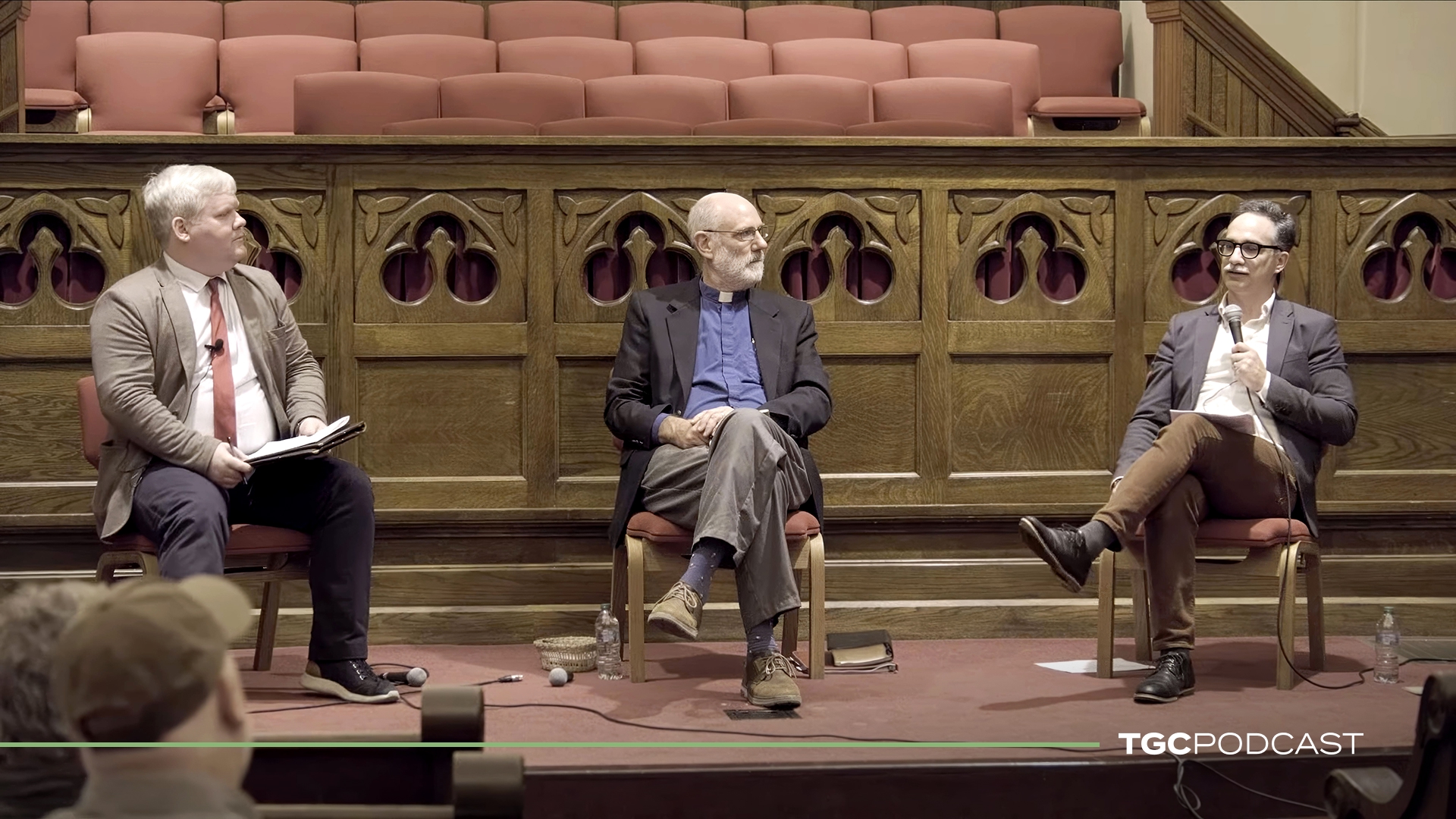 | | Assessing the Ministry of Tim Keller | | Tim Keller didn’t show many signs of worrying about his legacy. But even before he died in 2023, church leaders debated that legacy, whether his kingdom contributions had been overall for good or ill. Last month I was invited by Peter Leithart and the Theopolis Institute to discuss that legacy with one of Keller’s most widely read critics, James Wood. In promotion for the event, Theopolis described diverging views of Keller: “To many, he is a stalwart hero; to others, his effort to be winsome left him defenseless against the aggressive progressivism of the early twenty-first century.” In my opening remarks for the two-hour event, I emphasized how Keller urged the rising generation to remain steadfast in defending the historic, biblical gospel, while also developing new strategies for Christian ministry amid spreading secularism. Keller didn’t believe that in his lifetime he had solved the problem of how to foster spiritual revival in the post-Christendom West. He called for an urgent, unified effort—humble, thoughtful, and prayerful—to learn the conditions of secularism, and how they might become more favorable to saving faith. He left us to debate what ministry priorities and methods would best meet that growing challenge. As you listen and watch, ask God and consider what role you can play in sharing the truth, goodness, and beauty of the gospel. | | | | |  |  | | Pastoral Confessions: The Healing Path to Faithful Ministry Jamin Goggin | | I can’t remember the last time I read a book so convicting, with such intimate understanding of various challenges in pastoral ministry. Jamin Goggin is the kind of pastor I would trust with my confession, as he would point me toward forgiveness and healing in Christ. With more than 20 years in pastoral ministry, Jamin serves as an associate professor of Christian ministry and leadership at Talbot School of Theology, Biola University. He brings together experience, study, and his own confession to produce a relatable, redemptive book. More than a few ministers can probably relate to this scenario: The pastoral vocation is not for the faint of heart. It’s a vulnerable, and at times, perilous endeavor. After many long years of criticism, rejection, slander, and failure I came to understand the anger. To know it in my own heart. For a few years I pressed on, avoiding the deep hurt of ministry. Avoidance can masquerade as perseverance. By ignoring my pain and refusing its sadness, I covertly surrendered my heart to anger. With anger came resentment and bitterness. I worked hard to conceal it from others and from God. Hidden anger always leaks out of the heart. Often when least expected. Like from a pulpit on Sunday morning. My anger never showed up in the pulpit, but it did show up at home. I was irritable and impatient with my family. The playfulness of my children that once brought laughter, now incited frustration. I treated the idiosyncrasies of my wife’s personality as though they were major vices worthy of reproach. Our new puppy, who brought joy to the entire family, was a nuisance to me. My anger had nothing to do with my family, and it certainly wasn’t about my dog. It was about the church, but it was seeping out at home. Just hearing from another ministry veteran helped me identify the source of my frustrations. Once I could be honest about that source, and the resulting emotions, it was easier to stop reacting to circumstances. I could get proactive about seeking God’s help. Heeding Jamin’s counsel in Pastoral Confessions isn’t easy. Confessing sin rarely is. But a fresh wave of grace would flow through our churches if we will. “If we confess our sins, he is faithful and just to forgive us our sins and to cleanse us from all unrighteousness” (1 John 1:9). | | | |  | |
|