GOSPEL BOUND WITH COLLIN HANSEN
What I'm Seeing
AI’s Usefulness and Its Dangers for Preachers

The week you use AI to write your sermon will probably involve some kind of crisis: an unexpected death or funeral, a preacher fallen ill at the last minute, a critical email that requires a tense in-person meeting. You run out of time to prepare. You don’t have the necessary hours to study original languages and consult commentaries and develop illustrations. Your head is spinning; you can’t lock in to the mental work of an exegetical or homiletical outline. It’s 10 p.m. on Saturday night, and you can’t even think about how you’ll apply the passage to a congregation you know well.

Generative AI offers you a solution to what feels like an impossible problem. You need to preach the next morning. You need to sleep so you can handle the morning services, afternoon meeting with elders, and evening dinner with new members. And you have nothing to offer.

AI isn’t like the sermons you’ve been tempted to plagiarize. It’s too big of a risk to grab something from John Piper or Tim Keller. Odds are that someone might recognize the plagiarized sermon, or at least wonder why it doesn’t sound quite like you. But AI can sound like you. You can train AI on your past sermons, your notes, your previous queries. You can prompt the output with your own voice, as well as the collected wisdom of other preachers and scholars over the decades, even centuries. AI excels in mimicking the three-point sermon with introduction, thesis, points, sub-points, illustrations, even applications and conclusion. If you don’t like the first draft produced in seconds you can just prompt necessary revisions to complexity and tone.

And the congregation will love it. They’ll tell you afterward that you were especially clear this week. They loved the depth of insight. They felt like you were really speaking to them individually, like the Holy Spirit told you what they were thinking.

That’s why you’ll use AI to write your sermon the next week. But this time you won’t have the crises. You’ll just realize that it’s inefficient to spend so much time writing an inferior sermon. Why not spend that time instead visiting the sick, or praying, or meeting with your fellow leaders? Plus, the congregation likes the AI version of you better. You’re doing them a favor. Bonus, you get to spend more time with your family, hit the gym, play some golf. Who’s hurt? The ends justify the means. As long as you don’t give away that you’re not spending any time on your sermon, no one may even know what’s happening.

But here’s the problem. So often in ministry we’re tempted to confuse the product with the process. If pastoral ministry is primarily content delivery, then AI will often—maybe even usually—win. The product is better than what most of us can muster. But if pastoral ministry can’t be separated from the kind of man we’re becoming in the process, then AI-generated sermons rob us and our congregations of God’s intended blessing.

AI doesn’t just write sermons. AI can also put the preacher on screen. You don’t even need to stand up front to read what the computer wrote for you. What would your congregation lose without you? They can customize the voice, the hair, the dress, the volume—if they could agree. Maybe they’ll just stay at home where they can set all their own preferences. Each family member could craft their own sermons with their own AI preachers. Be careful what cutting corners says about your calling.

Yes, the product matters. But so does the process of who God is making you to be when you wrestle in prayerful study before the open Word. The key word comes in the apostle Paul’s exhortation to Timothy: “preach the word; be ready in season and out of season; reprove, rebuke, and exhort, with complete patience and teaching” (2 Tim. 4:2, emphasis added). Whatever AI is and becomes, it’s not patient. It can’t be patient. It’s not sentient.

We become patient as God shows patience to us in the process of study and writing, of appropriating the promises of God before we proclaim them to others. Then we offer them the product of “Logic on fire!” to borrow the famous phrase from Martyn Lloyd-Jones.

If you think you can beat AI in producing content, you probably can’t. You certainly can’t do so with the same efficiency. But if every sermon is a weekly climb up the mountain to behold the face of God, then your radiance will shine before others. They will “see your good works and give glory to your Father who is in heaven” (Matt. 5:16).

COLLIN HANSEN
Editor in Chief
 
What I'm Hearing
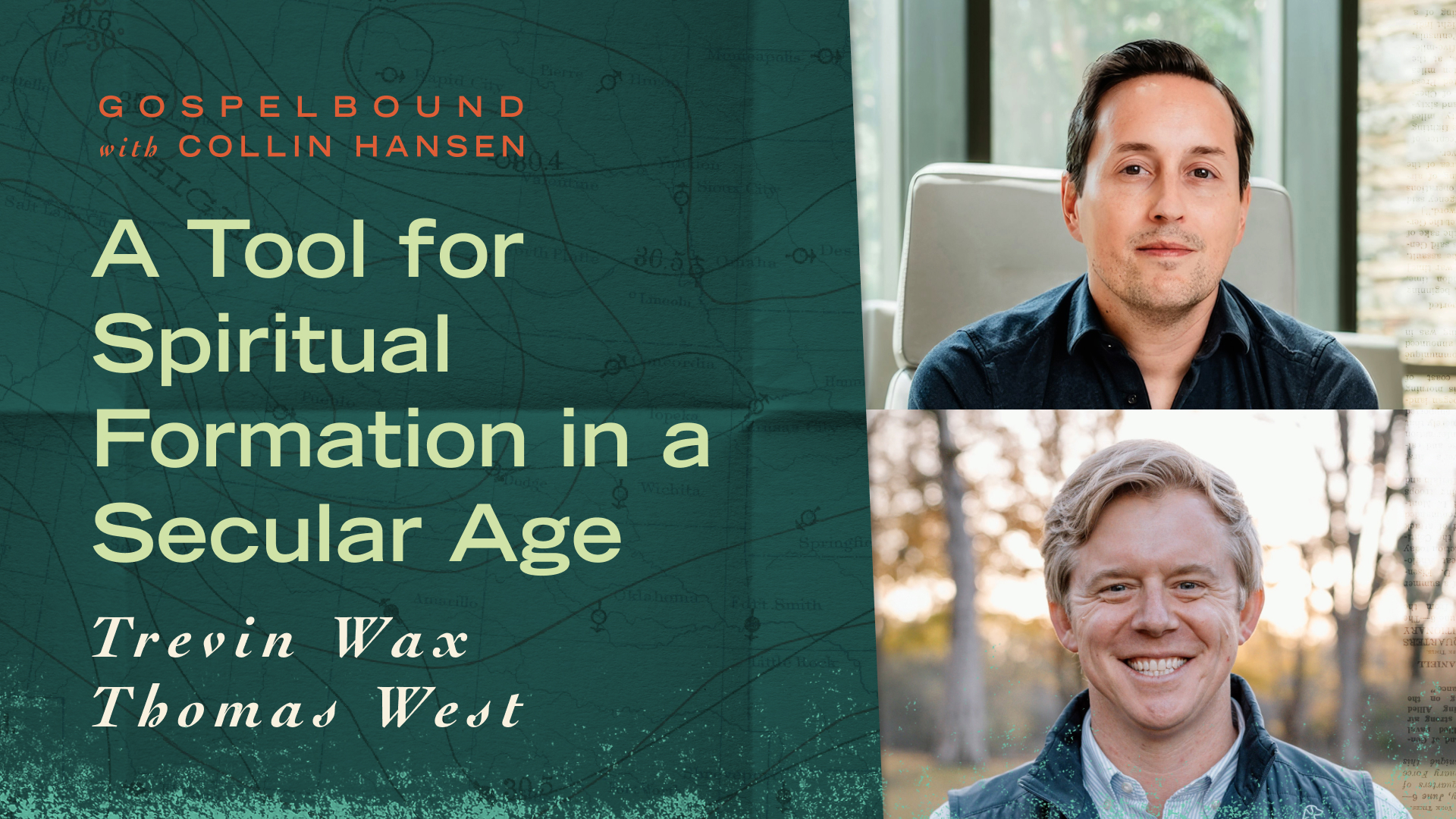
A Tool for Spiritual Formation in a Secular Age

At the end of the class on cultural apologetics I teach at Beeson Divinity School in Birmingham, Alabama, I assign a group exercise. The students need to compose 10 questions and answers from a modern-day catechism. Historically, catechisms have emerged during times of cultural transition and confrontation—such as our own time, in the aftermath of Christendom and the Enlightenment, awaiting whatever develops with post-liberalism.

So catechisms aren’t merely a relic of our past but a vital resource for the present that prepares us for the future. I’m delighted with how The New City Catechism, especially our devotional, still serves readers. My own church’s college ministry uses the devotional as a king of theological primer for their leaders. And when I hear from church leaders around the country and even the world, we’re in the midst of a catechesis revival that would please past generations. I remember J. I. Packer, when we worked together at Christianity Today, describe himself primary as a catechist (and an especially gifted one). He would have loved to see his hopes blossom in our day!

I’m delighted by a new volume, The Gospel Way Catechism: 50 Truths That Take on the World (Harvest House) that carries on that evangelical legacy. Tim Keller said, “We need a counter-catechism that explains, refutes, and re-narrates the world’s catechisms to Christians.” And that’s what my friends Trevin Wax and Thomas West have done in The Gospel Way Catechism. Trevin is a fellow at The Keller Center for Cultural Apologetics and serves as vice president of research and resource development at the North American Mission Board. Thomas is the pastor of Nashville First Baptist Church.

Trevin is TGC columnist and longtime friend through the whole rise of the young, restless, Reformed movement. I met Thomas in 2023 when he was planting a church in London. I appreciate how they both combine theological legacy with missiological urgency. You’ll hear in this interview how they see every generation of the church benefit from theological grounding.

 
What I'm Reading
The Twilight of Civilization
Jacques Maritain

By the start of the Second World War, Jacques Maritain had already established himself across the West as a formidable Catholic philosopher. With an eye toward how the past could preserve the future, Maritain helped the post-war world navigate unprecedented devastation through varied works, including contributions to the Universal Declaration of Human Rights in 1948.

Months before the European war officially began, Maritain took a dim view with what he anticipated as The Twilight of Civilization. Originally delivered as a lecture in Paris on February 8, 1939, then revised and updated for English translation during the war’s tide-turning year of 1942, The Twilight of Civilization blames the conflict on everyone from Marx to Nietzsche to Freud to Luther to Rousseau to Kierkegaard and even to Barth. (When revised, Maritain had to admit Barth acquitted himself nicely in the war against the Nazis.) He may have been wide of the mark on some of these other accusations, too, though he nailed the notorious German philosopher: “Nietzsche did not grasp that man has no choice except between two roads: the road to Calvary and the road to the slaughterhouse.” Worried over fascism as well as communism, Maritain identified how the death of God would lead to anything but peace: “For in the end, man without God cannot find unity except against another.”

During our troubled times, thankfully not yet to the peril endured by France after their 1940 surrender to the Germans, I’ve clung to Maritain’s conviction for how godly means matter in pursuit of righteous ends. We must not lose our souls in pursuit of saving our civilization, Maritain argued:

When we say that Christendom must be made anew by Christian means or perish completely; that there is no good to be expected from political undertakings of violence and regimentation, or of self-styled Christian totalitarianism, animated as they are by the very spirit from which civilization is suffering today; and that the persevering and patient action and the manifestation of the Christian spirit in the world are more important than the extremal apparatus of a Christian order: we are merely asserting that the principle of the primacy of the spiritual has to be respected even in the manner in which we shall work to bring it into existence; that the primacy of the spiritual, in other words, cannot be brought about by a negation of itself.

The universal declaration of 1948 excluded God and otherwise mostly neglected the resources of Christianity in rebuilding the West. But as Maritain warned before the war, dawn won’t break until Western civilization re-encounters the Lord. “After having put aside God in order to become self-sufficient, man loses his soul; he seeks himself in vain, turning the universe upside down in in his effort to find himself again,” Maritain said. “He finds only masks, and, behind those masks, death.”

Philosophers aren’t commonly known in our day as inspirational figures. But Maritain packs a punch of encouragement in this slim volume. We’re not in a desperate situation, Maritain said a year before his country fell before the Nazi aggressors—“on condition that men and nations who know the price of liberty determine upon a task of heroic renewal and rectification.”

As in his day of crisis, so in ours. It’s not too late in today’s twilight. Total darkness has not yet descended. There’s just one condition, according to Maritain:

If the Western democracies are not to be swept away, and a night of long centuries is not to come down upon civilization, it is on condition that they discover in its primitive purity their vital principle, which is justice and love, and whose source is of divine origin. It is on condition that they reconstruct their political philosophy and thus rediscover the sense of justice and heroism in the rediscovery of God.

Rediscover God and we’ll rediscover the heroism to pursue justice and love—no matter what darkness looms over our horizons.

 
Desktop mobile image alt text