TGC-icon-TCC-email-light

A newsletter of weekly mediations on biblical theology and curated resources from The Carson Center

February 18, 2026


Intro Heading

Genesis 3:15 “I will put enmity between you and the woman, and between your offspring and her offspring; he shall bruise your head, and you shall bruise his heel.””

Psalm 110:1 “The LORD says to my Lord: ‘Sit at my right hand, until I make your enemies your footstool.’”

Romans 16:20 “The God of peace will soon crush Satan under your feet.”

Genesis 46; Mark 16; Job 12; Romans 16

I hate snakes. All of them. I don’t like the way they look and feel. And their bite isn’t exactly a pleasure. There’s a reason Adam and Eve’s enemy is a serpent. As the Bible unfolds, we learn that the serpent is the devil (Rev. 20:2), the archnemesis of God’s people. This figure plays a critical role in the drama of redemption, often working behind the scenes. It’s not until the New Testament when we clearly see his schemes.

In Romans, Paul reaches back to Genesis 3 to explain a key element of the Christian life. According to Genesis 3:15, a godly king will vanquish the serpent at the very end of history, and all who trust in this redeemer will inherit his victory. This promise of redemption gains clarity as Israel’s history unfurls. The later prophets explicitly identify this individual as the “messiah” (see Isa 9:6; Micah 5:2). Psalm 110:1 builds on this messianic theme, strangely identifying an individual known as David’s “Lord,” whom Yahweh commands to “Sit at my right hand, until I make your enemies your footstool.”

The New Testament aligns the person of Christ with these Old Testament expectations. His life, death, and resurrection initially dealt the mortal blow to the serpent’s head. But the serpent “prowls around like a roaring lion, seeking someone to devour” (1 Pet. 5:8). Though Christ was victorious over the serpent, believers continue to wage war and extend Christ’s victory over all forms of spiritual hostility that stand against the church. This line of thinking explains why Paul alludes to two messianic texts from the Old Testament in 16:20 and applies them to believers. Through our union with Christ, his victory is our victory, and we participate in the fulfillment of Scripture. While it doesn’t seem like we are victorious over sin and the devil, we must hold fast to Paul’s promise that we have already achieved victory and will do so fully at our resurrection. – Ben Gladd 

Reflect: What are some examples of sin you’ve gradually defeated through Christ? What sins still need to be conquered?


Featured Content

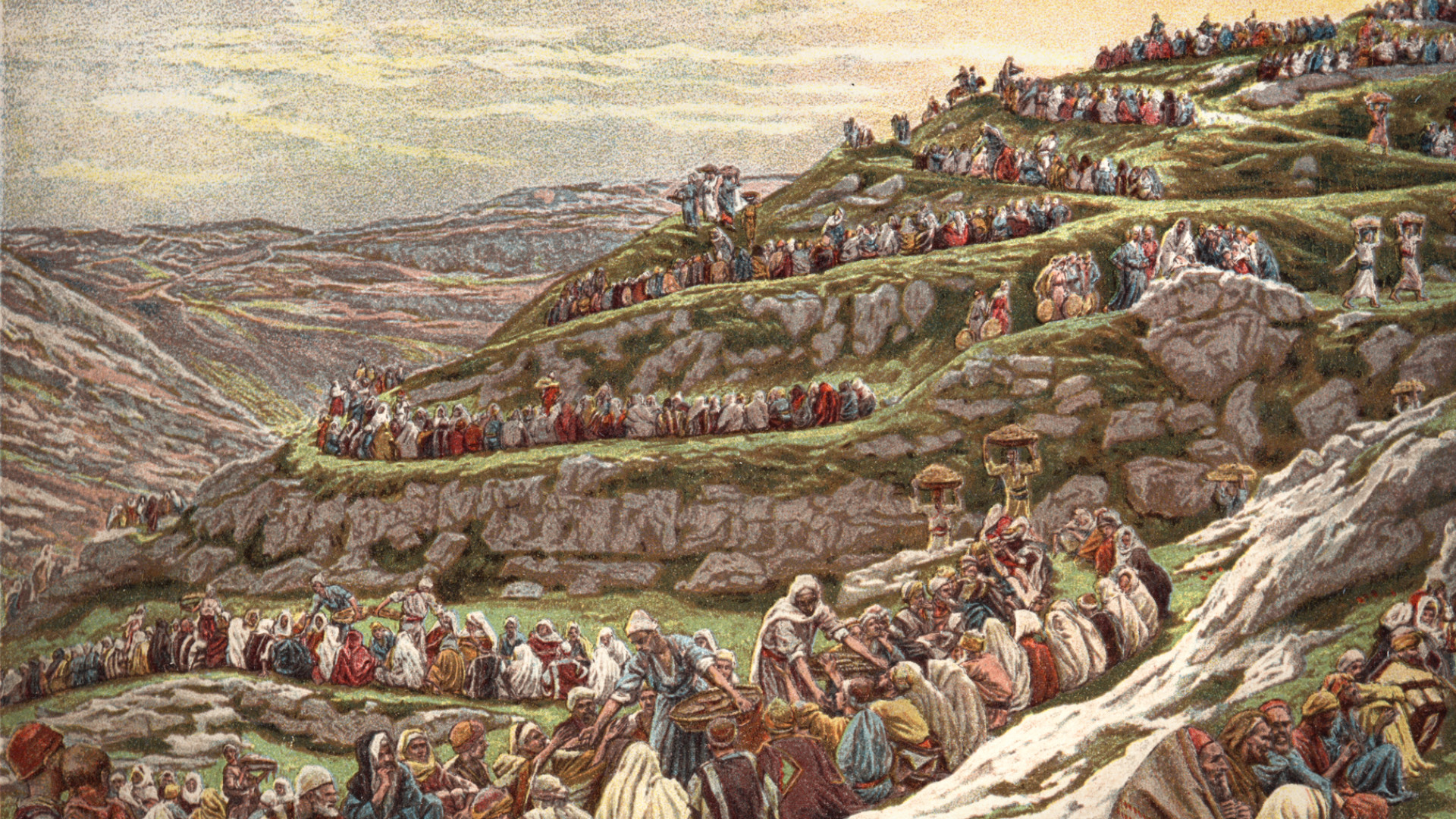
New Research Confirms Jesus’s Miracles

“New Research Confirms Jesus’ Miracles” by T.C. Schmidt

In chapter 5 of his Gospel, Luke unfolds the following scene: Jesus is teaching in a crowded house, and a paralyzed man is lowered through the roof to ask for healing. Jesus answers by forgiving his sins. Shocked, the scribes and Pharisees accused Jesus of blasphemy—for who, they ask, can forgive sins but God alone?

In response, Jesus heals the man’s paralysis. At this, the crowd is amazed. They glorify God, they’re filled with “awe,” and they exclaim, “Today we have seen paradoxa!” (Luke 5:26).

The word paradoxa is unusual. It’s used nowhere else in the New Testament, and translations are divided as to its meaning; the ESV renders it “extraordinary,” the NIV and NASB say “remarkable,” but many others prefer “strange things” (KJV, NKJV, NRSV, ASV, WEB, YLT). Dictionaries of ancient Greek retain both positive and negative meanings and also add “paradoxical.”

It seems that either the crowd as a whole was confused by what it had witnessed, not knowing exactly what to make of Jesus, or the crowd was divided, with some denigrating Jesus as a blasphemer and others praising him as a prophet of divine commission.

Either way, paradoxa captures the crowd’s belief that it witnessed something supernaturally strange, unsettling, and inexplicable, something perhaps paranormal, as we might say in English. The word paradoxa therefore isn’t inherently negative, but it isn’t inherently positive either—it connotes the kind of astonishment that leaves one bewildered, wondering what the source of the paradoxa might be. Are these of demonic origin? Are they divine? Without context, who can tell?

In my recent book Josephus and Jesus (read TGC’s review), I show that the ambiguous connotations of paradoxa reveal remarkable new evidence for Jesus’s miracles—evidence, moreover, that comes from an early, non-Christian writer well placed to know all about Jesus of Nazareth.


READ THE NEW EVIDENCE FOR JESUS' MIRACLES

banner

Featured Video

In this second episode of the Biblical Theology Briefing, Matt and Ben discuss the major themes that help us to see how the Bible hangs together as a story. They explore creation, the fall, redemption, and new creation. In highlighting these themes, they show how every book in the Bible is connected.


Featured Essay

Continuing to look at Jesus’ miracles, in this essay, from our catalog of 266 theological essays, Vern Poythress looks at the modern challenges to miracles in the Bible and how Christians may interact with them that affirms the validity of science without undermining the authority and truthfulness of the Bible. Further, Poythress shows us the purpose and function of Jesus’ miracles in his ministry, ultimately pointing us toward the eschatological fulfillment of God’s promises.

READ "The Miracles of Christ" by Vern Poythress

Weekly
Only have time for the best-of-the-best from TGC? This weekly email includes an editor’s pick for the one newly published resource you shouldn't miss, as well as a list of the six most popular pieces of content from the week. Sign up to stay in the loop!
SIGN ME UP