It is customary for authors to be asked to present their thoughts on the writing life, but they are not often solicited to write or speak about the reading life. An invitation to do so was welcome to me because my latest book is Recovering the Lost Art of Reading. I will share just a few thoughts on why reading matters, and why thinking people who have relinquished the practice of reading need to rejoin the ranks of readers.
It was nearly four centuries ago that Francis Bacon offered the opinion that reading makes a full person, conversation a ready person, and writing an exact person. An oft-quoted updating of Bacon’s conviction about the effect of reading is C. S. Lewis’s parallel statement that readers do not realize how much they owe to reading until they interact with a non-reader. Then, says Lewis, we are painfully aware of what what a tiny world non-readers inhabit.
On the surface, our culture does a lot of reading—digital reading that comes from a screen. But, in turn, studies show how remote this is from what is today called deep reading. Digital reading can scarcely be called reading in the traditional sense, and it is fleeting rather than the lifelong possession that much genuine reading is.
To my readers who find themselves resistant to what I am saying, I will simply propose an empirical test of what is lost when you do not read deeply and what is gained when you do. Put yourself on a two-week reading regimen, and then take stock of what has happened in your inner life of the mind, soul, and imagination.
I can predict what will happen. The first thing is an exhilarating experience of transport—transport from our own daily routine, and usually our familiar time and place, to a world removed from the immediate duties and anxieties of life. C. S. Lewis correctly claims that an almost automatic effect when we immerse ourselves in a genuine reading experience is the feeling “I have got out”—out of the confines of daily preoccupations. And in a further paradox, claims Lewis, we also feel that we have gotten in—into a world of the mind and imagination different from our own.
Since my own specialty is reading imaginative literature, let me make a further set of claims regarding the reading of literature. Such reading provides an even greater degree of transport than other types of reading. It puts us into contact with bedrock human experience because that is the subject of literature. Literature is an art form that offers the values that attend artistic achievement, and it can be a form of superior entertainment.
For my final commendation of reading, I will borrow a formula from a Christian leisure theorist: reading can be the growing time for the human spirit.
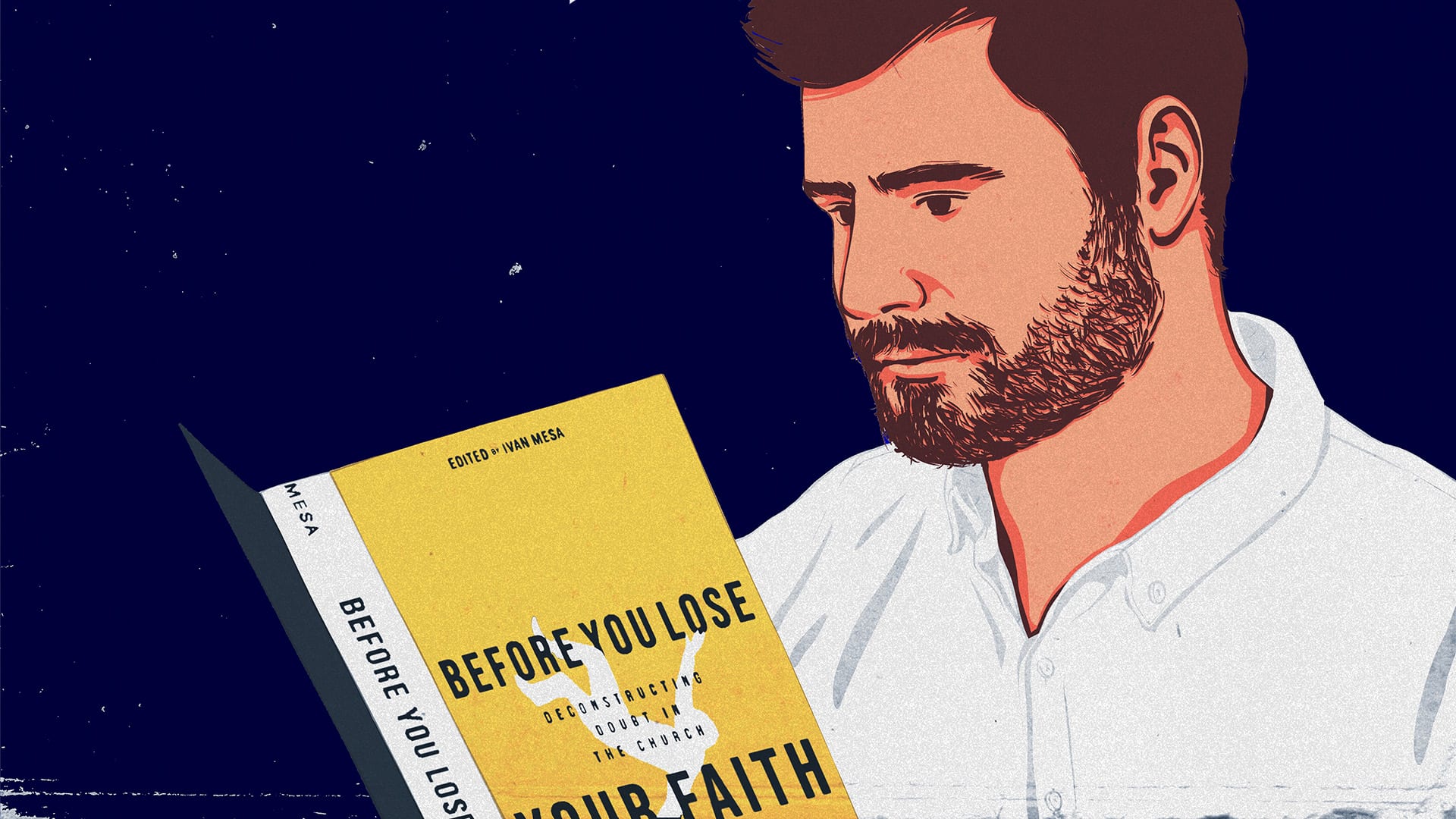
Deconstructing, however jarring and emotionally exhausting, need not end in a cul-de-sac of unbelief. In fact, deconstructing can be the road toward reconstructing—building up a more mature, robust faith that grapples honestly with the deepest questions of life. Read the review.
If we will make the vision and the wisdom of this book a matter of ongoing discussion and prayer in our generation, 20 years from now we gospel-loving Christians will be more united together and more compelling to our world. We will have fewer church splits and more church plants, less controversy and more solidarity, quieter hearts, fuller praises, and new conversions to Christ, because our more mature Christianity will be a persuasive and inviting alternative to cross over into. Read the review.
As a Baptist, I’ll insist that baptism is for believers, which also rules out infant communion. But with my disagreements aside, here is a book that will stir our heart afresh at the wonder of our baptism.
Here’s a little taste: Baptism is a war on Satan; a bridal bath; makes us kings; gives us weapons to fight. Creation belongs to the baptized. Every baptism is a little Pentecost. Baptism is the gospel with your name on it. God preaches in your baptism every day.