|
|

|
|
|
Dear Reader,
There are books we come back to time and time again. They remind us of someone, a place we left behind, or a time in life that is long gone. Sometimes it is a feeling of joy, hope, freedom, or wistful longing we would like to capture again. These books stir up memories like ghosts in a fog, but the memories disappear before we can grab onto them again. These are comfort books.
Reading The Lord of the Rings is an annual pilgrimage for me. Not that I have a date on my calendar to take the book off the shelf, but there usually comes a time—often in late fall—when I have to see what Frodo does with the One Ring this time. Though slightly dimmed, I still feel exhilaration at the twists in the story, like the first time I devoured the trilogy as a teen. (I don’t feel bad about rereading Tolkien; Peter Kreeft confesses a similar urge.)
Patrick McManus offers a similar gateway into my childhood. His humorous stories of hunting, fishing, and camping have only become funnier as I’ve aged into curmudgeonliness. But each time I read the stories in The Night the Bear Ate Goombaw, I find myself shaking with laughter, like I did reading it on the bus to school.
Reading comfort books doesn’t accomplish a task or achieve a goal. There isn’t always a clear educational or social benefit. But it feeds the heart and reminds me that I’m still just a child, longing for wonder in a world that doesn’t always feel like home.
Happy reading!
Andrew Spencer
Associate Editor
|
New from TGC
|
|
|
Book Review
George Yancey
|
|
“One of the strengths of this volume is that it undermines perspectives from the right and the left that argue critical theories are either totally correct or wholly destructive. The book reflects my larger critique of critical theory, which is that it’s often effective at revealing problems in our society, but the solutions it offers have largely failed. This nuance is one of the best qualities of the book.” Read the review.
|

|
|
Book Review
Ian Harber
|
|
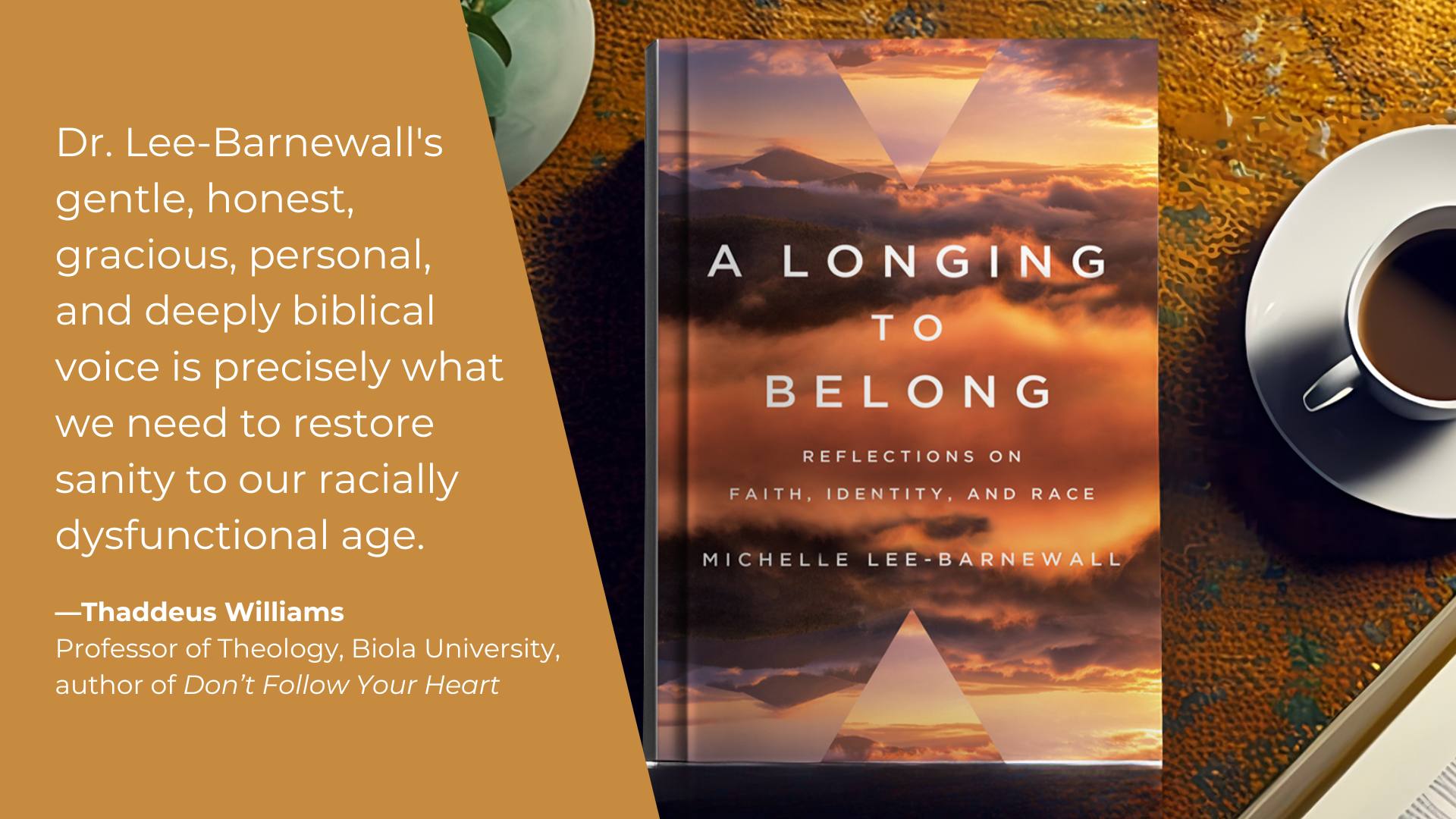
“Many Christians who have grown up in the church experienced this pressure from a young age—this individualistic need for certainty on everything while remaining perfectly morally upright. This teaches young believers they must make up their own minds in the right way on every question, while remaining pure from the world.” Read the review.
|

Book Review
Gene C. Fant Jr.
|
|

Book Review
Keith Simon
|
|

Book Review
Terry Glaspey
|
|

Book Review
Chris Martin
|
|

Book Review
Ginger Blomberg
|
|
|
Links for the Reading Life
|
| 1. |
Maureen O’Connor, “Barnes and Noble Sets Itself Free” (The New York Times)
“Bookstores, in Mr. Daunt’s view, are fundamentally different from other retail businesses, partly because of the range and variability of the products. Under his leadership, local managers are given a free hand, meaning that the Upper West Side store may offer a shopping experience quite different from the one in Spanish Fort, Ala.”
|
| 2. |
Joel Miller, “All the Horrifying Things We Do to Books” (Miller’s Book Review)
“More recently, when Penguin UK asked readers what horrifying things people do to books, most of the answers were predictable: cracking the spine, dog earring the pages, underlining and highlighting, writing in the book, leaving in the sun, and so on.
I hadn’t considered a few of the suggestions, such as reading with sticky fingers (nasty), but some of these supposed crimes are beloved practices for me. No, I never use bacon rashers as bookmarks (something de Bury would also abhor), but I do write in my books all the time. I’ve also stained more than a few with coffee. Can’t seem to help it. One person’s atrocity is another’s attraction.”
|
| 3. |
Lucy Austen, “What Has Faith to Do with Biography?” (Current)
“Possibly there is no better model for biography than the Bible. There it is perfectly plain that a true understanding of the world is not to be gained by pretending that things are other than what they are. If there is good, let it not be exaggerated. If there are evils, let us see what they are, and if we will, let us bring to bear upon them the light of a Biblical faith, but let us not operate as though they simply did not exist and therefore need no redemption.”
|
| 4. |
Paul Grimstad, “Confessions of an Audiobook Addict” (The New Yorker)
“The audiobook’s ascent into full-blown aesthetic autonomy came with the arrival of the iPod and its MP3 file format in 2001, and, as of 2023, more than half the U.S. population has listened to an audiobook (in Sweden, they outsell hardcovers). And, although it is tempting to evaluate audiobooks against the benchmark of physical books, they are really an entirely different thing. Of course, you’re not free to casually reread, paragraph reset, glance at the index, flip the book over to scan the insipid blurbs, or all the other desultory nonlinear things we do with books. And the tempo is fixed, though not entirely; you can set the speed at quarter increments, which gives a range of choices, from the soporific lowest setting, .25x, to the caffeinated upper end, at 2x. And audiobooks are not at all the same thing as a podcast. The latter are often messy, warts-and-all conversations, with all the ‘ums,’ ‘likes,’ laughs, and snorts left in, whereas an audiobook is a polished, edited, artificial production.”
|
|
| |
|
|

The Gospel Coalition
8520 Allison Pointe Boulevard, Suite 220, Indianapolis, IN, 46250
Take control of your inbox
Manage your preferences and choose which newsletters you want to receive or unsubscribe from all emails.
|
|