October 15, 2026
TGC Logo
Welcome to our weekly roundup of articles, podcasts, videos, and links curated by pastors, for pastors—to equip and encourage you in your ministry. You don’t have to shepherd alone. Let’s go.

WORD OF THE WEEK

How Not to Fence the Table

Written by Sean DeMars, pastor at Glory Community Church in Decatur, Alabama

Many Protestant churches practice what’s called fencing the table—offering a brief warning before the Lord’s Supper about who should and should not partake. This instinct is rooted in Scripture and church history. The supper is a sacred ordinance, and pastors rightly want to protect it from being taken lightly or profaned.

But as I wrote recently for TGC, Scripture doesn’t only help us see the need to fence the table; it also helps us see how not to fence the table.

In many churches today, fencing focuses on cultivating individual self-examination. While self-examination and personal repentance is certainly an important part of the Christian life, it’s not Paul’s concern 1 Corinthians 11:29. In that context, the apostle calls out a specific abuse of the table—Corinthian believers who dishonored one another and despised the church through their conduct at the meal.

Paul does call these church members to reconcile before they partake. But he doesn’t place the primary responsibility for deciding who should take communion on individual Christian consciences. His goal isn’t for introspective believers to worry over whether they’re worthy enough.

The New Testament gives that responsibility to the congregation. The church—not the individual’s self-assessment—determines whether coming to the table is appropriate. When someone claims to be a believer but refuses to repent of ongoing sin, the church is told to no longer treat that person as a member in good standing (Matt. 18:17; 1 Cor. 5:11–13). But otherwise, struggling believers are called to come to the table of grace.

I pray this article encourages you to consider the supper with fresh eyes. Examine the Scriptures, reexamine your practices, and lead your church community to eat and drink in a manner worthy of Christ.

Grace and peace,

Sean
Should Struggling Christians Abstain from Communion?

Sponsored Ad

Advertisement

Resource Roundup

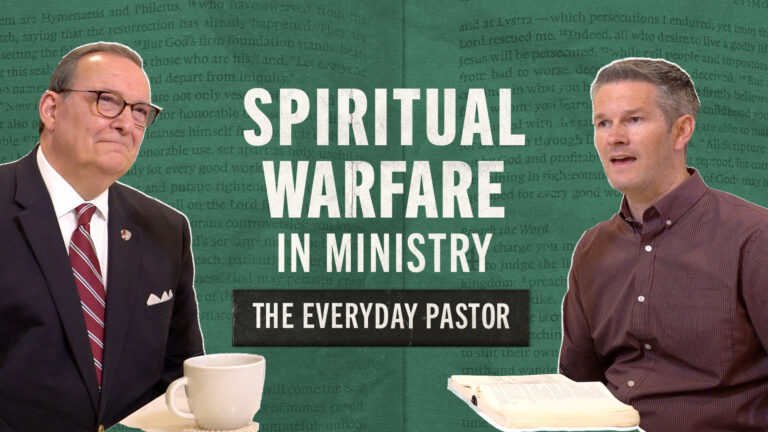
Spiritual Warfare in Ministry

Matt Smethurst and Ligon Duncan help pastors think biblically and pastorally about Satan’s schemes, the Spirit’s indwelling power, and how to resist discouragement while persevering in faithful ministry.

Discover the Theological Roots of Whole-Person Care

Gregg Allison says the church should be thankful for Anthony Hoekema’s contribution to theological anthropology and for how it equips us for today’s complexities.

Welcome Back, Church Planting

For a while, it looked like the church-planting party was over. But as Sarah Eekhoff Zylstra reports, numbers from the past few years tell us it’s not.


Around the Web

Here are links to other great resources worth your time:
  • Zach Cochran makes the case that church operations—governance, finances, facilities, people, and systems—aren’t just administrative busywork but a theologically grounded stewardship that frees pastors to focus on shepherding, preaching, and disciple-making.

  • Chase Krug argues that gentleness is best understood not as a personality type but as “force minimalism”—using the least intensity necessary to remain faithful and effective—and offers a diagnostic question to help practitioners cultivate it in everyday confrontations and conversations.

  • Reuben Bredenhof explains how pastoral faithfulness looks less like innovation and more like predictability—showing up consistently, opening Scripture, praying with people, and pointing them to Christ in every season.

Find more resources for pastors at tgc.org/pastors.
Advertisement