October 12, 2026
TGC Logo
Welcome to our weekly roundup of articles, podcasts, videos, and links curated by pastors, for pastors—to equip and encourage you in your ministry. You don’t have to shepherd alone. Let’s go.

WORD OF THE WEEK

How to Stay Human in an AI World

Written by Pete Nicholas, senior pastor of Redeemer Presbyterian Church Downtown in New York City

For pastors, one of the most challenging aspects of AI is its ubiquity. AI is affecting everything from education to entertainment, from jobs to the judicial system. The people in our churches are looking for guidance, but few (if any) of us are AI experts. Even if we’re experts in one area, how can we be experts in all the areas affected? We long to say something helpful, and we rightly believe the Bible has distinctive truths that need to be spoken into our AI age, but where do we start?

I believe focusing on virtues can help. Virtues are adaptable; for example, the virtue of patience is obviously relevant to the desire for immediacy AI seems to fuel. Properly inhabited, patience isn’t restricted to one area of life but can be deployed in all areas. A pastor may not be able to comment directly on the possibilities or pitfalls of deploying AI for medical diagnoses, but congregation members in all fields will benefit from understanding why cultivating patience can help us engage AI more fruitfully.

In my recent article for TGC, I unpack four vital virtues that are needful for our AI age and share how these virtues rub up against some of the most important areas AI stretches us in: community vs. individuality, embodiment vs. virtual living, growth vs. efficiency, and truth vs. sensationalism. Unpacking how to live with timeless Christian virtue amid these important tensions will help us to become more fully human and equip us to live better in our AI age.

—Pete

How to Stay Human in an AI World

Advertisement

Resource Roundup

Can Agentic AI Pastor Your Church?

Unlike generative AI tools such as ChatGPT or Gemini, agentic AI doesn’t wait for weekly prompts. An agent can work around the clock to prepare your Sunday sermon, then notify you it’s done. How should pastors respond to this new tech? By remembering, writes Sebastian Y. Kim, our God-given roles as shepherds.

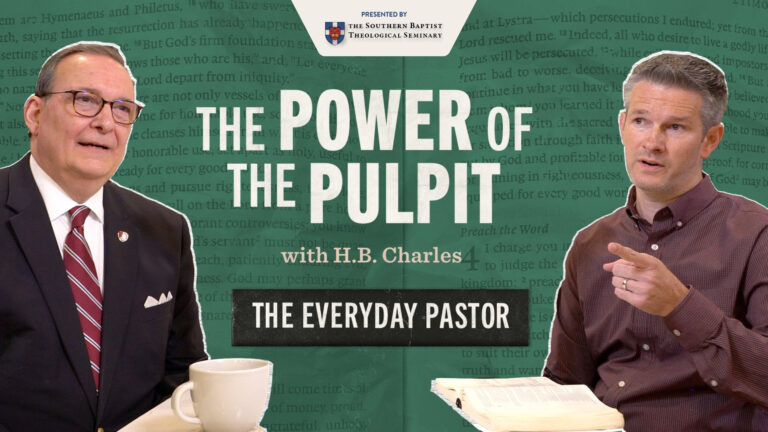
The Power of the Pulpit (with H. B. Charles Jr.)

H. B. Charles joins Matt Smethurst and Ligon Duncan on the Everyday Pastor podcast to discuss both the joys and the griefs of pastoral ministry.

The Sin We’ve Stopped Taking Seriously

We live in a world overflowing with self-promotion, where arrogance is reframed as swagger and narcissism passes for self-confidence.Trevin Wax says that though our culture no longer takes pride seriously, we must.


Around the Web

Here are links to other great resources worth your time:
  • Jacob Percy works through Romans 5, showing why original sin isn’t a relic of harsh theology but a doctrine that makes grace coherent. It gives pastors a framework for preaching honestly about human helplessness without sliding into despair.

  • Seth Troutt argues that “preaching to the choir” isn’t a pastoral failure but a necessary practice since regular attendees are prone to wander and often shaped by worldly ethics Scripture must directly confront.

  • Andrew Noble draws on recent scholarship and a survey of New Testament imitation texts to argue that while Jesus’s anger and table-flipping weren’t sinful, they’re permitted rather than encouraged for his followers who are called instead to imitate his servanthood, love, and endurance under hostility.

Find more resources for pastors at tgc.org/pastors.
Advertisement