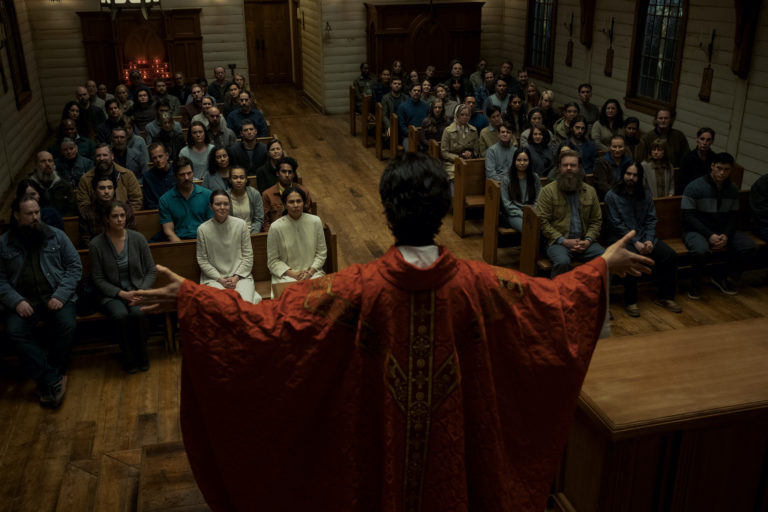
| The popular new Netflix limited series, Midnight Mass, is a fascinating cultural artifact that captures many of the tensions and contradictions of our post-Christian, secular age. On one hand the stylishly made, engrossing horror series exists in an enchanted universe where the supernatural is real. On the other hand, the series is a strident critique of faith (specifically Christianity) and tries to explain the miraculous in naturalistic ways. Relishing Christianity’s smells and bells moodboard while rejecting, subverting, or blaspheming its most central tenets, the show is exactly the sort of narrative you’d expect in a spiritual-but-not-religious age. In today’s Western culture we want institutions destroyed, but we’re happy to appropriate—and remix to our liking—various religious accoutrements left in the rubble. As Mike Duran points out in his review of the series for TGC, however, the remixed spirituality of Midnight Mass is toothless and incoherent. Like so much in our post-Christian era, faith deconstruction is far clearer and more animating than faith reconstruction. We know what we hate about organized religion and the church, but our alternatives for spiritual meaning are unsatisfying and ineffectual. This is why, for Christians, a show like Midnight Mass is worth critically engaging. It’s helpful to be aware of popular critiques of Christianity and faith, even as we should call out the emptiness of what is often suggested in its place. |