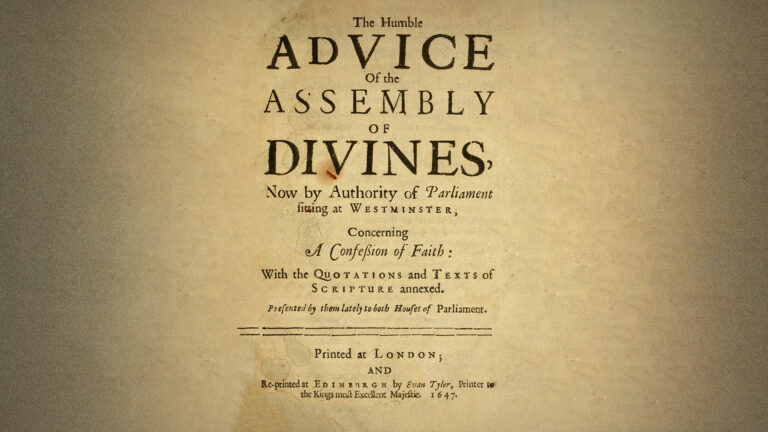
| Nineteenth-century theologian B.B. Warfield told the story of a military officer on the street of a city engulfed in rioting. Looking around, the officer immediately noticed a man who stood out because of the way he walked through the chaos with calmness and confidence. As they passed one another, the man turned to the officer and demanded, “What is the chief end of man?” When the officer replied with the centuries-old words of the Westminster Assembly, the man exclaimed, “I knew you were a shorter catechism boy by your looks!” The officer concurred, “That was just what I was thinking about you!” As a shorter catechism girl myself, I’ve always loved this story. Knowing the historic confessions of our Reformed faith is no mere intellectual exercise. The truths we find in those documents—truths about God, his Word, and his saving purposes—help us walk through the chaos of our age with noticeable calm. Ligon Duncan’s recent article, “Westminster Confession of Faith: Faithful, Pastoral, Global, and Enduring,” is the final installment in TGC’s series on the historic Reformed creeds and confessions. In his article, Duncan highlights the pastoral approach of the Westminster Divines, men who were not simply academics but were “true and experienced doctors of the human heart” who wrote with “pastoral wisdom and precision.” Our own 21st-century towns and cities are in turmoil. Perhaps what we need—in order to walk confidently in the midst of societal and spiritual crisis—is not anything new, but rather the timeless truths of God’s Word laid out for us by godly men of old. In every age, we need to be people who know and believe the answer to life’s fundamental question: “What is the chief end of man?” |