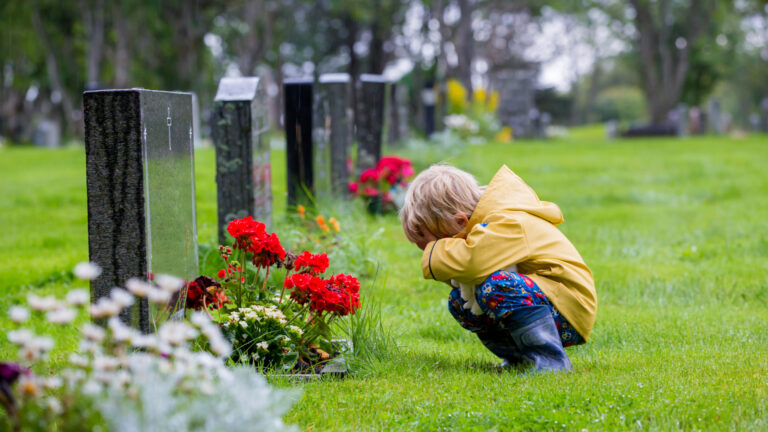
| During the 2023 school year, my daughter’s first-grade teacher died from a fast-moving cancer. In early November, she was in the classroom, tying kids’ shoes and singing songs about phonics, and in December, I received a memo in the class chat about her funeral arrangements. Many of the parents understandably expressed reluctance to talk to their kids about Miss G’s death and hesitation about bringing their kids to the funeral. “I think it will be too hard for him.” “I don’t want her to see Miss G’s body.” “I’m worried he’ll freak out.” “She’s never been to a funeral.” “I’m afraid he’ll be really sad.” This is a natural reaction. We want to protect our young kids from life’s hard realities for as long as we can. That’s why we turn off televised coverage of natural disasters and grave injustices when they walk into the room. That’s why we steer them away from playground bullies. That’s why we pray faithfully with them for an elderly relative’s healing without acknowledging that healing may never come. That’s why we’d rather take them to a baby shower than to a funeral. Alyson Punzi was a mom who didn’t want to talk about death either. Then her husband died, leaving her daughter without a dad. As Punzi scrambled to find resources for hard conversations, she realized that talking about death with her child also allowed her to talk about the gospel. In her recent article for TGC, she writes, As hard as it is to talk about death, we can start building a foundation now so that when our kids’ hearts deeply ache from the brokenness of this world and death leaves them with questions that have no earthly answers, they’ll know they can cry out to the God who has conquered death. It’s not an easy conversation to have, but it’s one our kids desperately need. Editors’ note: If you’re interested in developing your writing skills, join me and the rest of TGC’s editorial team for our next TGC Writers’ Cohort, February 25 to April 15, 2026 (8 weekly sessions). Learn more. |