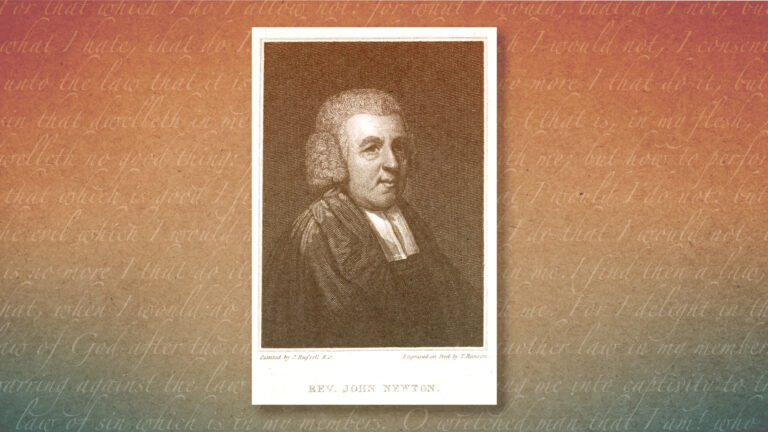
| I feel behind. There’s a lot of good I want to do that I never get around to. To make matters worse, I’m selfish. And prideful. Although I may be able to conceal these sins from you most of the time, I see the quiet victories they win in my heart. The paradox of sanctification is that awareness of sin is a sign of growth. Please don’t misunderstand me. The presence of the sin itself isn’t good, but God uses it for good to make us conscious of our need for him. No one has expressed this better than pastor and hymn writer John Newton: I asked the Lord that I might grow
In faith, and love, and ev’ry grace,
Might more of his salvation know,
And seek more earnestly his face. The hymn goes on to say, I hoped that in some favored hour,
At once he’d answer my request,
And by his love’s constraining power,
Subdue my sins and give me rest.
Instead of this, he made me feel
The hidden evils of my heart. Finally, Newton catches on, and the last verse paraphrases the words God speaks to Paul in 2 Corinthians 12:9: These inward trials I employ
From self and pride to set you free
And break your schemes of earthly joy
That you would seek your all in me. Newton’s hymns weren’t the only place he preached the good news about our insufficiency. In his pastoral letters, he expounded the benefits of knowing our weakness. Will Timmins has helpfully highlighted these letters in his article “Reading Romans 7 with John Newton.” We’d prefer to be strong and self-sufficient, but God loves us too much to let us move through life without him. When you read Romans 7 or when you feel your own inadequacy, let another of Newton’s hymns, “Amazing Grace,” be the soundtrack in the background. Let grace teach your heart to fear, then let grace your fears relieve. |