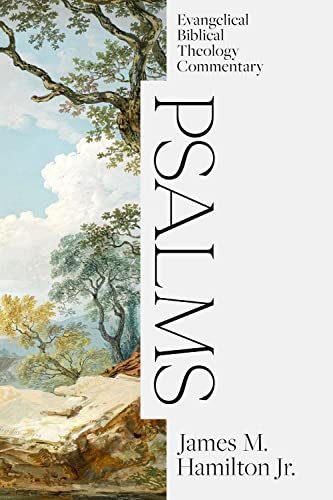
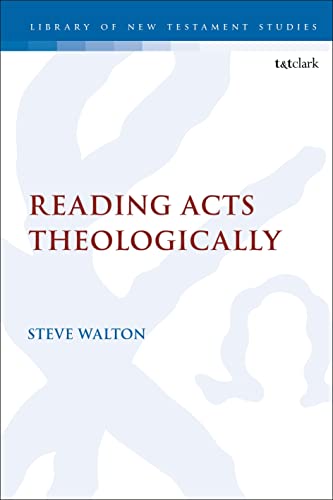
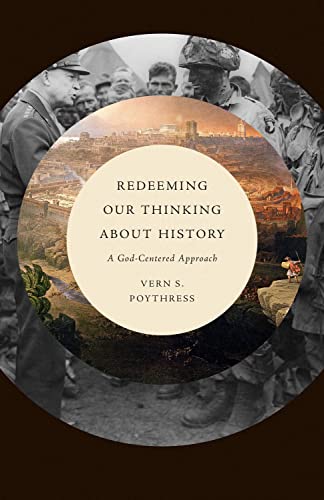
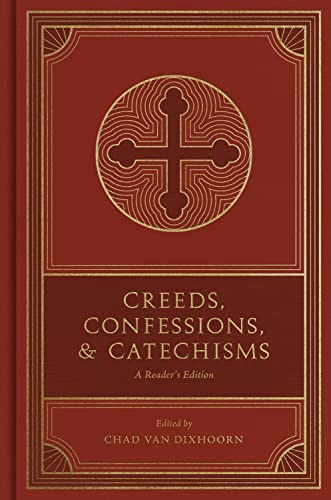
|
|
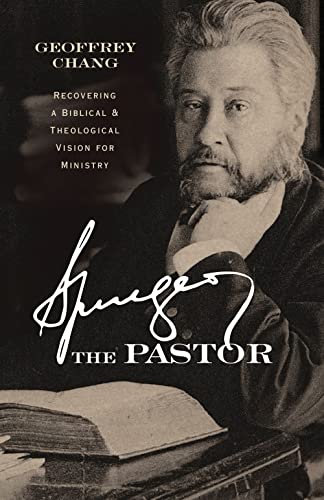
 |  |  | | J. I. Packer and the Next Wave of Evangelicalism: Foundations for Renewal | | BY PAUL R. HOUSE | | This article surveys the life and ministry of J. I. Packer, evangelical Anglican, theologian, author, Bible translator, and church renewal advocate. House suggests that Packer’s ministry is especially informative because it had roots in prewar evangelical circles and extended through the growth of the evangelical movement from the 1950s to the 1990s and the movement’s ebbing afterwards. He asserts that Packer’s efforts to aid theological and church restoration provide principles for much-needed biblical renewal in current evangelicalism. |  | | Is the Holy Spirit Really a “Person”—with a Distinct Personality? | | BY JOHN JEFFERSON DAVIS | | Davis aims to help the reader conceptualize and imagine the Holy Spirit as a real person with a distinct and knowable personality—a person of the Trinity more accessible to our faith, reading of Scripture, and worship. Factors in church history tending to marginalize the Holy Spirit in the life of the church are identified. Biblical texts dealing with the names, images, words, and actions of the Holy Spirit are expounded to put the distinct personality of the Holy Spirit into sharper focus. | | | | 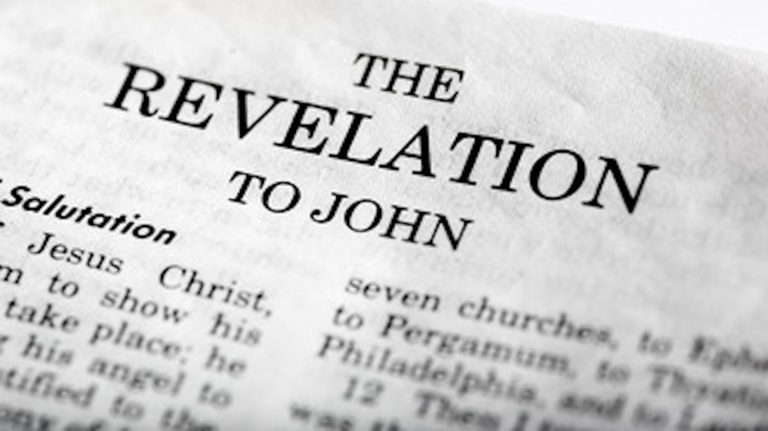 | | Numerical Symbolism in the Book of Revelation: A Weakness of Modern Bible Versions | | BY MICHAEL KUYKENDALL | | Several modern Bible versions do a disservice to John’s use of numbers in the book of Revelation. Kuykendall argues that John utilizes “good” numbers and “bad” numbers to express theological truths. Yet modern versions unwittingly thwart John’s theological intentions by masking his numerical symbolism. This is evidenced in two ways––changing (updating) the actual symbolic number when measurements and distances are mentioned; and rendering key terms in Revelation found exactly seven times with different English words, which obscures significant numerical interconnections. Kuykendall concludes that future modern versions and revisions of existing translations must treat Revelation differently on this issue. | | | | | Heaven’s War upon the Earth: How to Turn a Moderate 17th Century Pastor into a Radical | | BY NATHAN PARKER | | There appears a strong apocalyptical expectation in the writings of the 17th century Puritan pastor John Flavel, but, as Parker argues, this materialized in his later writings. Most people who thought the end of the world was imminent in the 17th century tended to be within radical groups that were active during the Interregnum. Though the momentum of apocalyptical thought was generally arrested over the next two decades it is notable that by the time of the Glorious Revolution it was incorporated into the preaching of a peaceable and deeply conciliatory pastor. This article sheds light on how one moderate Puritan came to embrace ideas with alarmingly radical implications. | | New Insights into the Formative Influence of Spurgeon’s Early Years | | BY GEOFFREY CHANG | | This article draws on lesser-known primary sources to argue for the formative influence of C. H. Spurgeon’s early years on his future ministry. Chang first examines John Spurgeon’s time in Raleigh, which explains why Spurgeon spent the first five years of his life with his grandfather, a relationship that shaped his view of ministry and the church. Second, he reflects on the ministry of T. W. Davids, pastor of the Congregational church in Colchester, and his influence on young Spurgeon. Third, Chang summarizes new insights from Spurgeon’s earliest preaching notebooks. | | The Young J. I. Packer as a ‘New Warfield’? A Chapter in the Post-1930 Revival of Reformed Theology | | BY KENNETH J. STEWART | | J. I. Packer first came to the attention of the reading public with a 1953 essay, “Revelation and Inspiration,” in the second printing of the New Bible Commentary. Stewart explains that this essay, as well as Packer’s controversial 1955 article on the Keswick movement, and his 1958 book, ‘Fundamentalism’ and the Word of God, illustrate his growing affinity with the writings of Princeton theologian, B. B. Warfield. In all this, Packer was a leading voice in the post-WWII reassertion of Reformed theology. But Packer, rather than being the pioneer of this movement, was in fact building on the legacy of others who had pointed in this direction. This movement, closely associated with Inter-Varsity, was itself part of a larger post-1929 resurgence of orthodox Reformed theology. | | The Explicit and Implicit Theological Method of J. I. Packer | | BY DON J. PAYNE | | J. I. Packer’s theological works have wielded remarkable influence on the landscape of North American evangelicalism. His hallmark theological emphases reflect both explicit methodological commitments and implicit methodological traits. Packer’s theological method is marked by a commitment to the inerrancy and authority of the biblical text, as interpreted within a covenantal, canonical, and Christo-centric framework. His method also reflects assumptions about the nature of divine and human rationality, the capacity of human rationality to access the formal meaning of the text, the nature of meaning in the text, and the role of the Holy Spirit in the hermeneutical process. | | The Latest from Themelios 47.3 | | | | What are good sexual acts? It is not that surprising when cultural voices, without reference to God, argue for the inherent goodness of all “unharmful” sexual desires and acts. Regrettably, ethical pragmatism has influenced some Christian sexual ethics, and this influence is particularly evident with the issue of masturbation. What God defines as good sexual acts are those that fulfill his unitive and procreative purposes for sex within marriage. Given God’s unitive and procreative purposes for sex within the context of marriage, we argue that masturbation is a categorically impermissible act because it fulfills neither of these purposes, and we counter Christian arguments for its permissibility. God calls Christians to deal with sexual desires, including good sexual desires, through either marital sexual expression or Spirit-enabled self-control. | | “The Sanctification of Our Speech”: The Theological Function of Truth and Falsehood in John Webster’s “Sins of Speech” | | BY ROBB TORSETH | | The contemporary debate concerning truth and falsehood has become distinctly conspicuous in light of recent global events. The increasing great divorce between diverging worldviews has resulted in what Susan Harding has coined the “repugnant cultural other,” where each group has retreated into itself, stigmatized the other, and thus neglects a genuine exchange of words and ideas. Here, the writings of the late John Webster help shed light on foundational conceptions of the purpose, use, and ethics of human language as primarily both theologically oriented and theologically originated. Torseth considers Webster’s 2015 article “Sins of Speech,” first in relation to his broader thought, and second as it applies to the contemporary problem of speech, public or private, in the information age. | |

|
|
Themelios is a peer-reviewed international evangelical theological journal that expounds on the historic Christian faith. Its primary audience is theological students, pastors and scholars. It was formerly a print journal operated by RTSF/UCCF in the UK, and it became a digital journal operated by The Gospel Coalition in 2008.
|
|
©2022 The Gospel Coalition, All Rights Reserved.
P.O. Box 170346 — Austin, TX 78717
Update Email | Unsubscribe
|
|