|
|
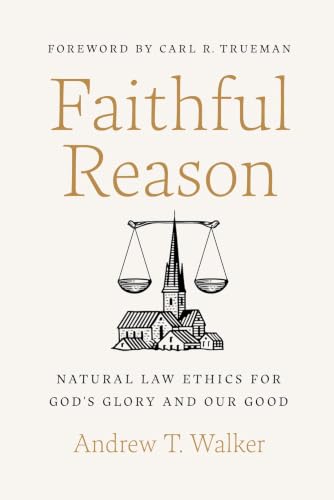
 |  | | The new December 2025 issue of Themelios has 251 pages of editorials, articles, and book reviews. It is freely available in three formats: (1) PDF, (2) web version, and (3) Logos Bible Software (coming soon). |  |  | | The Unchained Word: A Public Theology of Free Speech | | BY ANDREW T. WALKER & KRISTEN WAGGONER | | This essay develops a distinctly Christian theology of free speech in response to mounting threats of censorship across Western societies. We argue that freedom of speech is not merely a political concession of liberal democracies but arises from humanity’s nature as rational agents made in the image of God, created to be seekers and speakers of truth. Speech is both a constitutive feature of human selfhood and an instrumental good through which individuals and communities pursue moral goods and the common good. After examining the biblical purposes of speech, the limits of civil government’s authority, and the moral logic of human rights, we contend that a Christian account of free speech requires a dual affirmation: positively, that individuals have a duty to speak truthfully; and negatively, that governments bear a heavy burden of proof before restricting expression. Free speech thus serves as a shield against government overreach, a safeguard of human fallibility, and a vital condition for truth-seeking in a pluralistic world. While not absolute, free speech must enjoy a presumption of liberty if societies are to order themselves toward truth and resist the perennial temptation of tyranny. |  | | The Right-Side-Up Kingdom: A Lexical, Contextual, and Theological Study of Acts 17:6 and Its Implications | | BY JOANNE J. JUNG & ERIC B. OLDENBURG | | The kingdom of God is sometimes referred to as an upside-down kingdom. This descriptor originates from translating ἀναστατόω in Acts 17:6 as, “to turn the world upside down.” A lexical study will show that such a translation is misguided. A contextual study will show that using the phrase “upside down” to describe the kingdom is similarly problematic. Finally, a theological case will be made for prioritizing “right-side-up” over “upside-down” language for the kingdom of God. When God empowers success in our efforts to reconcile, redeem, and transform that which is upside-down, the kingdom of God is actualized in the world, and “right-side-up” is more appropriate in describing such realities. | | | |  | | Leviticus 8–10 as Narrative | | BY JOHN GOLDINGAY | | Leviticus 8–10 is the one substantial narrative in Leviticus. The paper considers six contemporary approaches to the interpretation of narrative—setting, point of view, plot, theme, characters, and language—in order to see how they illumine the interpretation of these chapters. It thus further aims to see how their application to these chapters might suggest that these contemporary methods may be useful in biblical interpretation, not least in connection with narratives that might not seem to engage modern Western readers. | | | | | Achan and Annihilation? Hyperbolic Language and the Justice of Yahweh in Joshua 7 | | BY JARED AUGUST & JONATHAN LOUGH | | The conquest language of Joshua is often taken as hyperbolic, particularly in chapters 6–10. This essay attempts to apply a hyperbolic reading to Joshua 7 and the Achan account, proposing that such a reading deals best with the larger context as well as the textual details. This interpretation suggests that by making himself an enemy of Yahweh, Achan suffered the same fate as the pagan Canaanite nations: Achan, as the enemy combatant, was executed, his livestock killed, his possessions destroyed, and his family dispossessed from their inheritance in the land. | | The Pastors and Teachers in Ephesians 4:11 | | BY JONATHAN D. WORTHINGTON | | Paul’s reference to “the pastors and teachers” in Ephesians 4:11 is regularly discussed and often misunderstood. In conversation with some key voices in the debate, I argue this double-sided thesis: (1) Paul’s grammar portrays pastors and teachers as two recognizably distinct groups—i.e., in general, pastors are not teachers and teachers are not pastors—and (2) they nevertheless must serve the saints in closer connection together than the other groups of leaders mentioned. On this sound foundation, I offer constructive possibilities with reference to the connected Greco-Roman systems of home and education for who within Pauline circles the pastors likely were, who the teachers likely were, and how they were likely meant to work together. | | Transposing Genre: Reading Hebrews 12:4–13 as Proverbial Wisdom | | BY ADAM CH’NG | | By citing Proverbs 3:11–12 (LXX) in Hebrews 12:5–6, the author of Hebrews transposes the wisdom genre of the proverb into his broader exposition (12:4–13). This article integrates and applies the theories of John Frow and Tremper Longman III, and argues that the strong literary connections between the proverb and Hebrews 12:4–13 indicate the incorporation of the wisdom genre. Accordingly, Hebrews 12:4–13 should be read as proverbial wisdom, and its characterisation of human suffering as divine discipline should be understood not as a universal theodicy but as a circumstantial truth. | | From Logizomai to Luther: The Great Exchange and the Development of the Imputed Righteousness | | BY BRADLEY GRAY | | Martin Luther’s theology of imputation, which is often understood through the paradigm of “the great exchange,” is a formative albeit misunderstood tenet of Reformation doctrine. Even though Luther never explicitly deployed the phrase, nevertheless, the gospel is conveyed in the language of a two-way transaction, wherein Christ’s righteousness is imputed to sinners as their sins are imputed to him. The pastoral necessity to preach the good news of imputation is best understood against the backdrop of historical and contemporary challenges to the doctrine itself. Imputation, therefore, remains vital not only for doctrinal clarity but for the believer’s assurance of salvation. | | Does Edwards’s Exegetical Typology “Always and Only Point to Spiritual Things Related to Christ?”A Response to Drew Hunter from the Evidence of the Blank Bible | | BY CAMERON SCHWEITZER | | This essay responds to Drew Hunter’s 2019 article, “Hebrews and the Typology of Jonathan Edwards,” challenging his thesis that Jonathan Edwards’s exegetical typology “always and only points to spiritual things related to Christ.” Through an analysis of Edwards’s Blank Bible, the essay identifies 143 notations where Edwards employs typology to uncover antitypes that are not strictly Christological. The evidence presented suggests that Edwards’s exegetical typology is broader and more complex than the Christological framework in which Hunter situated it. This article argues that, instead, Edwards’s exegetical reflections in the Blank Bible highlight that typology was, for him, a spiritual, historical, teleological, and eschatological hermeneutic for interpreting God’s work in redemptive history. | | The Christocentric and Christotelic Nature of Johannine Pneumatology | | BY ADRIAN P. ROSEN | | Several years ago, a highly regarded Pentecostal ecumenist suggested that the Paraclete’s work in the “world” supports a more inclusive soteriology. This article responds to this proposed theological trajectory within Johannine pneumatology, seeking to contribute to broader conversations regarding christological exclusivism and pneumatological inclusivism. An exegetical survey of the Spirit’s work in John’s Gospel—including the Spirit’s activity in Jesus’s earthly ministry, within the believer, and in the world—demonstrates that Johannine pneumatology remains decidedly christocentric and christotelic from start to finish. When one gives careful attention to the text, it becomes clear that John’s view of the Spirit’s work is decidedly and firmly anchored in his christological particularism. | | Missio Trinitatis: Theological Reflections on the Origin, Plan, and Purpose of God’s Mission | | BY BRIAN A. DEVRIES | | Trinitarian theology provides the basis for understanding missio Dei. The divine sendings of the Son and the Spirit explain the origin of God’s mission, while the divine council with the pactum salutis helps us comprehend the whole plan of God’s redemptive mission. God’s external work of mission, accomplished and applied across the history of redemption, highlights the eternal purpose of God’s mission and helps us align our participation in it. Using this time-tested Trinitarian language helps us avoid divergent definitions of this important concept, while clarifying ambiguities and guarding against common misuses. It also helps us better understand the church’s evangelistic witness in relation to the Triune God and his mission. | | Toward a Christian-Household Philosophy of Technology | | BY NICHOLAS J. WEYRENS | | Internet-connected digital technologies are having deleterious effects on children. In a world shaped by the digital, Christian parents have a moral duty to have an intentional philosophy of technology—a set of principles and practices—that will help their children flourish in Christ. In this essay, I propose four principles for a Christian-Household Philosophy of Technology to help parents understand how and why technologies shape children. By establishing the idea that we are what we attend to, I will connect the deformative effects of internet-based digital technologies with the spiritual deforming language of idols in Scripture. This highlights the importance for parents to protect their children’s attention and cultivate their children’s ability to attend, most notably to God, by integrating proposed practices into their own contextualized Christian-Household Philosophy of Technology. | | The Scandal of Marriage: Towards a Theology of Sexual Differentiation | | BY JON HORNE | | This essay argues that monogamous sexually-differentiated marriage is uniquely revealed through Christ’s relationship with the church in Ephesians 5:30–32. Through a trinitarian reading, marriage is understood as the Father’s initiative, sexually differentiated because it follows the form of Christ (groom) and church (bride), and perfected by the Spirit. The bride-groom metaphor is not merely illustrative but constitutive of marriage’s form. Therefore, because Jesus is biologically male, marriage cannot be relativized to accommodate same-sex unions. This makes marriage a scandal not unlike that of Christ’s particularity (1 Cor 1:23), which resists absorption into non-Christian notions of the divine. | |

|
|
Themelios is a peer-reviewed international evangelical theological journal that expounds on the historic Christian faith. Its primary audience is theological students, pastors and scholars. It was formerly a print journal operated by RTSF/UCCF in the UK, and it became a digital journal operated by The Gospel Coalition in 2008.
|
|
©2022 The Gospel Coalition, All Rights Reserved.
P.O. Box 170346 — Austin, TX 78717
Update Email | Unsubscribe
|
|