FEBRUARY 2025 In his account of Timothy Keller’s spiritual and intellectual formation, Collin Hansen shared how Tim discovered theological resources he needed to proclaim the gospel clearly and compellingly to the contemporary world. Writing near the end of his life, Tim wrote of how he learned in seminary about two important principles of the neo-Calvinist tradition that shaped him throughout his ministry: 1. “We should be orthodox, yet modern.” The world isn’t something from which we should withdraw. While remaining grounded in traditional, historic Christian doctrine, we should engage the modern world in its every aspect. 2. “Christianity is a world-and-life-view.” Christian beliefs constitute a worldview, a way to think about all of life and to be distinctive in our practices in each area—art, business, politics, civic life, family life, education, and so on. We should articulate those distinctive ways of thinking, speaking, and acting out in the world with non-Christians in our shared spheres and institutions. As Tim’s theology coalesced around these ideas, his theological world continued to expand by the writings of Herman Bavinck, Abraham Kuyper, J. H. Bavinck, and other neo-Calvinists. For Tim and the neo-Calvinists, the work of cultural apologetics isn’t simply reading the cultural tea leaves or studying events and artifacts. Cultural apologetics is the outworking of full systematic reflection. Starting at the end of May, the Keller Center for Cultural Apologetics will offer a new cohort, Exploring Neo-Calvinism: Foundations for Cultural Apologetics, to help you explore these theological resources. Led by two leading scholars of neo-Calvinism, Gray Sutanto and Cory Brock, the cohort will guide participants through key texts that reveal the tradition’s theological contributions and principles for cultural apologetics. Students, pastors, and practitioners will benefit from deeply engaging with the foundations of cultural apologetics, as well as exploring the practical outworkings of our theology in evangelistic conversations and preaching. 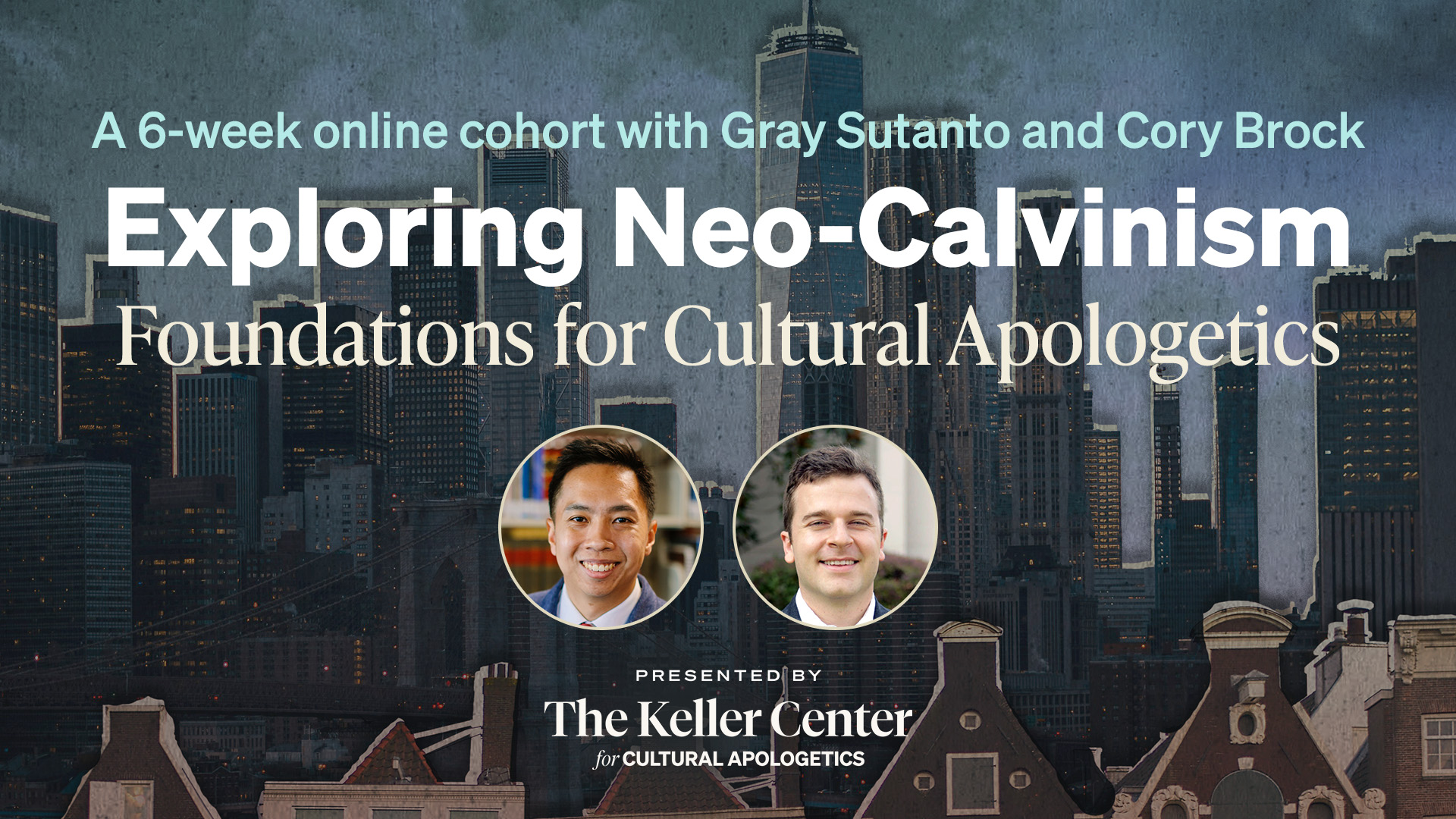
Make plans to join us, and don’t hesitate to reach out if you have any questions about the cohort email us at kellercohort@tgc.org. I look forward to learning with you about how we might faithfully share the one gospel that is true for all people across all times, in a way that engages the modern world in every aspect. |
FEATURED CONTENT  Derek Rishmawy explores the deep connection between a theology centered on Christ’s holiness and the practice of apologetics. He argues that honoring Christ as holy—with a willingness to suffer, gentleness, respect, and a clear conscience—empowers Christians to boldly defend their faith in a secular world.  Josh Chatraw explores how Augustine of Hippo’s writings, especially Confessions and City of God, offer powerful models for cultural apologetics in today’s therapeutic, consumer-driven society. He highlights Augustine’s persuasive strategies, emphasizing the importance of understanding culture’s deepest desires and offering the transformative power of the gospel as the ultimate answer to modern existential crises.  In this episode of Gospelbound, Collin Hansen interviews Ross Douthat about his book Believe: Why Everyone Should Be Religious, where he argues for the intellectual and existential necessity of embracing religion in a post-secular world. Douthat tackles critiques of religion, addresses the cultural shift away from atheism, and explores how returning to religious institutions can offer meaning and stability in a fragmented society. |