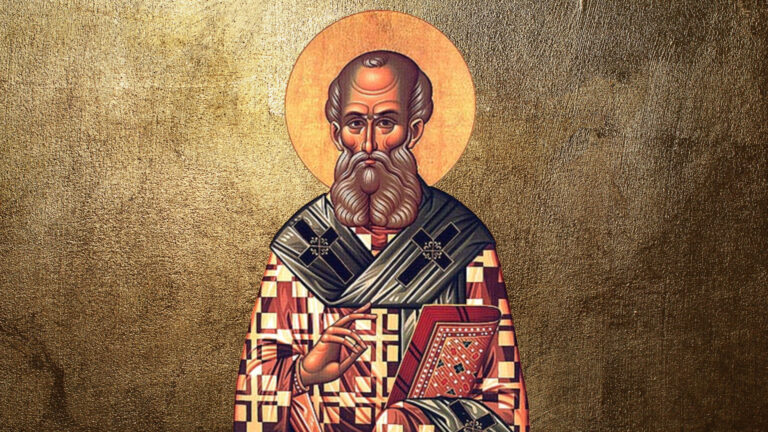
The fourth-century African theologian Athanasius is known for standing contra mundum, against the world. When much of the church had turned toward Arianism, he stood firm on the truth that Jesus is, and always has been, fully God. For this, Athanasius endured opposition and exile. Yet he never wavered. Contra mundum, however, doesn’t capture the fullness of Athanasius’s approach to the world. He was against the world for the sake of the world. He opposed the idolatry, heresy, and injustice of the world because he was for the redemptive flourishing of the world. In a culture shaped by compromise and confusion, Athanasius shows us what it looks like to hold fast to Christ with courage and love. Hostile Environment To understand Athanasius’s apologetic, we must begin with his context. He wasn’t writing from history’s sidelines but from the heart of one of the world’s most influential cities. Alexandria was the cultural capital of the Roman Empire, a bustling crossroads of trade and ideas. Home to the greatest library in the ancient world and filled with representatives from every major school of philosophy, Alexandria was a melting pot of cultures, religions, and competing worldviews. To be a bishop there was to be at the center of global conversations about truth, meaning, and power. As bishop, Athanasius faced constant attack. His opponents launched theological challenges, political schemes, and personal accusations. These battles often forced him into exile, five times in all, equating to nearly 20 years away from his church. Yet those exiles shaped him as a theologian. In the deserts of Egypt and in the cities of the empire, Athanasius found both refuge and perspective. Cut off from his familiar responsibilities, he wrote many of his most enduring works, sharpening his vision of Christ and clarifying his defense of the gospel. Athanasius’s apologetic wasn’t abstract. It was forged in the crucible of cultural diversity, political pressure, and personal suffering. His life in Alexandria taught him to engage competing ideas with clarity. His years in exile gave him space to reflect and to write for the good of the wider church. Out of this unique context came an apologetic that was both deeply theological and profoundly pastoral. READ MORE ABOUT ATHANASIUS’S APOLOGETIC METHOD |