

Article XVII
We affirm that God calls his people to display his glory in the reconciliation of the nations within the Church, and that God’s pleasure in this reconciliation is evident in the gathering of believers from every tongue and tribe and people and nation. We acknowledge that the staggering magnitude of injustice against African-Americans in the name of the Gospel presents a special opportunity for displaying the repentance, forgiveness, and restoration promised in the Gospel. We further affirm that evangelical Christianity in America bears a unique responsibility to demonstrate this reconciliation with our African-American brothers and sisters.We deny that any church can accept racial prejudice, discrimination, or division without betraying the Gospel.
That’s an article from the “Affirmations and Denials” documented circulated at the Together for the Gospel ’06 conference in Louisville. The statement was signed by Mark Dever, Ligon Duncan, Al Mohler, C.J. Mahaney, John Piper, R.C. Sproul, and John MacArthur.
That’s a statement of boldness. Gospel boldness. Boldness in the truth. Exclusive, excluding boldness. Sweeping boldness. Boldness with integrity. Boldness with implications and applications. Targeted boldness. Big-chested, loins-girded, bare-knuckled, man-up boldness!
You don’t see statements like these everyday… much less from national leaders of this stature… less still from “conservative, white, fundamentalist, evangelical” (choose your favorite label) leaders with apparently everything to lose and nothing to gain from such statements.
Let’s face it… race is still a much-feared topic in the church and especially among many Reformed types. And the charge of “racism” is downright terrifying to many of our brothers and as unshakeable as a skunk’s stink once attached.
Here’s what I learned at CHBC… follow the truth wherever it leads you and stand on it! I saw that modeled at CHBC and I praise my God daily for blessing me with the ineffable joy and privilege of serving there.
While I was there, truth-based, gospel-motivated boldness displayed itself in the leaders and the congregation on everything from courtship and dating to race and racism. And it was far more than a verbal declaration.
Just a couple of examples:
- It’s now policy that each class of pastoral interns read and discuss Francis J. Grimke’s Christianity and Race Prejudice, a scathing but insightful condemnation of racism in the white church and its incompatibility with the gospel. That’s 12 men per year now thinking in an intensive way about an issue they might otherwise have avoided altogether.
- I had the privilege of periodically introducing on Wednesday nights the congregation to important African-American pastors and church leaders with Reformed convictions… men like Lemuel Haynes and Jupiter Hammon and women like poetess Phillis Wheatley. That’s a local congregation broadening its view of “the Church” to include and appreciate men and women of different hues that have made significant contributions to the gospel cause in this country.
- I sat through hours of discussions where pastors deliberated thoughtfully, prayerfully, and sometimes agonizingly over how to cultivate, protect, and add to the racial unity the Lord has wrought in the church. That’s a changed pastorate, committed to loving people well by not being “color blind” (as if that were possible or encouraging) but by acknowledging that the varieties of humanity existing in our churches and in the world are not an after-thought of God but a purposeful decision to display His wisdom and glory.
- And oh! to witness the growing conversations among so many in the congregation that are desirous for the local church to look more and more like Eph. 2:11-3:12 and Rev 5:9. How I rejoice when the 22 year old brother from Ohio says, “I’m free to think about race in a responsible way for the first time.” And I could multiply comments like these because of the holy boldness the church has shown in this area.
- Or this denial broadcast to the entire church world: “We deny that any church can accept racial prejudice, discrimination, or division without betraying the Gospel.” That’s the kind of boldness that puts the world on notice about where you stand and where those who oppose the truth stand.
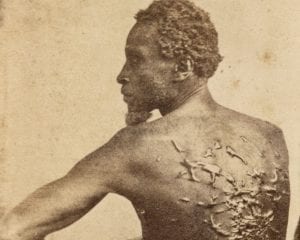
And in all of this, I’ve seen boldness tempered by thoughtfulness, the kind of thoughtfulness that denies any place to guilt trips, culture-idolizing, and gospel-blurring or denying gimmicks but seeks to repent of genuine wrongs. I’ve learned that such boldness takes discipline and character, and it takes the kind of courage that’s willing to break a few eggs in the attempt at an omelette. That says to a predominantly white, Southern Baptist church, “perhaps the greatest blight on the gospel in this country is the grotesquely sinful treatment African Americans have suffered at the hands of professing white Christians.”
What I value about CHBC’s effort at addressing race is that it’s undertaken in a theologically informed, pastorally careful, personally challenging, and publicly accountable way. They’ve avoided programmatic fads and have sought to bet their chips… get this… on Christians loving each other in a gospel-centered, gospel-motivated, gospel-defined way. They’re betting that the gospel actually changes people, that it renews minds (and hearts), even on profoundly difficult topics like race. That’s bold, too. It would be easiser to start a program or some other mostly outward display. But, they’re betting that Jesus will work in Christians in such a way as to display His glory through a supernatural unity across “natural divides” that mystifies and sometimes attracts an unbelieving world that, on the one hand, yearns for an end to its sin-induced alienation from God and man but, on the otherhand, has no reconciling solution outside of Christ.
Now, we’re not in heaven yet, so the work there is still incomplete. They’re much to be learned still; there are errors ahead of them to be sure. But, with God’s leading and omnipotent aid, they’ve at least begun the work. How many of us in our churches and in our personal lives are unable to say we’ve even begun? Too many of us I’m afraid. Can we say we’re true churches or true Christians apart from evidence of grace that trends toward this kind of boldness?
I’ve learned at CHBC something more about being bold. It’s betting my all and the church in my charge on the Gospel, on the Truth, on Jesus Christ. It’s following the Truth wherever He leads me and trusting in Him in all things. Jim Elliot seems appropriate here: “He is no fool who gives what he cannot keep to gain what he cannot lose.” That’s posted on the entry to the CHBC parking lot; I want it to be posted over my life. I’m praying for more boldness… and faith. What about you?