 |   | In this week’s briefing: In praise of youth sports amid warranted criticism, the reformation of women’s ministry, and the enduring grace of fathers. |   | | | | Pastors were the first to warn me about youth sports. Families disappeared from church for months on end. Parents didn’t think twice about spending thousands of dollars on travel ball but invested nothing comparable in their children’s spiritual development. Yet those same parents still expected pastors to convince those children to follow Christ after they left home. Then I began to experience some of the problems myself with my older son. I heard of local recreational leagues gutted as families with greater means availed themselves of for-profit travel leagues. I’ve felt the nudge toward expensive private lessons. I’ve failed, again and again, to resist the tendency toward identifying with my son’s performance. I’ve failed, again and again, to navigate that fine line between coaching my son toward improvement criticizing him toward dejection. I’ve cared too much about what children do on baseball and football fields. I’ve seen others care WAY too much about what children do on those same fields. I’ve read the studies that show competition fosters lifelong competitiveness, not sportsmanship. So if you’re worried about the state of youth sports today, I’m with you. Sarah Zylstra’s Recorded podcast captured many of those critiques and commended several godly ways forward for families and churches. But I’m here today to offer two cheers for youth sports. With all the warranted criticism, we shouldn’t take these three positive effects for granted. First, we complain as much about kids sitting inside on their personal iPads as we lament the state of youth sports. I’d much rather have the latter than the former. Last Saturday I saw 11 boys spending 9 a.m. to 9 p.m. outside on hot ball fields, sweating and straining the limits of their growing bodies. No smartphones. No tablets. Yes, Jonathan Haidt may be correct that unstructured, all-day, outdoor play would be better than a baseball tournament for these boys. But they also get a lot of that unstructured play on other days. And not all children have that option, due to the layout of their neighborhoods. Growing up on the farm I was grateful for youth sports and that time with my classmates. Before I started driving at age 14, I couldn’t reach my friends on my own while my parents worked. Second, we have precious few venues where youth can test their physical limits and practice perseverance. I told a dad friend skeptical about football that sports expose our children to the kind of discipline that develops character, especially as they learn to respond to inevitable failure. In the throes of a trying baseball season, my son and I have spent hours in the car reinforcing how even the best athletes in the world develop resilience through how they respond. No one just coasts from success to success. You can learn some of the same lessons from playing the piano, or learning to dance, or building a robot. Scouting remains popular in our community, and many boys I know jump between sporting events and campouts. But sports are especially helpful for challenging the mind and body under unplanned pressures. Third, sports bring different kinds of groups together at a time when Americans overall spend less time socializing. Especially in May during peak baseball season, I might spend 20 hours in a week during the late afternoons and evenings and Saturdays with my neighbors. I ride the emotional roller coaster up and down with the other parents and siblings of my son’s teammates. With a little intentionality it’s easy to strike up a conversation with them about more serious matters than sports, even our spiritual hopes and fears. Since I work long hours remotely, and in ministry, I don’t have much opportunity otherwise to learn about and from my neighbors. I might only get half an hour per year to catch up on Halloween with my neighbors across the street. So here’s two cheers for three positive effects from youth sports. I’m thankful for the coaches and other volunteers working to enhance the positive and mitigate the negative. 
| | COLLIN HANSEN | | Editor in Chief | | |  |  | | Nancy Guthrie and the Reformation of Women’s Ministry | | When Nancy Guthrie read my 2008 book Young, Restless, Reformed, she wrote but never sent me a letter to ask, “Where are the women?” I’m grateful that this week, she and I have been able to walk into the Indiana Convention Center, hear the signing of nearly 8,700 women at The Gospel Coalition’s Women’s Conference, and say, “Here they are!” Back when I was reporting the book in 2006 and 2007, I didn’t hear about popular Reformed female authors and Bible teachers. I did talk to several young Reformed women, such as my friend Irene Sun, a Yale graduate who studied Jonathan Edwards. But there’s no doubt men dominated the official and unofficial leadership of the YRR in the 2000s. In those years Nancy Guthrie was just beginning her exploration of Reformed theology. She taught in 2012 at that first TGC women’s conference, led by Kathleen Nielson. Jen Wilkin attended that first conference, too. Crossway wasn’t prepared for how popular her book Women of the Word would be at the 2014 conference. When it quickly sold out they sent emergency copies down from their Chicago-area warehouse. She’s sold more than 250,000 copies since. Melissa Kruger spoke at that 2014 conference, too, after attending in 2012. She joined TGC’s staff in 2016, began directing our women’s initiatives in 2019, and took over leadership of all conferences in 2023 as the vice president for discipleship programming. Along the way, I’ve seen more and more churches hire full-time staff to lead word-filled women’s ministries. From my first days on TGC staff in 2010, I’ve believed that one of the best ways to defend complementarianism is to demonstrate how that biblical framework helps men and women flourish alongside each other in the church and home. Not everyone supports that approach. Some would restrict women from teaching the Bible, even to other women. Some argue around the biblical commands and demand the same roles for men and women. The Gospel Coalition’s women’s conference falls every two years in the middle of June, sometimes even the same week as the Southern Baptist Convention’s Annual Meeting and the Presbyterian Church in America’s General Assembly. For as long as I can remember, those two church meetings have been debating important questions about the role of men and women. The conflict that builds in the weeks and months before those events can be disheartening. Women watch tempests on social media how they shouldn’t be allowed to attend seminary, or how there’s no such thing as idolizing marriage, and they grow discouraged. Maybe because I lived the history, I’m still more encouraged by our women’s conference than any other event. I see ever-growing hunger among women for the Word of God. And I see joyful thankfulness for that Word, and obedience to that Word, from the women who attend, sometimes crossing oceans for a taste of this blessed fellowship. I love hearing from those women about what he’s doing in their midst across varied contexts. Who could have imagined in 2012 by all the Lord would do in the last 14 years? I can’t wait to see what he does next. | | | | |  | 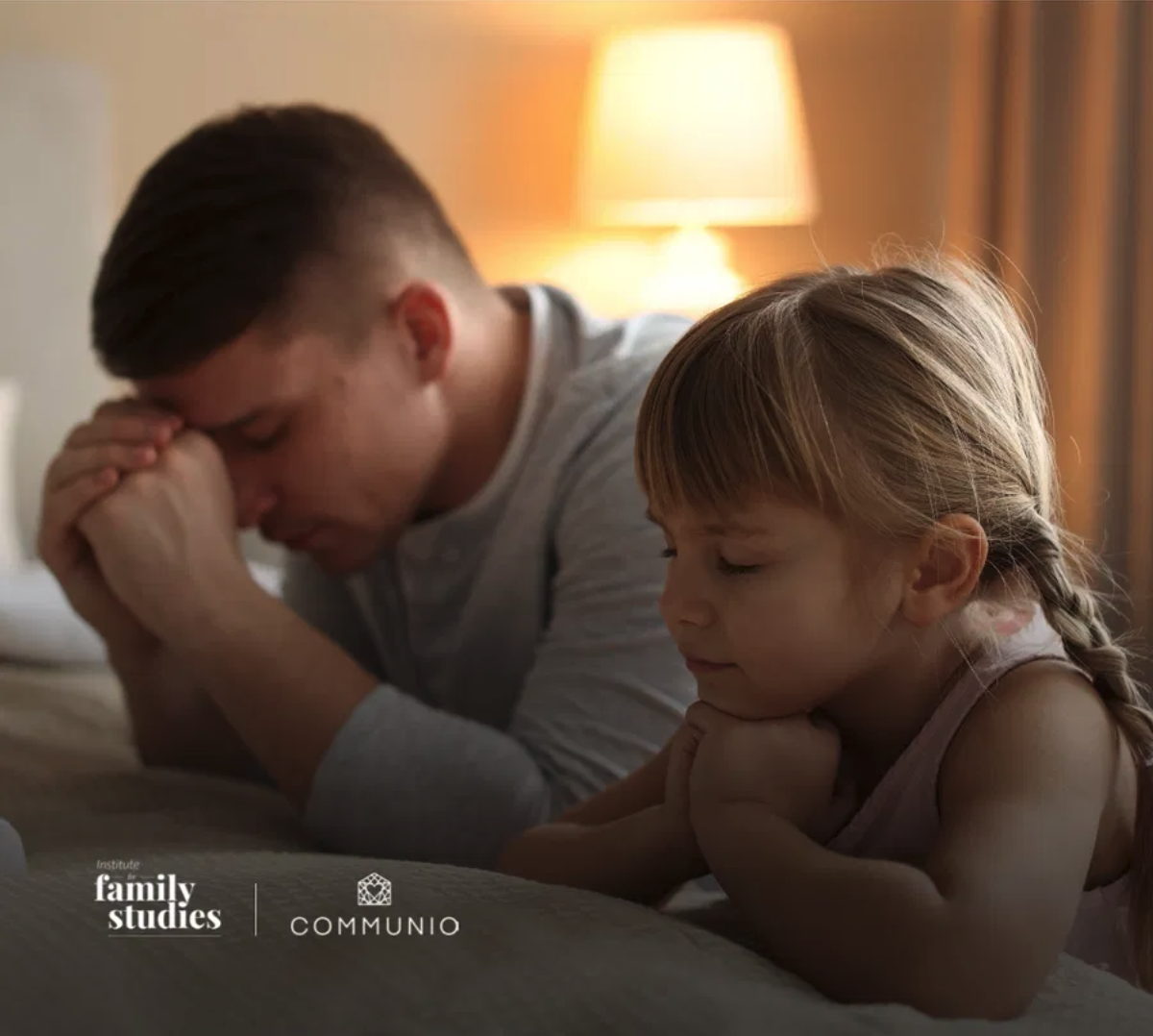 | | Passing The Torch: How Faith Moves Across Generations Institute for Family Studies | | Sometimes an important new academic study does nothing more than confirm what you already know from experience. But what the new study from the Institute for Family Studies (IFS) and Communio confirms is really important. If you already follow the work of Brad Wilcox and Lyman Stone for IFS, you’ll notice familiar patterns in “Passing the Torch: How Faith Moves Across Generations” by Jesse Smith and Jane Lankes Smith of Ohio State University. Families play the biggest role in faith transmission to children. Youth groups, pastors, and peer relationships can make a difference, but not as much as families do. Mothers are usually more influential than dads. But dads play a noticeable role. If children attend church every week with their mother alone, only 29 percent will attend church weekly as adults. That number jumps to 41 percent if both parents took them to church every week as children. Just in time for Father’s Day, even The New York Times acknowledged the vital role dads play in the lives of healthy children. But the Times focused more on the emotional benefits of parenting for dads and their communities. Clinical psychologist Darby Saxbe wrote, Men who prioritize fatherhood may lose some sleep, gain some extra weight and enjoy less free time, but they can also discover a richer life with greater meaning, purpose and connection. And when it comes to brain health and mental fitness, becoming a father is one of the best things you can do. I never expected the Times to opine on the traits of a good man, let alone to say it so well: “strength coupled with a willingness to look out for the young and vulnerable, to teach but also listen, to lead by example, to tackle daunting challenges and to persevere with grit.” The photo negative of this picture of manhood was exposed last week by the grown male who chose to abort his unborn child diagnosed with Down syndrome. Already taking the easy way out instead of protecting the vulnerable by tackling a daunting challenge, the YouTube influencer then portrayed himself as the victim of families understandably upset that he regarded the lives of their loved ones as not worth living. Happy Father’s Day, then, to my Uncle Dave, who led by example with my beloved younger cousin with Down syndrome. Uncle Dave, you never pretended at home on the farm, or at our school or church, that your life was easy, let alone ideal. But you carried on with good cheer and love for your daughter. I can only hope if God calls me to do something half that difficult, he’ll give me the same grace you’ve displayed. Next week on Unseen Things: After the women’s conference I’ll be traveling to see family in Detroit, and I’ll return June 26 with 250th-anniversary reflections on what makes the United States unique. | | | |  | |
|
