
At the time of his death in 2016, readers had been expecting many more books from John Webster. Known for his work on Holy Scripture, the nature of theology, the thought of Karl Barth, and the doctrine of God, Webster was for the most part only getting started. Hard at work on a five-volume Systematic Theology, not to mention other projects, he was taken away from us at the very moment his keen intellect was about to bear its ripest fruit. That project’s absence continues to be felt, as does Webster’s joyful demeanor and voice. It’s therefore surprising and delightful to see the publication of one last book from Webster, The Culture of Theology.
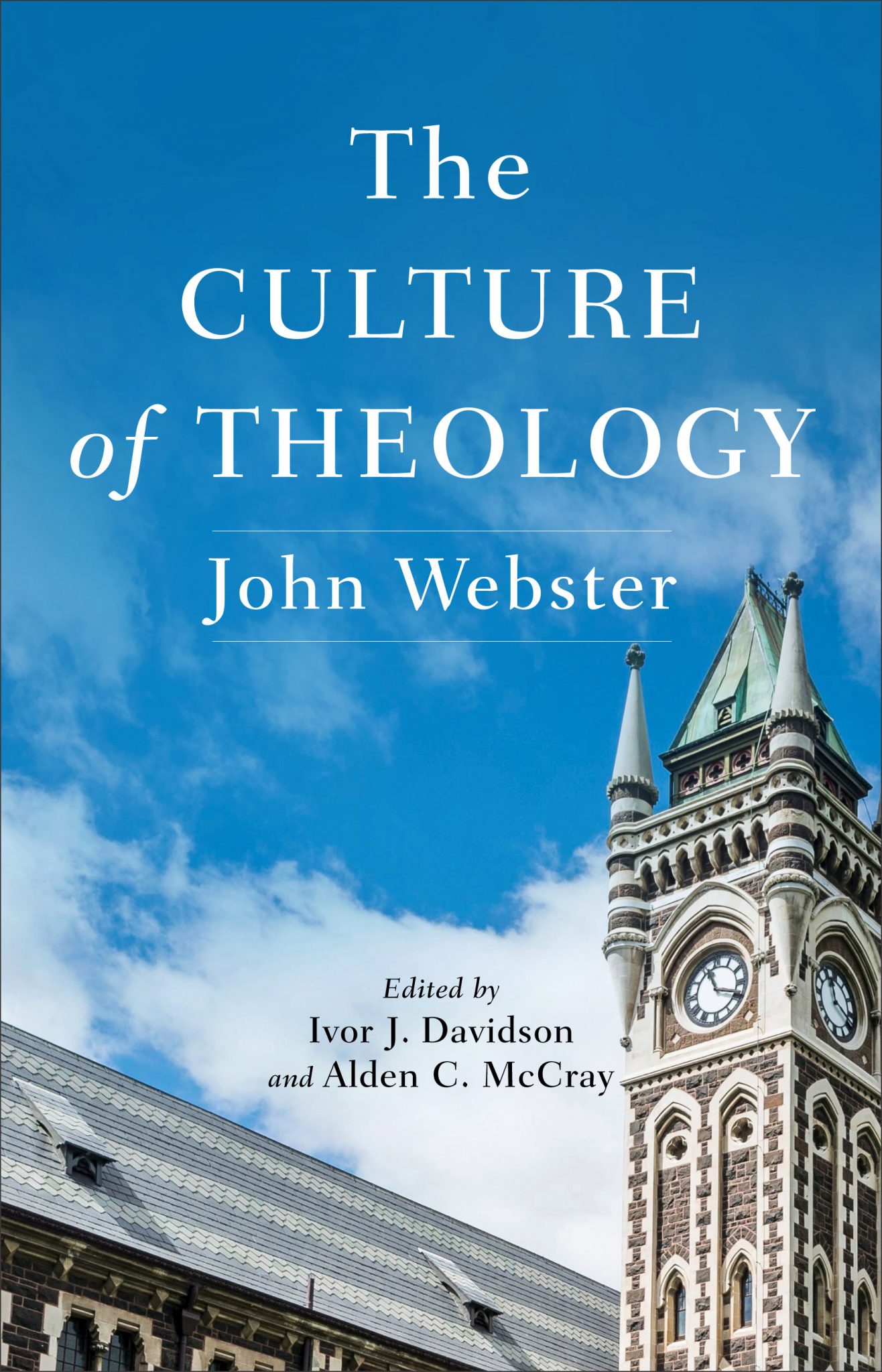
The Culture of Theology
John Webster
John Webster, one of the world’s leading systematic theologians, published extensively on the nature and practice of Christian theology. This work marked a turning point in Webster’s theological development and is his most substantial statement on the task of theology. It shows why theology matters and why its pursuit is a demanding but exhilarating venture. Previously unavailable in book form, this magisterial statement, now edited and critically introduced for the first time, presents Webster’s legendary lectures to a wider readership. It contains an extensive introductory essay by Ivor Davidson.
This new book isn’t quite new, however. It originated as a series of lectures, at the University of Otago in 1998, on the character of theology. We’re indebted to Ivor Davidson and Alden McCray for rescuing them from obscurity. Indeed, Davidson’s eloquent introduction is no small part of the book’s value. The nature of theology is a theme that occupied Webster throughout his career, and this particular iteration of his views wasn’t his last word on the matter. Nevertheless, these lectures possess an energy that makes them valuable in their own right.
Gospel-Centered Theologizing
The Culture of Theology is an elegant and joyful—and at times feisty—summons to “theological theology.” Despite its original context and audience, the issues Webster raises are as relevant today as they were two decades ago. At the heart of Webster’s reflections is what difference it makes for theology that it is concerned with the arresting gospel of Jesus Christ, that inbreaking of the new creation and “great catastrophe of human life and history” (43). The eschatological or apocalyptic texture to his argument is one that Webster would eventually suppress in favor of other emphases he considered better able to make the point. But the point is quite forceful as is: the presence of the risen Jesus by his Spirit at once raises the possibility of theology and calls it into question.
As the title suggests, the gospel creates a particular theological “culture,” an embodied way of life with visible and identifiable practices by which the church pursues certain goals. And since these practices are human actions, they’re capable of cultivation and improvement, as well as neglect. By the Spirit’s gifts, theologians should become certain kinds of people interrogated by the gospel and prodded toward fitting habits of mind and soul. They should exercise these gifts in disciplined action, above all “practices of reading and interpretation, and the educational and political strategies which surround them” (45).
Because it never masters God, because God slays it and makes it alive, theology is therefore necessarily self-critical.
Yet since this way of life is created by the gospel, it’s not something we can make for ourselves. The only thing we can do is constantly cast ourselves at God’s feet in humility and repentance, turning ourselves over to his sanctifying work. Theologians aren’t a professional class with a self-assured, firm grasp of their subject. The subject matter of theological study is dangerous and untamed: God is a consuming fire and therefore never domesticated by even the most sophisticated, pious, or well-meaning theological cultures. The need for repentance never ceases, because the need for God’s grace never ceases. Hence, theology must have a sense of humor. If we can’t laugh at ourselves, we have yet to attain that humility without which no true theology can exist. While the culture of theology must be different from the wider culture, it must not think too much of itself on this account. It is what it is, and theologians are what they are, only by God’s grace. Because it never masters God, because God slays it and makes it alive, theology is therefore necessarily self-critical.
Webster traces this core insight as it applies to reading Scripture and the great texts of the Christian tradition, theology’s institutional settings, its self-critical practices, and theologians themselves. Readers might nitpick certain elements here and there—the somewhat “Barthian” account of revelation and Scripture, the relatively thin account of habits, and so forth. But, as Davidson’s introduction recounts, Webster beat us to the punch and changed his views on these matters, in part because he really tried to live up to this portrait of theology himself.
Pursue God for His Own Sake
For evangelicals, The Culture of Theology perhaps best reads as a gentle and timely provocation. Several themes will be welcome: the concern to bridge the divides between theology and church life, the emphasis on reading Scripture as the heart of theology, and the need for theologians to be disciples themselves.
Other emphases would be easy to brush aside, but only to our own peril. When Webster argues that much modern divinity has lost its confidence in Scripture and catechesis, turning to other sources, it can be easy to think this happens elsewhere and to other people. But we’ve missed the heart of his argument if we can’t see how this is true of ourselves. We often flail about in reaction to the latest crisis rather than displaying a quiet confidence in Jesus’s gospel. Even recent turns toward tradition and “retrieval” of our doctrinal heritage can become little more than social and political winds masquerading as theology.
Do we really want a theological theology—a pursuit of God for his own sake through patient and attentive hearing of his Word—or do we have time for it only insofar as it helps us stake out some territory? Webster’s challenge here is timely, because he asks if we really have been overwhelmed by the gospel and the lordship of Christ enough to let that set our agenda.
This is a challenge well worth hearing, and hearing again.