



Historians sometimes argue that evangelicalism is, at its core, a type of spirituality. David Bebbington’s famous “evangelical quadrilateral” of biblicism, conversionism, crucicentrism, and activism is nothing if not a baseline summary of evangelical spirituality. Much of the time, evangelical spirituality is more assumed than actively pursued. But that’s begun to change over the past generation as evangelicals have increasingly focused more intentionally on practicing spiritual disciplines and reading spiritual classics. Figures such as James Houston, Eugene Peterson, Richard Foster, and Dallas Willard have helped to nurture this evangelical renaissance of spirituality.
One of the problems for evangelicals interested in spirituality is that many of the most famous spiritual classics weren’t written from an evangelical perspective. Sure, we have Jonathan Edwards, Hannah Whitall Smith, A. W. Tozer, and J. I. Packer. But the vast majority of spiritual classics come from the Catholic and Orthodox traditions or, if Protestant, predate the advent of modern evangelicalism in the 18th-century transatlantic awakenings. But what are we to do with the desert fathers, the medieval mystics, and the Puritans? (Believe it or not, most evangelicals don’t read the Puritans for fun.)
Kyle Strobel (professor of theology at Grand Canyon University) and Jamin Goggin (pastor at Saddleback Church) have provided us with a key resource to help evangelicals answer these questions with Reading the Christian Spiritual Classics: A Guide for Evangelicals.. Though the contributors come from a variety of theological and ecclesiastical traditions, all of them write as convictional evangelicals who want to help their fellow evangelicals mature in their faith through reading spiritual classics. I think their efforts are successful.
Why, How, and Who?
Reading the Christian Spiritual Classics is divided into four parts. Part 1 includes three chapters that provide a rationale for reading spiritual classics (Steve Porter), temptations in doing so (John Coe), and the value of spiritual classics for soul care (Betsy Barber). Each contributor is a faculty member at Biola University, which stands at the epicenter of the evangelical spirituality renaissance. The spiritual classics can be a means of sanctifying grace, but they must not be read for the sake of vain curiosity or as a substitute for the Scriptures. We read them for the purpose of spiritual transformation. Pastors and other church leaders especially will appreciate these chapters.
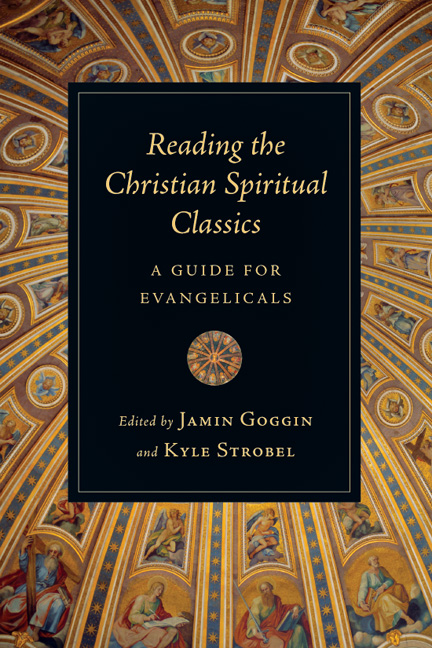
Reading the Christian Spiritual Classics: A Guide for Evangelicals
Jamin Goggin and Kyle Strobel
Reading the Christian Spiritual Classics: A Guide for Evangelicals
Jamin Goggin and Kyle Strobel
Part 2 is dedicated to historical theology and introduces readers to the various schools of Christian spirituality (Evan Howard), the history of spiritual theology (Greg Peters), and the various genres of spiritual classics (James Houston). The first of these chapters is mostly descriptive, the second looks at the theology and worldview that has informed most spiritual writers, especially pre-moderns, and the final looks at some of the classic forms of spiritual writings and the characteristics that have led to their enduring value. Church historians will find these chapters particularly valuable.
Part 3 looks at the art of reading evangelically, offering evangelical perspectives on Catholic spirituality (Bruce Demarest) and Orthodox spirituality (James Payton), as well as an evangelical theology of reading spiritual classics (Fred Sanders). The Demarest and Payton chapters will assuage the doubts many evangelicals have about reading outside our traditions. The authors are upfront about theological differences and even deficiencies in the Catholic and Orthodox traditions. They provide helpful guidance for evangelicals who desire to read in those traditions critically, but profitably. Sanders argues for an “open, but cautious” approach to non-evangelical spirituality. We should embrace an eclectic diet of spiritual reading, but remain rooted in the supreme authority of Scripture and the truth of the biblical gospel.
Part 4 includes five chapters that offer suggestions about how evangelicals can benefit from specific spiritual traditions. Writers in the patristic (Michael Glerup), desert (Gerald Sittler), and medieval traditions (Greg Peters) will seem most alien to contemporary evangelicals. However, the authors believe these traditions can be spiritually helpful when read discerningly. Most evangelicals will probably have less trouble reading Reformation spirituality (Timothy George) or spiritual classics in the Puritan and Pietist traditions (Tom Schwanda), since these movements provide the “scaffolding” of modern evangelical spirituality.
Great Place to Start
Reading the Spiritual Classics is an excellent resource for pastors, seminarians, and other Christian leaders. Virtually all of the authors strike a good balance between descriptive summaries of various approaches to spirituality and thoughtful prescription from an overtly evangelical perspective (including pointed critique, when appropriate). Many readers will be convinced there is value in reading at least some spiritual classics, perhaps even from non-evangelical perspectives, but nobody should feel stunted in their spirituality if they simply aren’t interested in ever reading Imitation of Christ or Practicing the Presence of God.
Some readers might be frustrated because the book is too generically evangelical, but that would misunderstand its purpose. Reading the Spiritual Classics isn’t intended to be a New Calvinist critique of medieval Catholicism mysticism, or a dispensational critique of Puritan spiritual classics, or a Baptist engagement with Eastern Orthodox spirituality. Hopefully, it will encourage evangelicals from those traditions and others to at least consider the merits of the sort of gospel-centered eclecticism that Fred Sanders calls for in his chapter. It should also challenge evangelicals who uncritically devour non-evangelical spiritual classics and assume they are growing in Christ to be more thoughtful and read more wisely for the sake of spiritual maturity.
Reading the Spiritual Classics is a great place to start for evangelicals who are trying to understand “the lay of the land” when it comes to Christian spirituality. But the editors and contributors will surely agree that reading this book is meant to be a gateway into the wonderful world of reading the spiritual classics themselves. Read this book, then take up and read a classic work of Christian spirituality. The editors include a helpful list of suggested readings in the back.