


Charles Haddon Spurgeon (1834–92) wrote more words in English than any Christian to date. His published sermons alone now span seventy thick volumes, containing over 4,000 sermons. In less than forty years, Spurgeon published approximately 150 books. His literary output was, in a word, prodigious. With such a vast literary catalogue, where does one even begin?
Spurgeon’s writing is just part of his extraordinary legacy. For nearly four decades, he pastored the largest Protestant church in Christendom in the largest city in the world in London. No other preacher of that period was better known and better loved across the globe. By the end of the nineteenth century, his sermons had been translated into more than forty languages and an estimated 100 million copies of his public sermons had been sold. Today he’s still read by tens of millions of people worldwide. Most Christians, if they’ve not read Spurgeon, have at least heard him quoted (or misquoted!). His words splash across social media daily, adorn t-shirts and coffee mugs, and sound forth from pulpits around the world every week.
What keeps people coming back to Spurgeon? More than anything, it is his utter absorption with the person and work of Jesus Christ. The center of Spurgeon’s preaching, pastoring, and writing was the Lord himself. Few preachers have captured the surpassing loveliness of Christ and the compelling power of the gospel better than C. H. Spurgeon. That’s why I encourage every Christian to read Spurgeon—because in getting Spurgeon they get more of Jesus.
The Sermons
The best place to start with Spurgeon is simply to read some of his sermons as they represent his most enduring legacy. Though it certainly would have been wonderful to hear Spurgeon’s sermons live, they still sparkle on the written page.
Spurgeon was preeminently a preacher. He viewed the pulpit as central to his ministry. “Chief of all is the responsibility which the preaching of the Word involves,” he wrote in 1875, “It enters largely into the account of a minister’s life-work, and tells upon him more than any other part of his mission.”
Of course, to attempt to read all of Spurgeon’s sermons is an insurmountable task. I usually encourage people to simply begin with a single volume. I personally recommend selecting one of the volumes of sermons preached during the 1870s or 1880s in Spurgeon’s mature years. I recommend starting with volume sixteen in the Metropolitan Tabernacle Pulpit, which is a collection of Spurgeon’s sermons preached in 1870. These sermons reflect a potent combination of theological depth, pastoral warmth, and evangelistic fervor. In reading Spurgeon’s sermons, Christians will find their faith strengthened and their affections stirred for Christ and His Word.
Most of Spurgeon’s sermons are available for free online at the Spurgeon Center website.
The Treasury of David
Apart from his published sermons, Spurgeon’s magnum opus was his seven-volume commentary on the entire psalter, titled The Treasury of David. Today, the work is typically published in three volumes.
Written over the course of sixteen years, The Treasury of David showcases better than any other book Spurgeon’s exceptional literary gifts. In the preface to the first volume he wrote, “The delightful study of the Psalms has yielded me boundless profit and ever-growing pleasure; common gratitude constrains me to communicate to others a portion of the benefit, with the prayer that it may induce them to search further for themselves.”
Spurgeon believed Christians should constantly read the Psalms because they speak more to Christian experience than any other book of the Bible: “No man needs better company than the Psalms; therein he may read and commune with friends human and divine; friends who know the heart of man towards God, and the heart of God towards man; friends who perfectly sympathise with us and our sorrows, friends who never betray or forsake.”
Morning and Evening
Spurgeon published various devotional works over his lifetime, the best of which is his collection of daily devotionals titled Morning and Evening. With readings for the start and end of each day, Morning and Evening offers short and edifying reflections on various texts of Scripture designed to strengthen the faith of believers. This volume has served the devotional lives of millions of Christians, making it one of Spurgeon’s best-loved works.
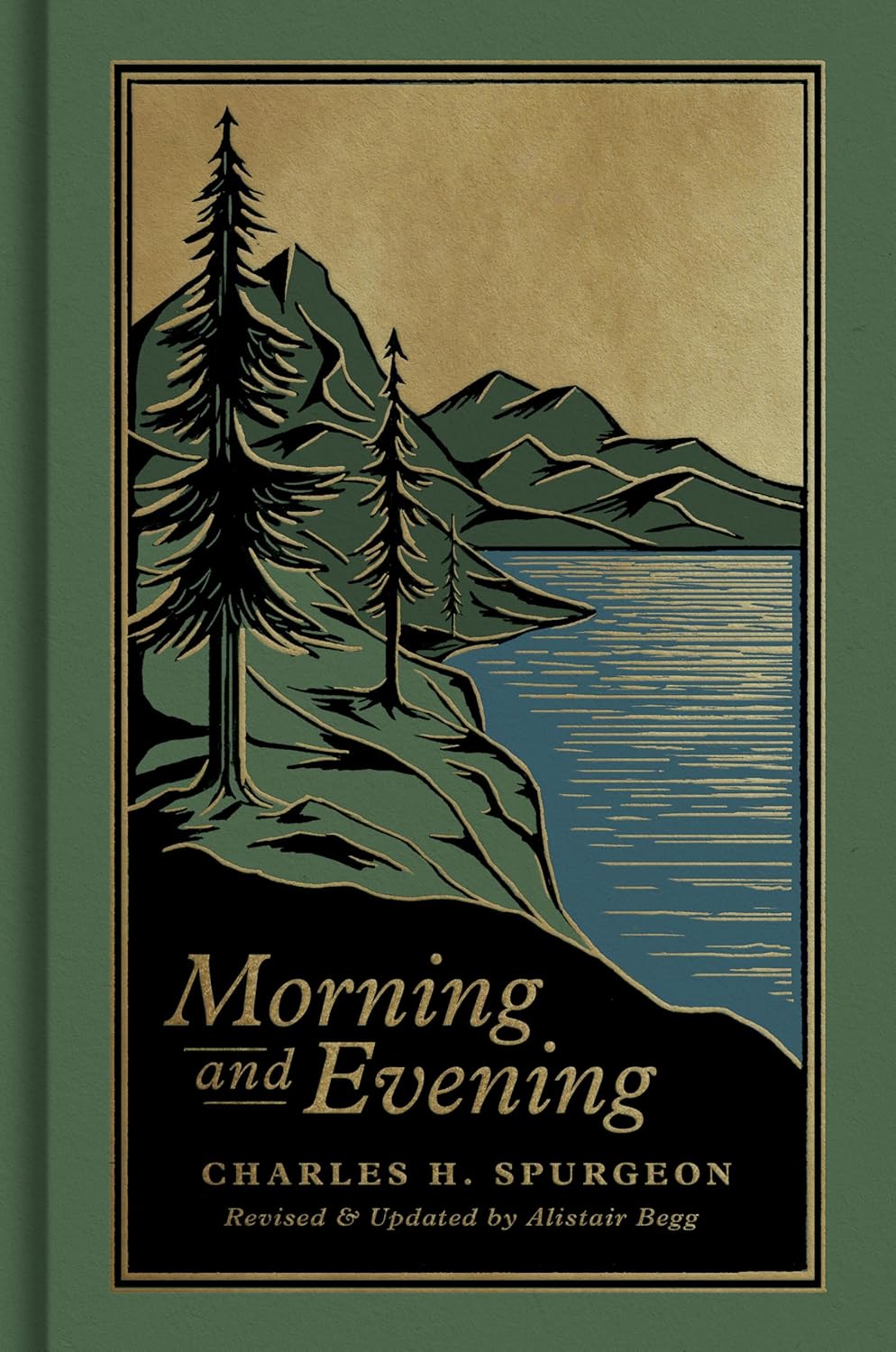
Morning and Evening: A New Edition of the Classic Devotional Based on The Holy Bible, English Standard Version
Charles H. Spurgeon
Morning and Evening: A New Edition of the Classic Devotional Based on The Holy Bible, English Standard Version
Charles H. Spurgeon
For over 100 years, Christians have started and ended each day with Charles Spurgeon’s Morning and Evening as a companion. Featuring two brief daily readings throughout the year, this classic devotional emphasizes the importance of abiding in Christ and consistently meditating on God’s word. The richness of Spurgeon’s biblical understanding offers a look into the heart of one of England’s foremost pastors and enduring Christian authors.
Lectures to My Students
First published in a series of three volumes, Lectures to My Students is a collection of Spurgeon’s Friday afternoon lectures to the assembled body of the students at his Pastors’ College. There he gave some of his most famous addresses such as “The Call to Ministry,” “The Minister’s Fainting Fits,” and “The Blind Eye and the Deaf Ear.”
These lectures show Spurgeon at his finest as he spoke extemporaneously on matters related to pastoral theology and various practical subjects. His seasoned wisdom, sound judgment, and veteran experience are on full display in these lectures. They also provide characteristic specimens of Spurgeon’s quick wit and playful sense of humor, as he often provides hilarious critiques of the typical preaching of the day. Lectures to My Students, usually published today in single volume, is a true ministerial classic and belongs on the shelf of every seminary student and pastor.
Going Deeper
For readers seeking to better understand Spurgeon’s life and ministry, it’s worth digging into Spurgeon’s two volume Autobiography. For an older biography that provides an edifying account of Spurgeon’s life, ministry, and theology, I would recommend Arnold Dallimore’s Spurgeon: A Biography. For more contemporary treatments of Spurgeon, I would suggest my introductory biography Spurgeon: A Life as well as Geoff Chang’s Spurgeon the Pastor.
The world of literature by and about Spurgeon is vast and ever-growing. But someone could read ten pages of Spurgeon’s own writing every day for a lifetime and still not get through all his works. On one level, it doesn’t matter where a reader begins with reading Spurgeon. Every page has a blessing on it, because no matter where you look in Spurgeon’s books, you’re sure to find the Lord Jesus Christ.