Written by Daniel Darling, director of the Land Center for Cultural Engagement at Southwestern Baptist Theological Seminary.
As I write this, I’m laughing at the viral social media posts of World Cup visitors from European and Asian nations experiencing uniquely American fare. Alexis de Tocqueville went back to France in the late 1800s boasting of America’s distinctive blend of religion and liberty, and of the local civic institutions that made up the unique web of American democracy. Today, he might go back to his home country boasting of Buc-ee’s and Waffle House, unlimited chips and salsa, and the unmatched glory of a fresh plate of biscuits and gravy.
Sometimes it takes outsiders to help us appreciate what has become familiar. This is how I think about patriotism as America celebrates 250 fragile years of freedom. In my classes, it’s often the immigrants or children of immigrants who can’t stop talking about America and are the least embarrassed when Lee Greenwood starts to sing “God Bless the U.S.A.”
Patriotism is a lot of things—love of the people, place, history, and ideals of the nation where God has sovereignly called us to live—but at the very least it’s simple gratitude. And gratitude is hard to muster when what is good becomes too familiar. This season with its many America 250 celebrations reminds us to obey a biblical command: “In everything give thanks” (1 Thess. 5:18, KJV).
I felt gratitude when I stood for the first time at the Lincoln Memorial, overcome by the enormity of Lincoln’s burden, this great man who held the nation together during her most perilous moment. I feel gratitude when I look at the tightly folded flag in my office, the one that draped the coffin of my Jewish grandfather whose parents came here escaping the pogroms in Europe in the early 19th century. Grandpa endured the Great Depression, fought as a tank commander in World War II, and then came home and raised a family.
America is far from perfect. This we know from the headlines, from history, and from the harangues we hear on the campaign trail. But America is also a good gift. Her ideals are beautiful, even if they’ve never been fully realized. I’d argue that until Christ returns to usher in God’s kingdom, our representative republic is one of the best ways to organize a country.
I also believe it’s good to love America. A Christian can hardly seek the welfare of a country he hates (see Jer. 29:7). Richard John Neuhaus, the Catholic social commentator, went so far as to say that patriotism, properly ordered under the lordship of Christ, is a “species of discipleship.”
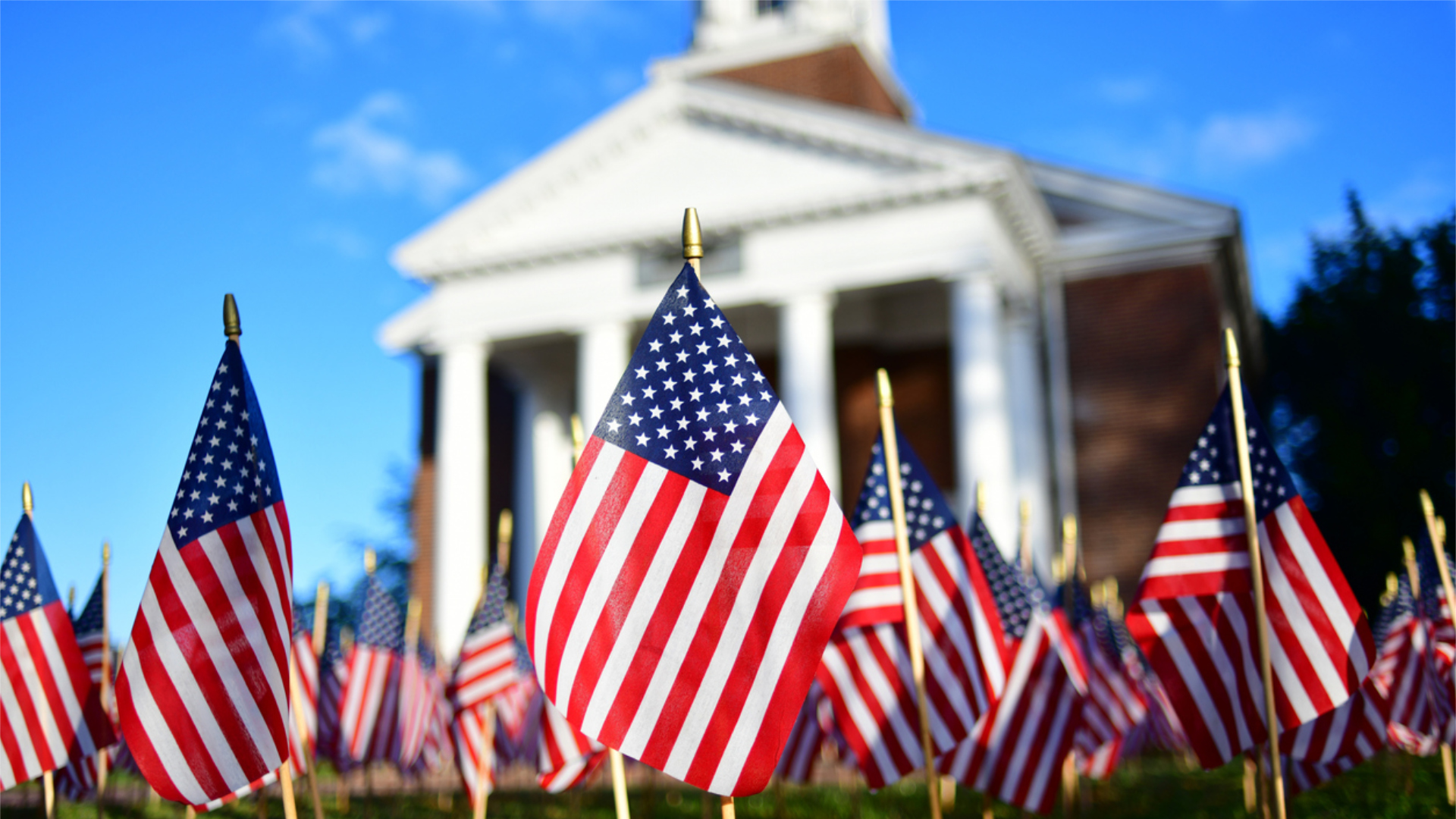
So as we see old glory waving in the breeze, as we lift our hands to our hearts in response to the national anthem, as we watch fireworks and attend parades, let’s whisper a silent prayer to God and thank him for allowing us to live in a nation so free.
—Daniel