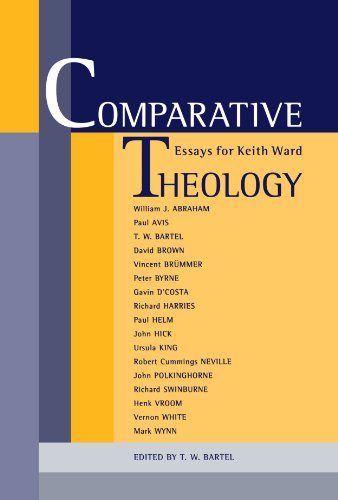

Keith Ward has been one of the most influential and significant English systematic theologians of recent times. His books have generally been well received and respected from a breadth of theological opinion. Sometimes he has appeared quite orthodox while at other times he has, not unfairly, been characterised as a radical pluralist. This enigmatic quality of his general theology is odd given that he writes with clarity. This collection of essays helps to understand a little better the riddle of Ward’s theological position (his own autobiographical piece is called ‘A Guide for the Perplexed’).
The seventeen essays that form the book are a very mixed bag. Some engage directly with Ward’s writings and offer detailed interaction with his ideas. Other essays could have been written for anyone and almost appear to have had Ward’s name slipped in for effect. These latter essays tend to reflect the interests of the authors rather than being of direct engagement with Ward.
The list of contributors is lengthy, including such notables as Paul Avis, Vincent Brummer, Gavin D’Costa, Paul Helm, John Hick, John Polkinghorne and Richard Swinburne. The essays are divided into sections that reflect stages in Ward’s work: revelation, creation, human nature and community along with an autobiographical piece. Essays interacting closely with Ward include those on pluralism by Byrne, Hick and D’Costa who also dialogue with one another. Helm engages with Ward’s aversion to a strong doctrine of divine sovereignty. Scientific issues are also given attention and Polkinghorne appreciates Ward’s pluralist approach to understanding creation.
Ward is no evangelical. But is he still, broadly, orthodox? He accepts that he may be described as ‘two selves’—the ‘pious believer’ and the philosophical thinker who ‘stands back’ from dogmatic claims (190). More specifically, he is happy to locate himself in the western liberal tradition stemming from Friedrich Schleiermacher (195). As a ‘pious believer’ Ward uses the language of the Christian tradition. But for him the only non-negotiable dogma is that ‘there is a spiritual realm which is in some sense more real than … the material world’ (198). This belief is vague enough to accommodate the claims of any and every major world religion. At the level of bedrock belief, Ward is not so dissimilar to John Hick despite his desire to maintain a greater commitment to the particularities of the Christian narrative.
It is to Ward’s credit that a book like this should be assembled in his honour. It reflects the breadth of his thought that the essays should range across such diverse topics. It reflects his reputation that the contributors should be from such a range of backgrounds. However, we might wonder how helpful a ‘guide for the perplexed’ Ward really is. He rejects evangelicalism as ‘myopic and unduly restrictive’ (191). His own theological vision offers many questions but few answers. This book is a worthy tribute to that vision. The essays are of a high quality but remain accessible without much specialist knowledge either of the subject areas or Keith Ward’s own work.
Moorlands College, Christchurch