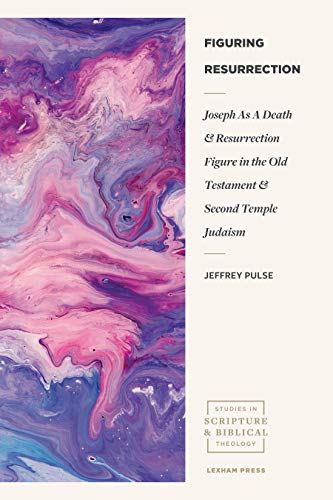
More words are given to Joseph and his story than any other character or narrative in Genesis. Despite this, Joseph disappears from most of the Old Testament. After his burial (Josh 24:32), only Psalm 105:17–22 directly references the events of Joseph’s story. Despite his “fade from the pages of Scripture” (p. 252), Joseph somehow becomes a major character in Second Temple literature. What explains this resurrection of interest in Joseph? After the fall of Jerusalem, the people of Israel sought to establish their identity and evaluate their situation, both culturally and theologically. Instead of establishing a new identity, they returned to their Scriptures. Narrative portrayals of death and resurrection offered hope for a future resurrected identity as God’s people. This led to a new appreciation of the Joseph narrative (p. 261).
However, these Second Temple texts needed to overcome a perceived negative characterization of Joseph found in the Masoretic Text (pp. 147–62). In a fascinating study of narrative and historical interpretation, Jeffrey Pulse argues that editors and translators were willing “to polish and restore the image of Joseph” (p. 162). But the ways that they polish Joseph’s image portray certain convictions about his character. This leads Pulse to conclude that “Joseph is not primarily a moral and ethical example, an excellent statesman, or a salvific character…. [Joseph instead is a] death-and-resurrection figure” evident through reading the text as a unified theological narrative (pp. 279–80).
Chapters 1–2 argue for reading the Joseph narrative as a unified theological narrative. Pulse argues that historical-critical, form-critical, and tradition-critical methods have failed to provide adequate interpretations. Instead, he argues for a canonical reading focused on theological motifs evident across the narrative.
Chapter 3 provides a close reading of the MT of Genesis 37–50. He pays close attention to theological motifs—particularly the motif of death and resurrection. He concludes that “the life of Joseph, with all its ups and downs, [gives] example after example of death and resurrection” (p. 145). These examples are further highlighted in chapter 5.
Chapter 4 provides an account of the various negative portrayals of Joseph’s character evident in the MT. The negative portrayal of Joseph, widely recognized among Joseph scholars, poses problems for those who read Joseph as a hero of the faith (p. 161). Thus, extrabiblical and pseudepigraphic literature arose in the Second Temple period to resurrect Joseph’s portrayal (p. 162).
Chapter 5 provides an analysis of twelve potential death-and-resurrection motifs in the Joseph narrative—from separation-and-reunion and slavery-and-freedom to stripped-and-clothed garments. Whereas a few of these motifs are not as evident as others, the cumulative case argues persuasively that “no other character and no other narrative in the Old Testament … brings together so many of the themes of this motif” (p. 195).
Chapters 6–7 look at interpretations of the Joseph narrative evident in the Septuagint and Targum Onkelos translations of the passage. Pulse argues that the Egyptian context of the Septuagint translators may have led them to supplement Joseph’s image to emphasize that an ancient Jew had blessed Egypt. He argues that Targum Onkelos gives a significant makeover to Joseph’s characterization to “polish the image of Joseph, making him more palatable to rabbinic tastes” (p. 226). Although their emphases are different, neither of these ancient interpretations removes the death-and-resurrection motifs in their resurrection of Joseph’s character.
Chapter 8 gives a brief discussion of Second Temple literature that shows Joseph’s resurgent popularity. The main reason, according to Pulse, comes through the death-and-resurrection shape of the story that gave hope for restoration and redemption (pp. 260–61).
Chapter 9 gives an even more brief discussion of Joseph’s use in Philo and Josephus. He notes that these appropriations of the Joseph narrative argue against rigid uniformity of interpretation (p. 262). As with the previous chapter, one wishes Pulse would have said more. The fascinating glimpse of the interpretation of Joseph noted in these chapters begs for additional commentary.
The final chapter studies the interpretation of Joseph’s bones from the MT through to the Second Temple. Pulse argues that Joseph’s statement about his bones (Gen 50:24–25) provides a depiction of the Exodus noted in canonical reflection (Heb 11:22). He discusses the prominence of Joseph’s bones in Jubilees, The Testament of Joseph, and Ben Sira. Pulse’s reflection on the canonical and historical interpretation of Joseph’s bones in this chapter shows the fruitfulness of theological reflection on the death-and-resurrection motif. The book ends with a brief conclusion chapter that summarizes the arguments and suggests some implications for interpretation.
Samuel Emadi’s From Prisoner to Prince: The Joseph Story in Biblical Theology, NSBT 59 (Downers Grove, IL: IVP Academic, 2022) argues that the Joseph story, though seemingly absent from most of the Old Testament, typologically influenced a series of later narratives and even shaped how biblical authors narrate redemptive history. Pulse has made a more nuanced claim and shows that the post-exilic Israelite community found new hope for a new context through reviving theological motifs found in Joseph’s story. As a result, “Joseph was resurrected into a new life of prominence among the Second Temple people of Israel” (p. 261).
Both pastors and seminary students will profit from reading this book. Pastors will find much worth considering the close readings of the biblical text, as well as its reflection on a variety of theological motifs. Seminarians will find an exceptional example of theological interpretation. In chapter 1, Pulse quotes Brevard Childs as suggesting that “proper appreciation of the canon directs the reader’s attention to the sacred writings rather than to their editors” (p. 21). Figuring Resurrection has accomplished this goal. Through a close analysis of canonical and historical interpretation, Pulse has drawn the reader’s attention more closely to the sacred text of the Joseph story.