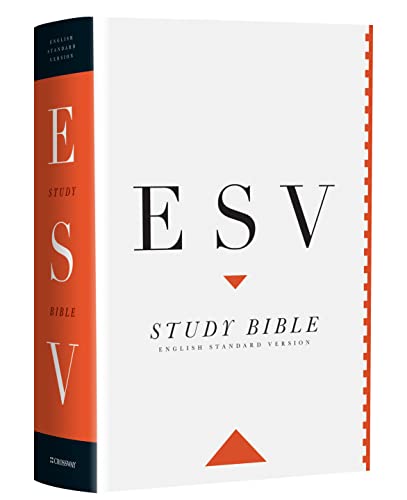

This review assesses the New Testament section of the ESV, a new translation produced by an international galaxy of evangelical scholars.
Any New Testament translation can be classified by the answers it gives to at least the following questions: (1) is its language ancient or modern?; (2) is the language level more literary or more colloquial?; (3) who are its intended readers?; (4) what are its intended uses?; (5) what editions of the Greek text is it based on?; (6) are its translation principles more concerned with the forms of the source languages or with the meanings conveyed by those forms? At this stage in the history of Bible translation into English, any new version has to have strong reasons to justify its launch into a market that must be approaching saturation. So how does ESV answer these questions?
(1) The language is not archaic in the sense of preserving vocabulary items no longer understood, or obsolete forms like thee and thou. But in its syntax it is certainly not modern either, and the long sentences in for instance Luke 1:68–79 are not at all easy to read aloud well. Inclusive (or more precisely non-exclusive) language is used very sparingly, so that we find anyone rather than KJV any man in 1 John 2:1, but in Matthew 4:4 and Luke 4:4 we still read Man shall not live by bread alone.
(2) As may be anticipated from the answer to the first question, the language level leans much more towards the literary than the colloquial. Moreover the text is liberally sprinkled with forms unnatural to modern speakers, such as behold (e.g. Matt. 1:20, 23; 2:1, 9, 13, 19; 3:16, 17 etc.), and rise/rose (e.g. Matt. 2:13, 14, 20, 21 etc.). Traditional theological terminology is retained, so that for instance the word righteousness is used both in Matthew 6:1 and Romans 3:21–22, despite the significant difference in its meaning in these different contexts.
(3) The intended readership is never identified in the Preface, so one is left to guess. The Preface does state that the ESV ‘stands in the classic mainstream of English Bible translations’, and mentions Tyndale, KJV, RV, ASV, and RSV. The absence of any mention of the NASB, NKJV or NRSV, which are plainly in the same tradition, seems to imply that the intended readership is people who for one reason or another are dissatisfied with those versions.
(4) The Preface claims that ‘the ESV is equally suited for public reading and preaching, for private reading and reflection, for both academic and devotional study, and for Scripture memorisation’. Such an (over-) ambitious claim on the one hand inevitably limits the potential readership to those who are already committed and well educated Christian believers, and on the other hand virtually excludes ESV from use by the less educated and by unbelievers—that is to say by the large majority of the population.
(5) The Greek text on which the ESV is based is that of the UBS 4th edition/Nestlé-Aland 27th edition; that is to say it is fully up to date with mainstream NT textual scholarship. In this respect it has an advantage over the NKJV.
(6) The Preface states twice that the ESV is ‘essentially literal’ in its approach to translation. Yet it also ‘seeks to carry over every possible nuance of meaning in the original words of Scripture into our own language’. This double aim is an attempt to square the circle, and, sadly, betrays a fundamentally flawed understanding of the nature of language and of translation: the worldwide Bible translation community has demonstrated again and again that the more literal the rendering, the more likely it is that the meaning of the original will be concealed, or even lost. A good example of this is the retention of the literal Woman in Jesus’ address to his mother in John 2:4 and 19:26. This was an acceptable form of address in Greek (compare John 4:21; 8:10; 20:13, 15) but carries completely the wrong connotative meaning in English, and makes Jesus sound rude and brusque. An emphasis on literalness cannot do other than reduce a translation’s ability to communicate the meaning intended by the original writer. The circle cannot be squared.
In terms of production, the hardback review copy is sturdily bound, and the Bible text is pleasingly printed, though the centre column references and footnotes are in a font size minute enough to deter all but the most assiduous readers. Happily the text is printed in paragraphs, rather than having each verse begins a new paragraph as in the KJV, NASB and NKJV. There are section headings, though there is no statement on how the decisions were made where to place them. This is by no means as self-evident a matter as it may seem to anyone who has never tried to do it. A useful table of weights and measures is added at the back, together with a brief (72 page) concordance, again in a very small type size. There are no introductions to the individual books, no chronological charts or genealogies, no glossary of technical terms, and most surprisingly no maps.
Retired UBS Translator