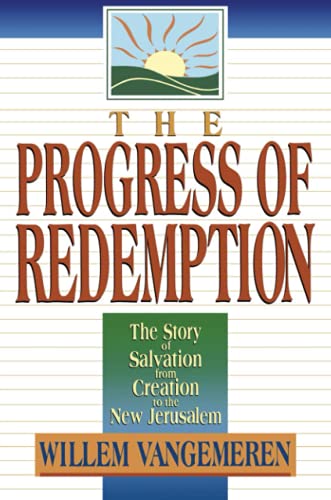
This work by the Associate Professor of Old Testament at Reformed Theological Seminary is really a thematic survey of God’s redemptive and kingdom programmes. The introduction argues for a three-fold approach to Bible study (p. 43). One should study a passage in its literary context, its canonical context, and its redemptive-historical context. The first category is genre-sensitive and focuses on the message as it is contained within the book alone. The second level associates the book with other like works of the period and with the book’s placement in the canon. How does Joshua fit in with the other historical books of Israel? The third level is the level of theological synthesis. How does this section fit into the whole of the Bible? The author applies this three-part model to biblical-theological study. It is a sound approach. The book is divided into twelve parts, usually reflecting a key division of the canon and of history, though the first four units deal with material in the Torah to lay a foundation for what follows. Most of these units deal with a given period in three chapters distinguishing these three basic steps.
The structure of the book is the key to understanding it. The goal is to move through the Bible so that the progressive development of key themes is manifest. The book is well suited for a survey class on the plan of God in the Bible. VanGemeren wishes to stress the fundamental unity of God’s plan and discusses every book of the Bible as it relates to these fundamental themes. He is keen to show how all the covenants are still operative and that there is unity in God’s plan and in his institutions as he brings salvation to reality. VanGemeren argues that the kingdom of God has always been present, whether in the theocratic structure of Israel, in the church, or in the consummation. He closes with a plea that despite differences in how evangelical traditions see the end, there is much that they hold in common (p. 474).
In addition, he briefly treats other relevant issues, so that his study is comprehensive in a way other such studies are not. He has a short section on the intertestamental period (ch. 26), overviews the history of the church (ch. 36), and mentions what he regards as the seven challenges currently facing the church (ch. 38). This last chapter is brief and nicely done.
The book has many merits. First, it very adequately and sensitively moves through the various books of the Bible and shows how the promises of God are presented gradually, with the early passages only becoming totally clear in their force as later revelation serves to clarify earlier revelation. For example, Genesis 3:15 is handled with care both in terms of its clear emphasis in the context of Genesis of a struggle between man and creation and in terms of its later relevance to Jesus Christ (pp. 92–93). Second, many themes are brought to the surface in each section so that basic emphases in the various units of the Bible are made clear. Third, the relationship of later texts to earlier biblical ideas is consistently noted. All these benefits make the volume useful, though it must be said that the survey form of the work means naturally that there is little new here and that almost all themes are treated very briefly.
Despite these merits, problems remain. The book’s structure makes the treatment repetitive and hard to work through. One wishes the author had put the book into three sections: one working through the books individually, another working through the canonical groups, and the third tying together the pieces into the basic synthesis. There still would have been some repetition, but this way the flow of the argument for each level of interpretation would have remained clear, rather than forcing the reader to move constantly in and out of three concurrent discussions. To put together the importance of the Spirit’s role for the church one has to read pp. 360, 404, 409–410 and 458–460. This sometimes makes the reading frustrating, though for the diligent there is reward.
Also, VanGemeren has a major desire to challenge a view of the kingdom that is popular in NT studies. This is the view of Kümmel who argues that the kingdom is already and not yet. VanGemeren wishes to argue that the kingdom has always been present and that the NT emphasis on the kingdom’s presence is in continuity with the OT kingdom (pp. 347–355). The discussion is at the centre of his thesis and it seems to fail.
The major problem is a failure to distinguish between OT texts where the kingdom of God is described as present and OT texts on the hope of the kingdom of God as something to be anticipated. Those OT texts that depict the kingdom of God as present express God’s general rule as Sovereign Creator. As such, this OT theme is a given in all biblical periods since it is grounded in God’s role as Creator of all men.
The kingdom of God in the NT is a particular eschatological entity, anticipated by the prophets and regarded as of such a superior nature as to be a new entity ushering in a new era. Here one looks at the plan of God as redeemer. From the OT perspective this kingdom is not present, but is coming. Even in the NT, it is arriving: inaugurated, but looking to consummation. A text like Luke 7:27 makes this distinction between promise and inauguration very clear in distinguishing John the Baptist from Jesus, highlighting the difference between the eras. VanGemeren attempts to explain the disjunction between promise and inauguration in texts like Matthew 3:1–3; 11:12–13; and Luke 16:16, but the efforts fail to convince (pp. 349–350). In addition, he fails to consider texts where Jesus mentions the new wine not going into old wineskins or where the Sabbath practices are challenged or where Paul describes the law as a pedagogue. Such passages point to more discontinuity than VanGemeren seems to allow, though he clearly is aware of the problem.
VanGemeren says some important things here, such as that the kingdom is not identical with the church and that perhaps Israel has a future, but to argue the church has always existed is to ignore a text like Acts 11:15–18, where Peter can speak of the ‘beginning’, or Ephesians 2:14–22, where the new temple is called a new man and is built on the foundation of the apostles and NT prophets, not OT prophets as Van Gemeren suggests (pp. 326, 398, 462–463). The people of God are one people, but they existed in various institutions through which God has worked. It does not help the portrait of the progress of God’s plan to blur these institutions together, even when their functions are very parallel and even though they can share certain metaphors as a result. One can see relationships without arguing for identity.
In sum, this is a helpful survey of God’s plan. Its basic approach is sound, though some elements in the execution and emphasis leave questions. For someone seeking an overview of major redemptive themes of the Bible, this is a good starting point.