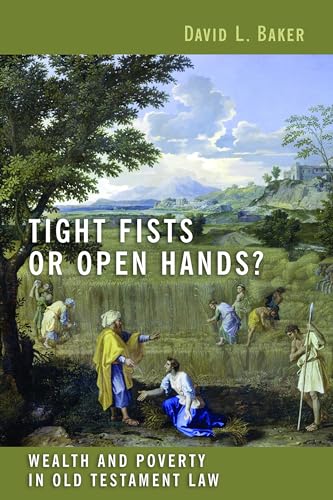

It is not very often that I run into a book that I wish I had the privilege and capacity of writing. Yet, no regrets. Reading it was a rewarding experience, one that challenged me to move on to something else because the subject has been addressed accordingly. The bibliography is fifty-three pages long, and that does not include the extra forty pages with separate indexes of subjects, foreign words, Scripture, ancient Near East laws, and authors. According to the author, “the heart of the book is a new translation and exegetical study of all the biblical laws concerned with wealth and poverty” (p. xiv), and he does so without using vocalized Hebrew or transliterating Semitic languages.
The book investigates three aspects of life in the ancient near east context: (1) property and land, (2) marginal people, and (3) justice and generosity. As the subtitle suggests, his quest hinges upon the expected distinction in the way biblical and ANE laws deal with wealth and poverty. Is it with tight fists or open hands? For the OT laws he follows a canonical approach, seeking to understand them in their biblical (Decalogue, Book of the Covenant, Holiness Code, and Deuteronomistic Laws) rather than historical context. For the ANE laws a rather chronological order is adopted for organization’s sake only, inasmuch as “all ANE laws in question are virtually earlier than those in the Old Testament” (p. 2).
Chapters 2–4 address property and land: property rights (ch. 2), property responsibilities (ch. 3), and ancestral land (ch. 4). Baker’s analysis is a priceless resource for pastors and leaders who need to preach on a weekly basis; it will certainly enhance their interest in biblical laws as a source of preaching. For example, when dealing with property responsibilities, Baker concludes,
the most significant difference is that the ancient near eastern laws make detailed provisions for renting, whereas the parallel clauses in the Book of the Covenant are concerned with borrowing. There is no mention of borrowing in the ancient near eastern laws, while the only biblical mention of renting is a brief supplement to the law of borrowing (Exod 22:15b). It seems that here we have an Israelite distinctive, whereby a member of the covenant community is expected to help another member in need by lending an animal without making a profit, just as he or she is expected to lend money without interest to a needy person. (pp. 73–74)
Chapter 4 superbly analyzes the holy jubilee within its proper semantic domain, namely, the question of ancestral land. When one looks at certain issues over against their original context, which in this case includes a comparative study with other law codes, it is possible to see the entire set of conclusions that are dependent upon the holy jubilee. For instance, we can see that “land in ancient Israel was not really sold at all, but simply leased until the year of jubilee” (p. 84). Why? Because
God himself asserts his claim as ultimate owner of the land occupied by Israel. His gift of the land is not an unconditional grant, but more like a long-term lease or loan. This means that the people of Israel are like tenants or stewards, who are free to live and work in the land but do not have absolute rights of disposal over it. (p. 85)
Chapters 5–7 elaborate on marginal people: slaves (ch. 5), semi-slaves (ch. 6), and other vulnerable people (ch. 7). As one plunges into these chapters, it becomes clear that unless a definition for these three social class is achieved it is impossible to formulate a satisfactory answer to the question “tight fists or open hands?”
The final section of the book (chs. 8–11) deals with justice and generosity: just lawsuits (ch. 8), shared harvests (ch. 9), generous loans (ch. 10), and fair trade (ch. 11). As I say above, the way Baker arranges the content of his study leads me to emphasize the importance of having a proper definition of “marginal people” before we get into matters of justice and generosity. Take, for instance, the case of witnesses, discussed under just lawsuits (ch. 8):
Great harm can be caused by false witnesses, as shown in the death of Naboth and the death of Jesus, to mention just two of the most notorious examples. At the same time, it is irresponsible to avoid giving false testimony by substituting silence for speech. Witnesses may be reluctant to speak out if they know that what they say will be unwelcome (cf. Amos 5:10), so Leviticus makes it clear that members of the community have a duty to testify if they have seen a crime take place. (p. 208)
The concluding chapter (ch. 12) draws out the key similarities between OT and other ANE law codes—“the differences far outnumber the similarities” (p. 305)—and the theological and ethical implications. For instance, Baker rightly concludes,
Compared to today’s world, where slavery is illegal yet there are more slaves than at any other time in history, it is arguable that Old Testament law is simply being realistic. Rather than outlawing the institution of slavery completely, it establishes various principles to ameliorate the condition of the poor and needy. If all these principles had been practiced consistently, slavery would probably have disappeared many centuries before Wilberforce. (p. 312)
I strongly recommend the book to pastors and leaders who want to reconsider much of what has been said on wealth and poverty in the OT in light of this comparative study. Baker has scored a priceless contribution by putting together exegesis and comparative studies in a way that lay people benefit.
Andrew Jumper Graduate Center, Mackenzie University
Sao Paulo, Brazil
Most of us, I suspect, develop fairly standard ways, one might even say repetitive ways, to appeal to the motivations of our hearers when we preach the gospel. Recently, however, I have wondered if I have erred in this respect—not so much in what I…
I want to thank Themelios for the unusual opportunity to interact with two reviewers of my book Ancient Near Eastern Themes in Biblical Theology. An author does not often have the opportunity, not only to join discussion with two reviewers, but also to express and…
When I came to Westminster Theological Seminary in Philadelphia as a young student in the 1960s, two things struck me. First, under the portrait of one of the founding fathers, the biblical scholar Robert Dick Wilson, was a simple epithet: “I have not shirked the…
In 2006 on Christianity Today’s leadership blog, Pastor Brian McLaren urged evangelical leaders to find a “Pastoral Response” to their parishioners on the issue of homosexuality. In short, he argued that the Bible is not clear on the moral status of homosexuality and that the…
We cannot overstate how important knowing the context is for understanding the significance of any communication, whether that is a simple word, sentence, paragraph, larger text, sign, photograph, or cultural cue. This is axiomatic for interpreting an ancient document like the Bible. Yet it is…