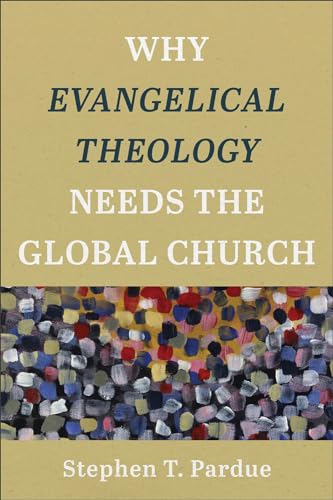
In the landscape of theology, the region between cultural contextualization and fidelity to Scripture is fraught with difficulty. The contemporary shift toward global theology only further enhances this reality. In Why Evangelical Theology Needs the Global Church, Stephen Pardue charts a path for an evangelical contextual theology. His approach appreciates the blessing of local cultures while maintaining an unflinching faithfulness to the timeless truths of God’s Word.
In chapter 1, Pardue begins by addressing three common challenges to the legitimacy of contextual theology. The first is that theology is a scientific enterprise that should be independent of cultural influences, to which he responds that scientific inquiry itself is culturally-rooted and practices differ across contexts. The second objection is that cultural accommodation runs the risk of syncretism, therefore such influences must be minimized. Pardue responds by appealing to the value of contextualization, drawing from New Testament examples, including Paul in the book of Acts. The final objection is that cultural context may be helpful, but theological content should remain unchanged. Pardue observes that even the process of principlizing or abstracting theological truths is a contextual practice.
In chapter 2, Pardue argues that culture ought to serve a ministerial role to the magisterial authority of Scripture in the task of theology. His brief introduction to the recent history of contextual theology and key taxonomies concludes that culture permeates the theological process and ought to be a valued resource in theology, not merely a tolerated reality.
In chapter 3, the previous thesis is advanced one step further to argue that culture should be considered a desirable resource for the task of theology. Pardue draws from Dyrness to conclude that cultures are dynamic realities through which people express their identity. He then explores biblical themes, centering the concept of culture around the redemption of Babel, thus affirming cultural distinctiveness as a blessing from God that will last into eternity. Theologically, Pardue sees culture as a gift of common grace that, though subject to sin and the fall, can be redeemed and cultivated to yield new, theological fruit. Culture, therefore, is a gift that brings God’s people together as long as it is carefully held up to the penetrating light and judgment of Scripture.
Chapter 4 moves from the what to the how, as Pardue establishes ecclesiology as the anchor for contextual theology. Before investigating ecclesiology, Pardue looks at globalization, the doctrine of the Trinity, and the doctrine of the incarnation and finds each helpful but ultimately insufficient for the task at hand. The doctrine of the church is where New Testament authors turn to “define the nature of Christian unity in diversity” (p. 107) and, therefore, is the most promising locus upon which to ground contextual theology.
Drawing from the Nicene Creed, Pardue casts a vision for a contextual theology marked by holiness, apostolicity, unity, and catholicity in chapter 5. Holiness and apostolicity establish that the church is set apart for God’s purposes and committed to the inspired teaching of the apostles and the prophets. By bringing their unique cultural gifts to the worldwide Christian community, local churches can contribute to universal growth in understanding the riches of God’s wisdom and grace. A grasp of catholic wholeness inspires “confidence that every cultural soil is fundamentally capable of nourishing the vine of Christian faith” (p. 129). Catholicity and unity, therefore, protect against the flaws of fragmentation and isolation by drawing the worldwide church together in pursuit of the triune God.
To complete his case for an evangelical contextual theology, Pardue contends that catholicity points the church not only outward but also backward to draw from the Great Tradition. Instead of building local theologies that inherently reject traditional frameworks, contextual theology ought to be devoted to retrieving the theological riches of the past. Engaging with tradition provides case studies of past explorations, gives a unique perspective from a different era, guards against contemporary imbalances, and marks vital doctrinal boundaries.
There are many strengths to Pardue’s case for an evangelical contextual theology that are worth mentioning. The first is how Pardue brings a charitable and irenic tone that does not compromise its incisiveness and nuance. His clarity and pacing are other qualities that stand out. Far from being verbose, each chapter moves along briskly without feeling like any key points were omitted. Though there may be times when deeper exploration is warranted, it was not the intent of this work to do so. Finally, Pardue’s use of case studies is illuminating. Each chapter concludes with an example demonstrating the value of practicing contextual theology in the way he espouses or the pitfalls of imbalances he warns against.
Why Evangelical Theology Needs the Global Church is a compelling case for a nuanced practice of contextual theology. Pardue successfully outlines the value and riches of local cultures and roots them within the worldwide church and the Great Tradition. He writes in a way that is both accessible and precise, making this a good fit for an advanced undergraduate or introductory seminary course, but documenting well enough to direct a seasoned theologian to further avenues of inquiry.