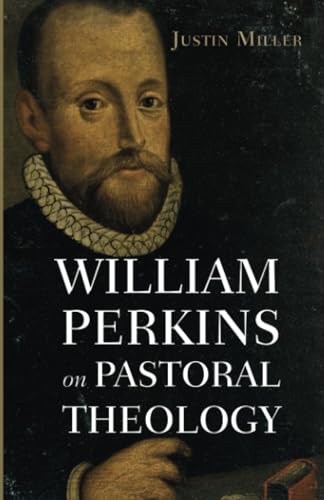
William Perkins (1558–1602) was arguably the most popular Protestant author and pastor in Elizabethan England. By the early 1600s, within England, his works outsold those of John Calvin, Theodore Beza, and Heinrich Bullinger combined. Perkins became the first Protestant divine from England to have a widespread continental reception. His works heavily influenced the New World. But by the mid-1800s, he fell into relative obscurity. Since the 1950s, however, the study of Perkins has experienced a renaissance. Scholarship on Perkins has tended to focus on a few topics like the conscience, covenant theology, predestination, preaching, and, to a lesser extent, demonology, the family, assurance, and Ramism. In part, because Perkins never wrote a tract specifically on ecclesiology, academics have devoted relatively little time to Perkins’s views on either the church or the sacraments. To be sure, some academics like David Barbee, Bryan Spinks, and Donald John MacLean have discussed these topics. However, Justin Miller’s William Perkins on Pastoral Theology—particularly chapters 2–5—provides a helpful elucidation of Perkins’s understanding of the church and the sacraments.
Miller’s book unfolds in eight chapters. The opening chapter proffers a brief discussion of Perkins’s life (pp. 2–6) followed by a consideration of Perkins’s use of the church fathers (pp. 6–10), which seeks to encourage today’s Christians to rediscover the fathers. Chapter 2 explores “Perkins’s view of the local church.” While the term “local church” is somewhat anachronistic for Perkins and blurs the way he often thought of the Church of England as a single church, Miller nonetheless highlights important parts of Perkins’s thinking, such as the marks of a church (p. 19), the regulative principle (p. 23), the Christian Sabbath (p. 26), and church membership (p. 27). Chapters 3–5 discuss Perkins’s views on the sacraments. Chapter 6 explores Perkins’s thoughts on pastoral ministry. Chapter 7 traces Perkins’s discussion of preaching. Chapter 8 concludes the book by comparing parts of Perkins’s thought with that of Jonathan Edwards and John Owen.
Miller’s work is a version of his DMin dissertation. Miller is not as concerned with engaging in academic debates as with edifying local churches through “historical theology for God’s glory and the church’s good” (p. 11). He puts Perkins into conversation with recent authors like Albert Martin (pp. 61, 86) and Martyn Lloyd-Jones (pp. 64, 79, 93). Miller’s work is a type of retrieval that seeks to guide and exhort today’s pastors. In other words, he is making a positive theological argument rather than offering abstract historical observations about Perkins and late Elizabethan England.
While Miller’s book has many commendable points, I want to highlight three. First, the book explores a relatively understudied topic. Chapter 2, in particular, covers ground that is not widely discussed by others. Second, the work accurately captures the broad strokes of Perkins’s thought. As Perkins’s corpus runs more than two million words, the presence of a roughly 100-page book on a topic is valuable. I should note that the brevity of Miller’s work means that he must, by necessity, oversimplify parts of Perkins’s thought (e.g., the marks of a church on p. 19). Nonetheless, pastors who want to know what Perkins thought on pastoral theology without reading two million words will find a faithful guide in Miller. Third, the book is relevant and applicable to today’s Protestant pastors. Miller does a good job connecting Perkins’s thought to the underlying pastoral issues facing ministers today. To be sure, there is much more in Perkins’s thought that Miller—if he had written a longer book—could have discussed. For instance, Perkins spoke at length about the dangers of false conversion and the importance of excommunication.
Given that this this is an academic review of a book that originated as a dissertation, I offer two observations before concluding. I should add that these two points do not detract from the usefulness of Miller’s work for today’s pastors. First, the book largely sidesteps important scholarship on Perkins and his period. For instance, before spending a few pages discussing “the church fathers and Perkins” (pp. 6–10), Miller observes, “I do not intend to exhaust this topic, as it would be a dissertation of its own and a worthy one” (p. 6, emphasis original). An important academic already wrote such a dissertation: David Barbee, “A Reformed Catholike: William Perkins’ Use of the Church Fathers” (PhD diss., University of Pennsylvania, 2013). Further, Ian Breward, Coleman Ford, and Ann-Stephane Schäfer have authored detailed discussions on this topic—none of which appear in Miller’s book.
Second, the book generally avoids historically contextualizing Perkins. In particular, Miller’s work omits a number of factors that influenced Perkins’s thinking on the church. For instance, Elizabeth and members of her ecclesiastical hierarchy, like John Whitgift and Richard Bancroft, exerted substantial energy to quell the Puritan movement, which sought, in part, to make changes to English ecclesiastical life. Likewise, Perkins wrote within the context of threats from Separatists like Robert Browne, Henry Barrow, John Greenwood, and Francis Johnson. Further, ecclesiastical and political opposition from Roman Catholicism influenced Perkins’s ecclesiastical thinking. When readers see Perkins’s thought on the church through these three lenses, his thinking comes into clearer focus.
Nonetheless, for pastors and interested laymen who want to understand parts of the pastoral theology of Elizabethan England’s foremost divine, I recommend this book. Pastors who want to retrieve parts of Perkins’s pastoral theology for their ministry today will benefit from Miller’s writing.