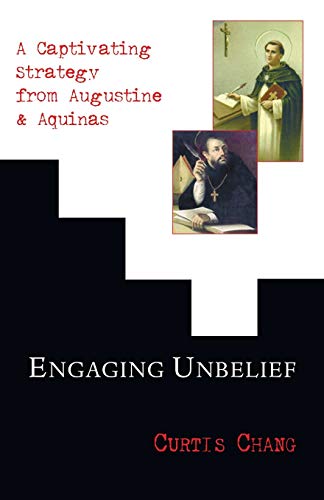
The stated aim of the author is to construct a new, rhetorical strategy for engaging with our present ‘epochal challenge’ of post modernism. To achieve this we must (in our postmodern epoch) take into account the narrative nature of meaning and retain an ability to engage critically with rival stories. It is to Augustine and (surprisingly) Aquinas that we are directed for our categories and models to achieve this.
Augustine and Aquinas respectively, faced their own ‘epochal challenges’ (a ‘contest in story telling’) of the ‘Eternal City’ of pagan Rome and the ‘Only City’ of Aristotelian based Islamic thought. In Augustine’s day the challengers sought to deconstruct the ‘Eternal City’ narrative by blaming Rome’s decline on the church. While for Aquinas the challenge of the ‘Only City’ narrative came from the superior learning of Islam.
Chang devotes the central two chapters to exploring how each challenger engaged unbelief. Both protagonists are commended for adopting the Pauline strategy of ‘Taking every thought captive’ (2 Cor. 10:5). They did so, Chang argues with a three-part modus operandi: Entering the challenger’s story; retelling the story; and capturing the retold tale within the gospel narrative. The one who can tell the best story wins the epoch. This mouth-watering aim to tell a better story is what motivated this reader to stay the course despite a considerable number of detours. I fear that this simple aim is slightly obscured by the complexity of Chang’s analysis. This is partly due to the ambitious scope of the book which offers Augustine’s ‘City of God’ and Aquinas’s ‘Summa contra Gentiles’ as works which share a comprehensive unity. The qualifications and nuances required to justify Summa contra Gentiles as a significant compliment to ‘City of God’ in engaging with our own epochal challenge, compromise the clarity of the book. Chang writes unashamedly as an enthusiast who knows and loves his subject matter. At crucial moments, however, his loyalty to Aquinas (in particular) leads him to some eccentric and unconvincing conclusions: for instance, Aquinas gains plaudits for keeping Aristotle within the Christian circle while Luther is chastised for his legendary purge (‘Aristotle is to theology as darkness is to light’). Similarly, Chang does not critique Aquinas for believing that the will of man is fallen but the intellect is not. Instead Aquinas is commended for keeping a ‘de clawed’ Aristotle within the church and thereby preventing an ‘earlier and more irreconcilable split than that caused by the Enlightenment.’
By contrast ‘City of God’ offers a more discernable and convincing demonstration of ‘enter, retell and capture’. Unlike Summa Contra Gentiles, it enjoyed a good measure of success in offering a ‘better story’ and Chang draws this out with a great skill and erudition.
The criticism of traditional apologetics (as more ‘crusade’ than conversation) and the sympathy for our postmodern societies’ tragic flaw are both powerfully done.
I do not wish to diminish the challenge to enter sympathetically into the postmodern story rather than merely confront it aggressively. Yet there is no getting away from the fact that Paul’s aim, ‘To take captive every thought’ necessitates a ‘demolishing of strongholds’. Chang’s pastoral concern for the fractured and dispossessed postmodern person seems to commit him to a theological pacifism in which the judicial elements of the gospel are marginalised. Thus in the name of ‘rhetorical repair’ the atonement is to be offered as God’s ‘satisfying resolution of the doubt and marginalisation that we suffer’.
The danger here is that in entering the challenger’s story we leave behind crucial elements of our own. We must be able to speak to postmoderns without postmodernising the gospel, and be able to ‘Spoil the Egyptians’ without building a golden calf.