×
 

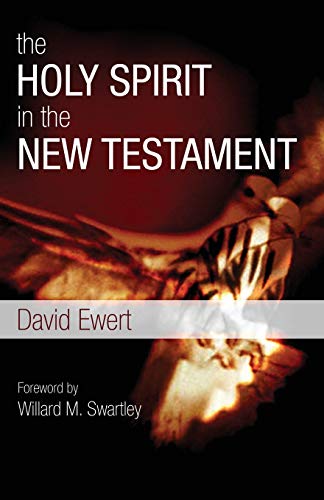
The Holy Spirit in the New Testament

Written by David EwartReviewed By Clark H. Pinnock

There are several books which survey the New Testament doctrine of the Spirit of God. This book by a mature Mennonite evangelical scholar is a worthy addition to this field. Compared to Dunn’s Jesus and the Spirit it is much shorter and less oriented to critical problems. Compared to Montague’s The Holy Spirit, The Growth of a Biblical Tradition it is less oriented to redactional differences in the witnesses and more of a unitive interpretation of the text as a whole. It is more like Green’s I believe in the Holy Spirit in its total stance, and agrees with it on almost everything.

One could characterise Ewart’s book as richly scriptural and well-abreast of the scholarly literature on the subject of the Spirit. It is divided into three main parts. The first discusses the promise of the Spirit in the Old Testament and then in the gospel traditions. Nothing is left out—the Johannine material is treated as the authentic teaching of Jesus without any misgivings on the author’s part. The second section treats the coming of the Spirit on the day of Pentecost and the effect of his coming upon the early church. Though Ewart is not open to the pentecostal interpretation of Acts when it comes to a baptism of power at a later point in a Christian’s life, nevertheless he is forthright when speaking of the power and gifts of the Spirit displayed in the early period and shows no desire to suppress this fact. The third section takes up the witness of the epistles. Again there is no picking and choosing between authentic and inauthentic letters.

Ewart’s treatment of the material is patient and careful and warmly practical. It reveals scholarly attention to issues, an unhurried willingness to let the scripture speak, and a long experience in teaching and walking with the Lord. The book would be a most excellent guide for use in a study group or in preparing a series of sermons on the doctrine of the Spirit.

I have no complaints to register against this book. It is a scholarly and edifying treatment of what its title announces. It was written with the people of God in mind, and will instruct anyone who is willing to read it.


Clark H. Pinnock

McMaster Divinity College, Hamilton, Ontario, Canada