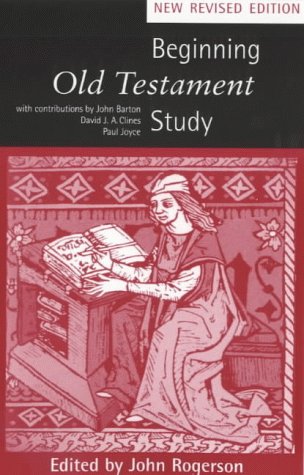
This is the second edition of a useful introduction to critical biblical study first published in 1983 and often reprinted, now ‘extensively updated and revised’ according to the cover. Some changes are unexceptional: sensitive inclusive language and the use of ‘BCE’. Bibliographies are updated, though without reference to evangelical writers (except Goldingay and Wright). Other changes reflect the developments in scholarship and authors’ views over the intervening years, and fall into three groups.
- Three chapters are virtually unchanged: Introduction; chapter 5 (The Individual and the Community, Joyce); chapter 7 (OT Ethics, Joyce).
- Five chapters have one substantially rewritten section but are otherwise virtually unchanged: chapter 1 (History of OT Study, Rogerson): Section D ‘From 1750’; chapter 4 (OT World View, Rogerson): Section E, Social Organisation: chapter 6 (OT Theology, Barton): Section VI, on Biblical Theology and recent critiques (this whole chapter is rewritten, but the contents are otherwise similar); chapter 8 (OT and NT, Joyce); additional comments on literary relationships and expanded conclusion (143 f, 145–47): chapter 9 (Using the OT, Rogerson): section B now addresses homosexuality and creation (153–57).
- Two chapters have substantial changes: In chapter 2 (Methods in OT Study) Clines retracts his earlier view that ‘the primary goal in biblical study should be understanding’, and proposes instead ‘evaluation or critique’ (emphases original). His earlier essay helpfully distinguished between first order and second order methods. The latter category is now relegated to third order, and a new second order of four methods is proposed: feminist criticism, material or political criticism, reader-response criticism and deconstruction. In chapter 3 (OT History) Rogerson rewrites the first half, up to his paragraph on 560 BCE onwards, reflecting a more sceptical approach to Israelite historiography. Perhaps significantly, he also deletes a concluding paragraph on not accepting critical scholarship uncritically!
These changes generally enhance the book’s value as a clearly written introduction to critical OT study. However, its main weakness remains its lack of interaction with more conservative scholarship, and for this evangelicals and others will need to look elsewhere.